Minnesota Mosaics Guild

When I think of mosaics, Lakewood Cemetery Memorial Chapel is the first place that comes to my mind.
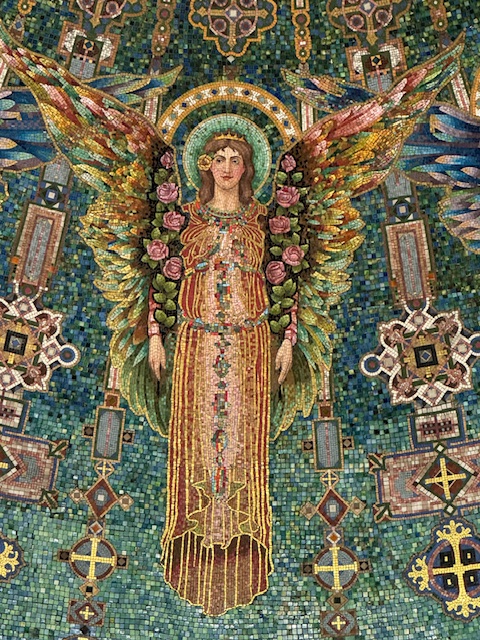
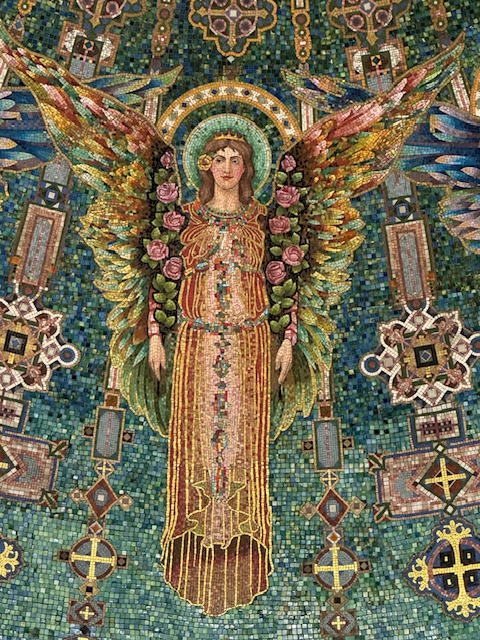
On of the mosaic angels in the Lakewood Cemetery Memorial Chapel.

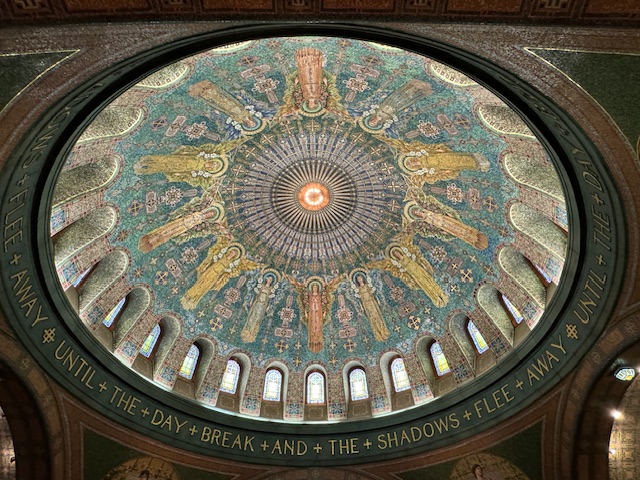
Inside the chapel is a magnificent display of mosaics, made from 10 million tesserae (marble, stone and glass) tiles, creating angels and other beautiful figures on the walls and overhead on the domed ceiling. They are stunning.

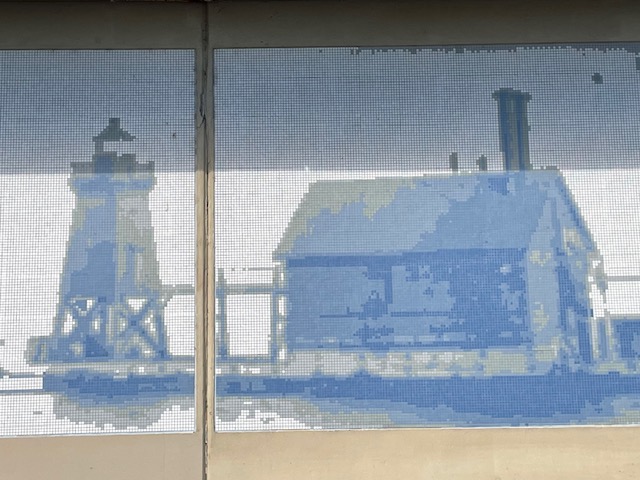
And then, I think of Duluth MN, where there is a great mosaic panel along the Duluth Lakewalk.

The mosaic mural on the lake walk in Duluth, MN.
On of the scenes on the Duluth mural, depicting the quarter inch tiles used in the mosaic.

It is made of ceramic tiles and illustrates different Lake Superior scenes. It’s fun to see this amazing public art display.
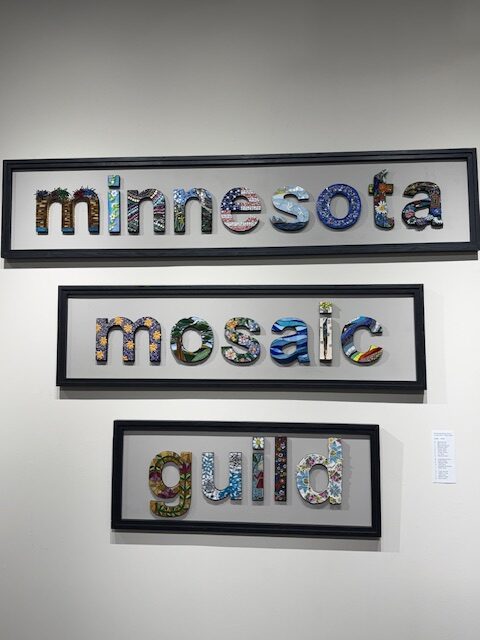
The letters to create this sign was fun to see. Each letter is a mosaic.

So, when I noticed the Paradise Theatre in Faribault was hosting an exhibit by the Minnesota Mosaics Guild, I was excited to check it out. There were several pieces on display…all of them impressive and one-of-a-kind. 
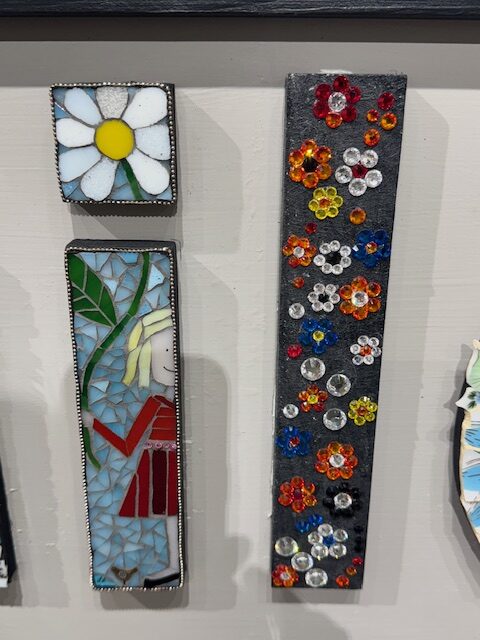
These are two mosaic letters, i and l, from the word Guild.

There were three pieces in particular, that stood out to me. 
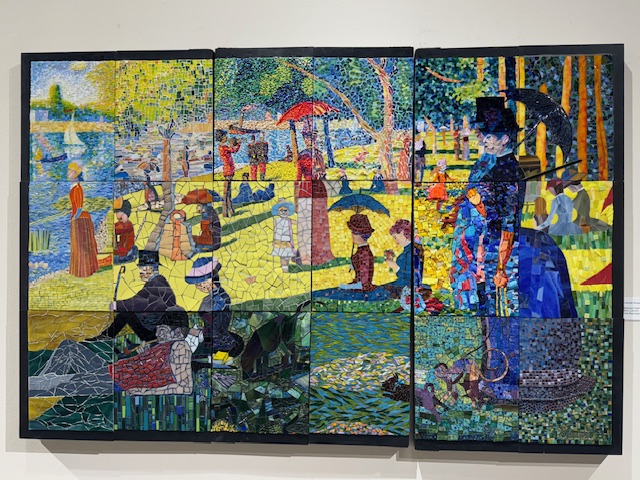
“A Sunday Afternoon” by multiple artists.

The first one was a mosaic made to capture the painting A Sunday Afternoon (on the Island of La Grande Jatte  by George Seurat painted from 1884-1886). It was larger than the others on display, and the picture was divided into 18 equal sections, each section representing a portion of the painting.
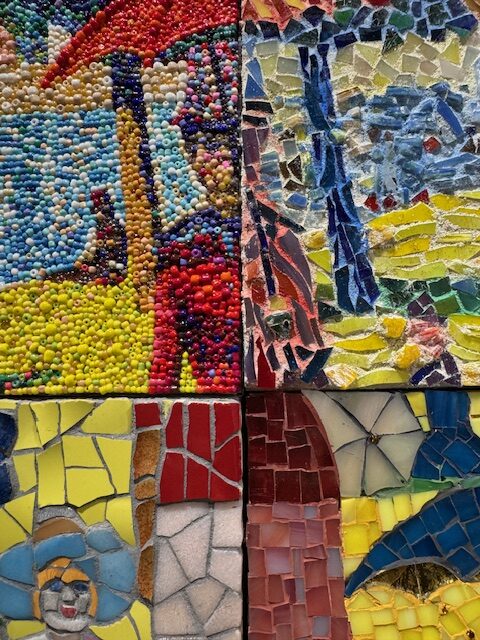
Four sections from The Sunday Afternoon painting made into individual mosaics.

Each section was a mosaic created by a different artist and had its own form of medium to re-create a portion of the painting. Then it was assembled together, like a quilt, for a spectacular piece of artwork.
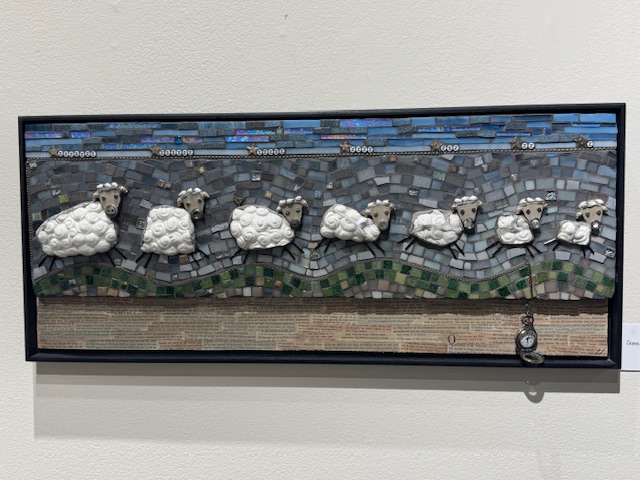
“Counting Sheep” by Laura Lee

 “Counting Sheep” was another a delightful mosaic that used glass, metal, paper, ceramic and shells. It was detailed and creative, with an old watch incorporated into the picture.
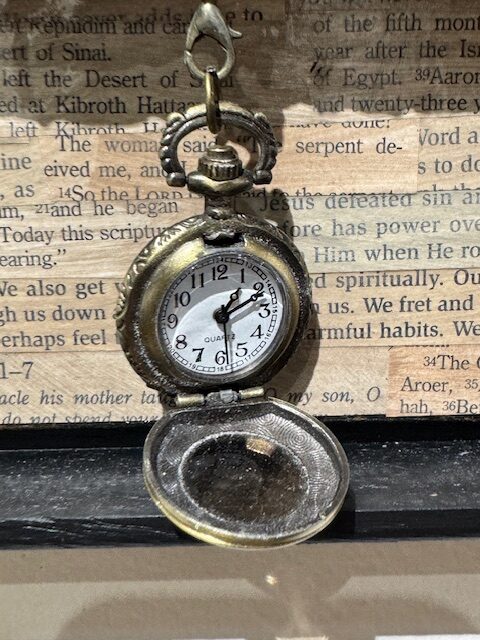
An old small pocket watch is a piece of the “Counting Sheep” mosaic.
Part of the back drop is made with pages from a Bible.
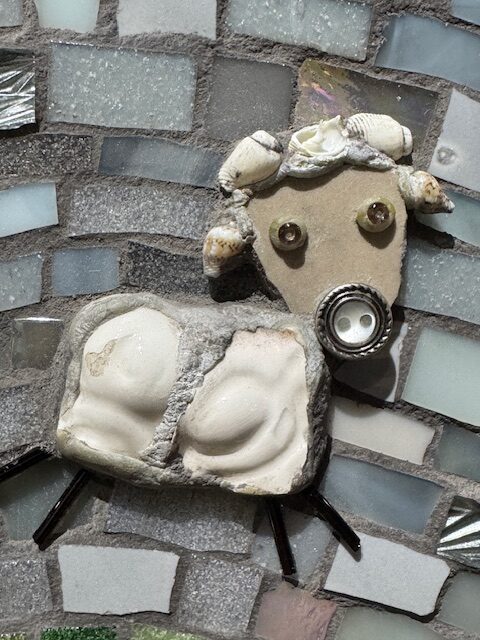
One of the mosaic’s sheep, up close…button nose, shell ears etc…

I would have liked to bring this “Counting Sheep” mosaic home with me.
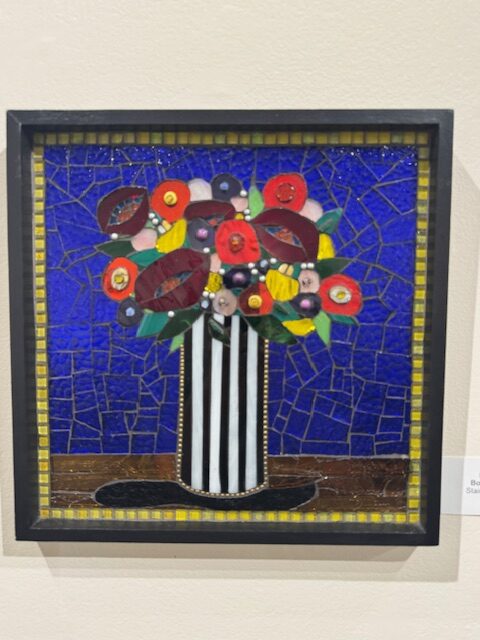
“Bouquet for Mom” by Lisa Van Wyn

“Bouquet for Mom” was bright and colorful, and stood out. It was made of stained glass and beads.

Other great works:
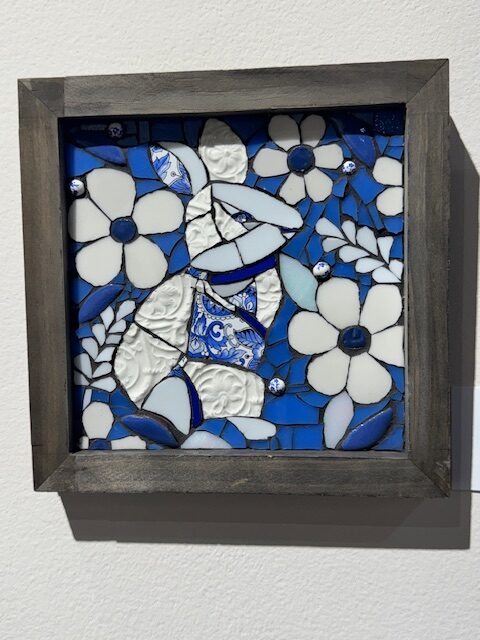
“The Blue Willow Bunny”, using dishes/china, glass, beads, by Lisa Van Wyn.
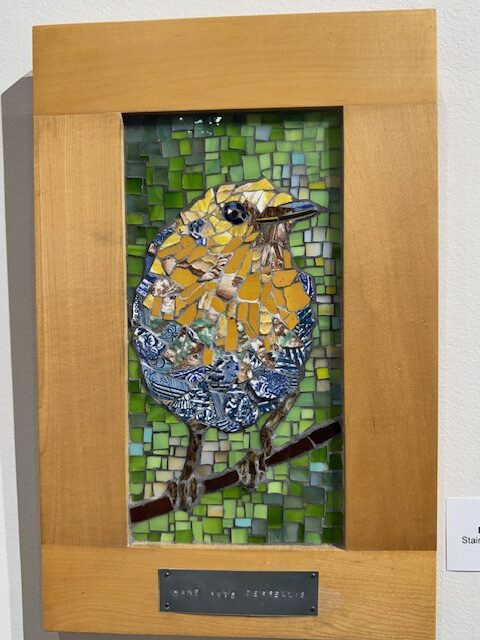
“Mane Avis Tessellis”, using stained glass and broken dishes, by Maureen Rath.

 It was fun to read an open invitation from the Minnesota Mosaics Guild to anyone who is interested in this art form, to join the guild and create…whether you have any previous experience with mosaics or not.
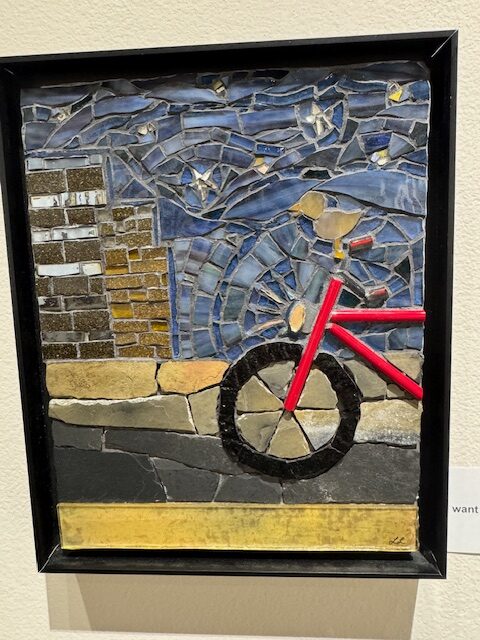
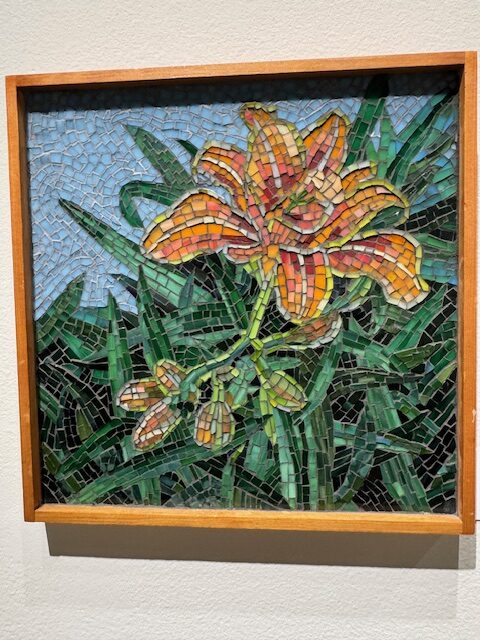
“I want to ride my bicycle”, glass and slate, by Laura Lee
“Lily”, stained glass, by Maureen Rath

The exhibit was not large, but it packed a lot of creativity into one room.
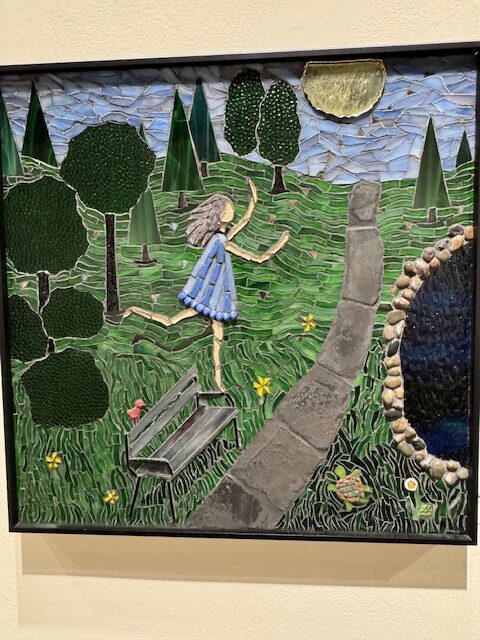
“Madness is meaningless”, glass, slate, stone and shell, by Laura Lee.

Mosaics are a whimsical, and amazing art form.
Lakewood Memorial Chapel

It never ceases to amaze me…the chapel at Lakewood Cemetery, on Lake Bde Maka Ska (previously Lake Calhoun). My paternal grandparents, and a beloved aunt, are buried in this picturesque cemetery. That is how I discovered the chapel. I didn’t know about it before I went to the cemetery to see the family graves. Since my discovery, I do visit the chapel occasionally, and often bring friends or out-of-town guests there, if they have not seen the stunning chapel.

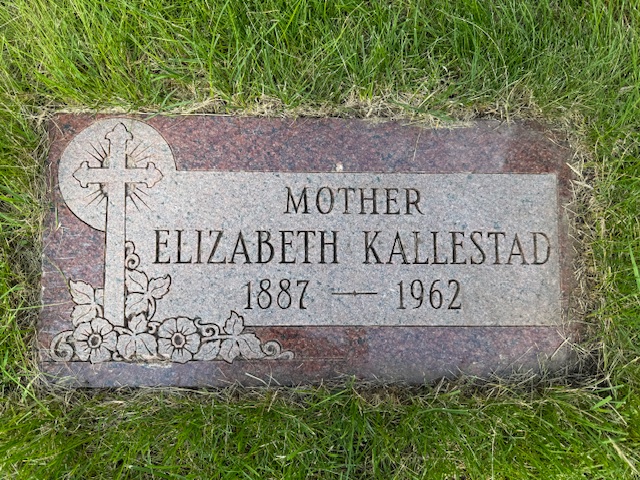
My paternal grandmother’s gravestone.

The cemetery itself seems like an extra special place. Two Hundred and Fifty acres of mature trees, lush grass, and rolling hills with magnificent tombstones and monuments.  I learned on my last visit, the grounds of the cemetery are an accredited arboretum. I would assume my grandparents chose to lie in rest at this cemetery because of its beauty and proximity to a city lake. I know my grandmother loved the water, as do I. And as did Auntie Ag.

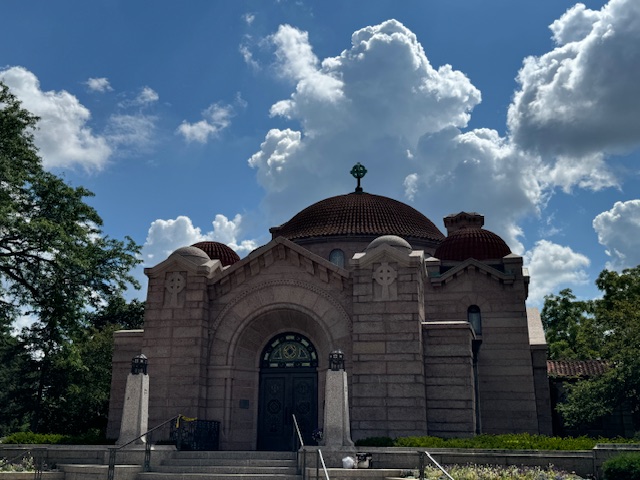
The Lakewood Cemetery Memorial Chapel.

The Memorial Chapel was completed in 1910. It is the centerpiece of the cemetery.   It is on the National Register of Historic Places, and it is a work of art; an excellent example of Byzantine mosaic art. I’m not sure why more attention isn’t given to this edifice. It is said, if this chapel were in Europe, thousands would visit it. 

“The dome is 40 feet high and ringed with 24 stained glass windows, set in copper and serves as a sundial. Twelve angels adorn the door, relating to the Old Testament’s 12 sons of Jacob, 12 tribes of Israel, 12 gates to the Holy City and the 12 disciples of Christ in the New Testament.” There is a lot of symbolism within the artwork, explained in the brochure.
A zoomed-in image of one of twelve angels in the dome…all small mosaic tiles.

The chapel at Lakewood Cemetery is open to the public daily, when not reserved for special events, such as weddings or funerals. When we were there with our son and his family recently, there was a sound check going on so it was closed to the public, however a woman came over to us and said if we kept silent, she would open the doors so we could peak into the chapel to see the magnificent dome, its amazing walls, and its beautiful mosaic. 

From the brochure:

"In 1906, Lakewood’s trustees formed a committee to guide the chapel development and solicit design concepts from leading architects.

In 1908 the Lakewood Building committee hired Harry Wild Jones, a prominent Minneapolis architect.

In 1909 the Lakewood Board of Trustees commissioned New York interior designer Charles Lamb to design the interior. He suggested a Byzantine mosaic design based on the interior of the San Marco Cathedral in Venice.

Lamb traveled to Rome to enlist six of Italy’s most accomplished mosaic artists, who had just completed a project at the Vatican. In Venice they created more than 10 million mosaic pieces, from marble, stone and glass fused with gold and silver [for the Lakewood Memorial Chapel].

The tiles, no larger than a fingernail, were attached to gummed cloth and shipped to Minneapolis. The artist themselves arrived in the summer of 1909 and painstakingly assembled the masterpiece inside the chapel."

The chapel was completed in 1910.
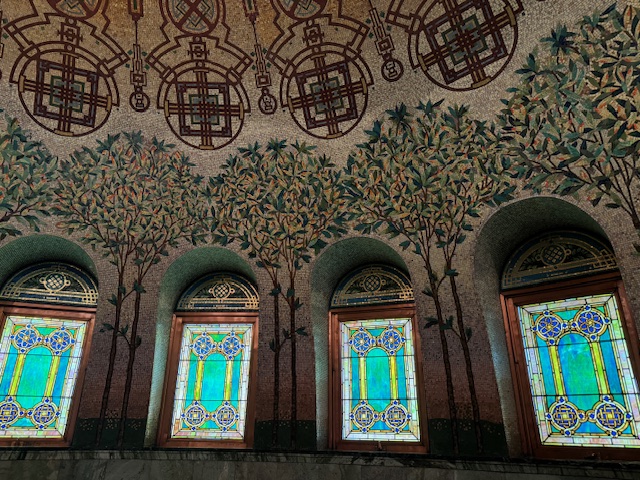
“The alcove at the front of the chapel is lined with entwined mosaic olive trees, whose fruit is known for healing properties.”

Today the chapel stands virtually unchanged in appearance from the day it was completed.

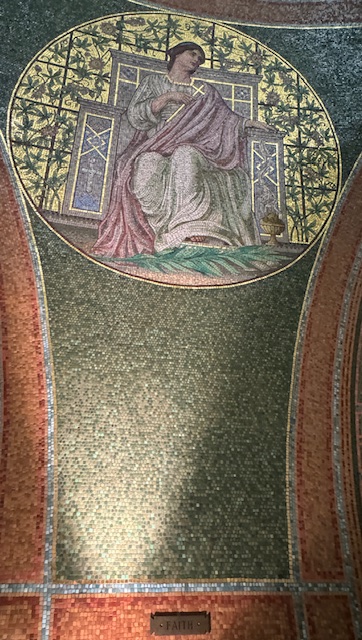
One of four large mosaic figures that represent the virtues of Love, Hope, Memory and Faith. They adorn the side walls below the dome. This particular figure is “Hope”.

If I lived close to this impressive – dazzling – spectacular chapel, I’m confident I would find myself visiting more frequently, just sitting inside and being still.


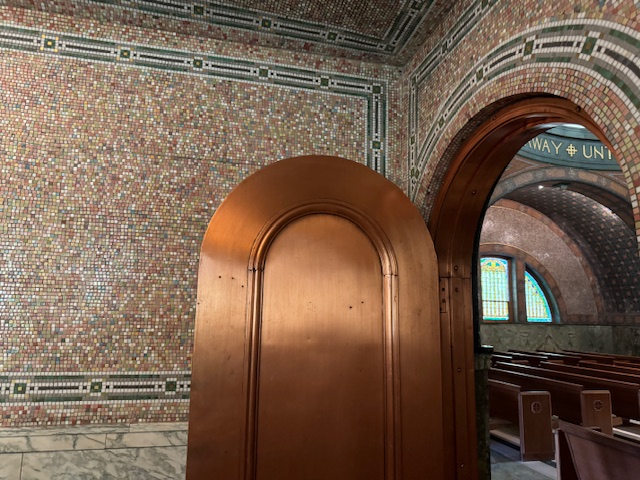
Copper doors and mosaic tiles and lots of detail are in this architectural masterpiece.
Be still and know that I am God.  
Psalm 46:10