Last week friends from out-of-town came for a visit. We had a great time showing them our new home, the thriving, yet quaint town of Northfield, and some southern Minnesota landscapes.
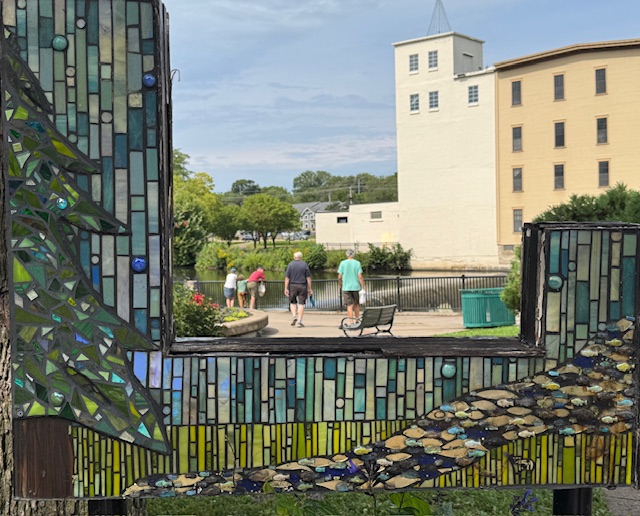
I noticed this “new to me” mosaic art installment on Bridge Square. From this angle, it frames the original Ames Mill and the dam on the Cannon River.
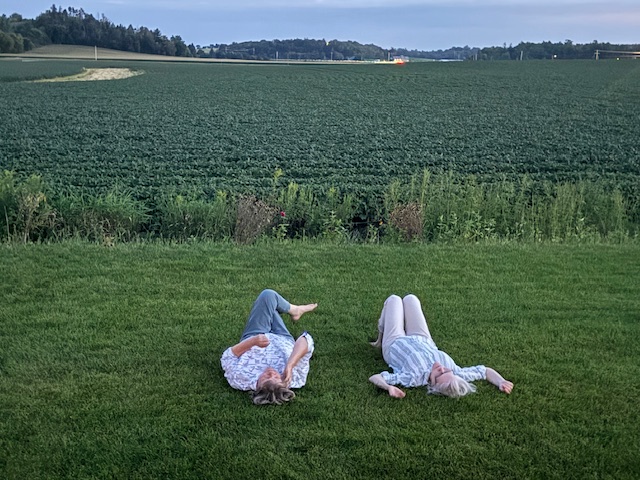
One of the evenings we were sitting out on our patio enjoying dinner and summer offerings…comfortable weather, sunny, blue skies fading into dusky skies, and no mosquitos!
My friend and I gazing up at the night sky.
My friend and I even laid down on the grass for a while, to watch the stars come out.
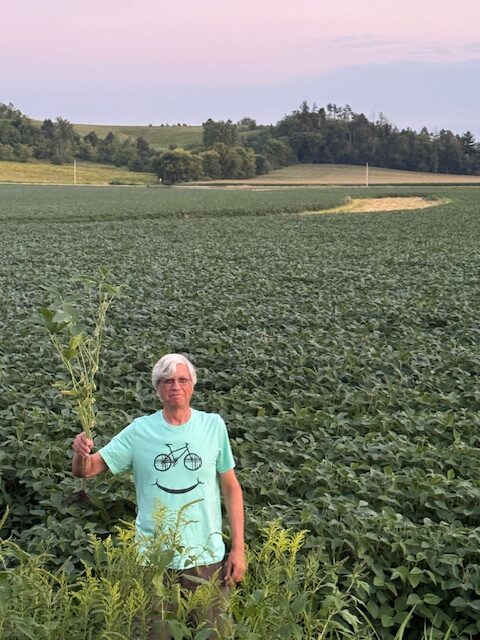
Gary and the beanstalk!
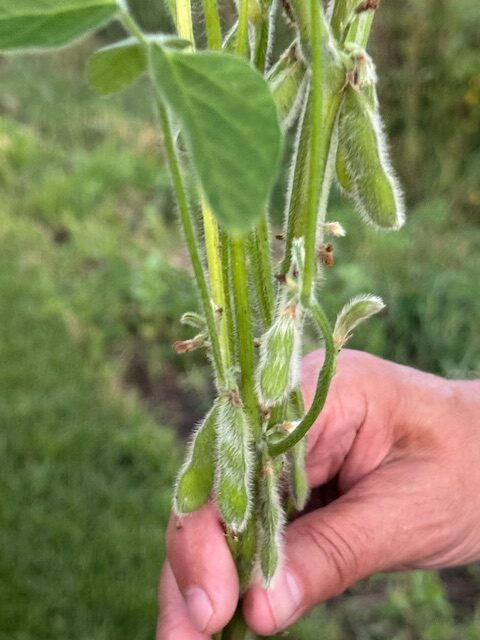
This seemed to be a good time to pull up a soybean stalk from the field behind us. I’ve been waiting to do this. I have never seen a soybean plant up close. All summer we have been watching fields of soybeans grow in our “backyard” and I was curious what they looked like.
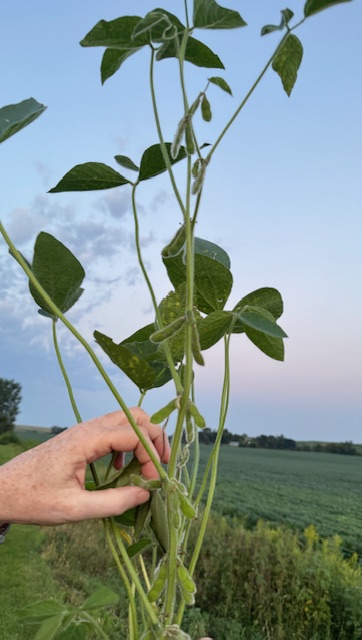
A soybean stalk up close.
So, Gary climbed down the small incline and pulled up a plant, roots and all. It was about three feet tall and had several fuzzy little bean pods hanging on the stem.
Fuzzy bean pods.
We put it in a vase of water and stuck it in the corner of our patio for future reference, and for decoration. It’s slowly fading away, but the crop of soybeans in the field behind us is thriving.
When I think of mosaics, Lakewood Cemetery Memorial Chapel is the first place that comes to my mind.
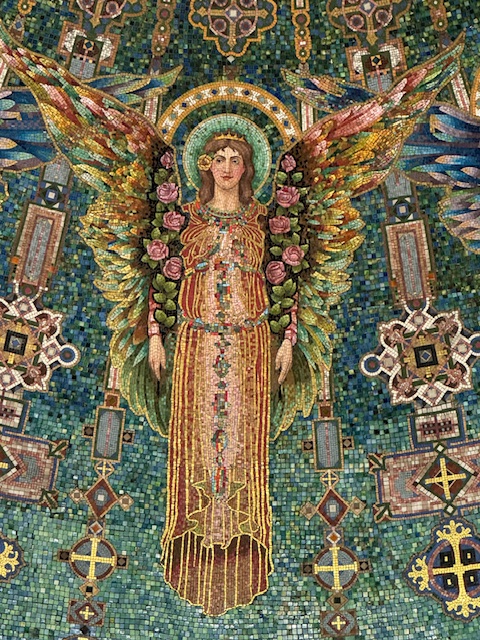
On of the mosaic angels in the Lakewood Cemetery Memorial Chapel.
Inside the chapel is a magnificent display of mosaics, made from 10 million tesserae (marble, stone and glass) tiles, creating angels and other beautiful figures on the walls and overhead on the domed ceiling. They are stunning.
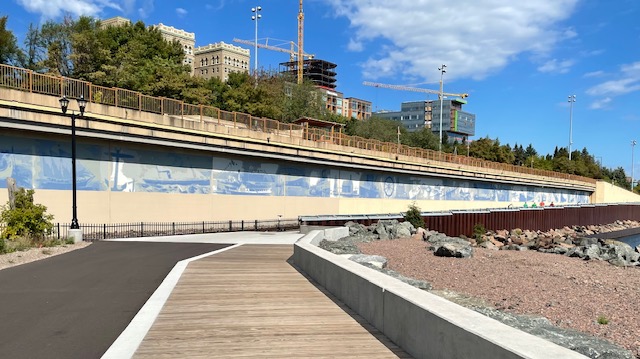
And then, I think of Duluth MN, where there is a great mosaic panel along the Duluth Lakewalk.
The mosaic mural on the lake walk in Duluth, MN.
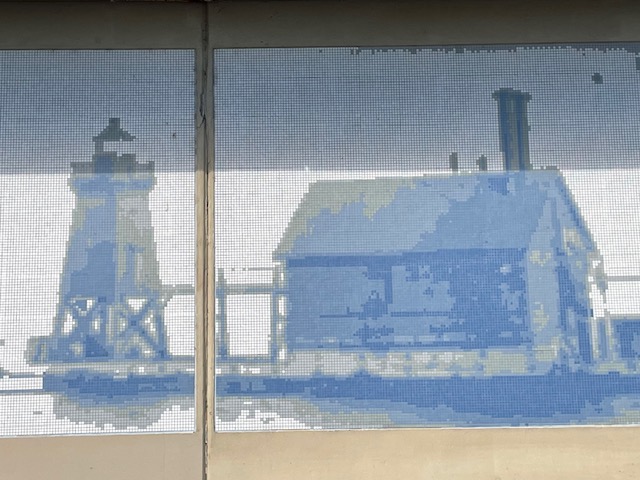
On of the scenes on the Duluth mural, depicting the quarter inch tiles used in the mosaic.
It is made of ceramic tiles and illustrates different Lake Superior scenes. It’s fun to see this amazing public art display.
The letters to create this sign was fun to see. Each letter is a mosaic.
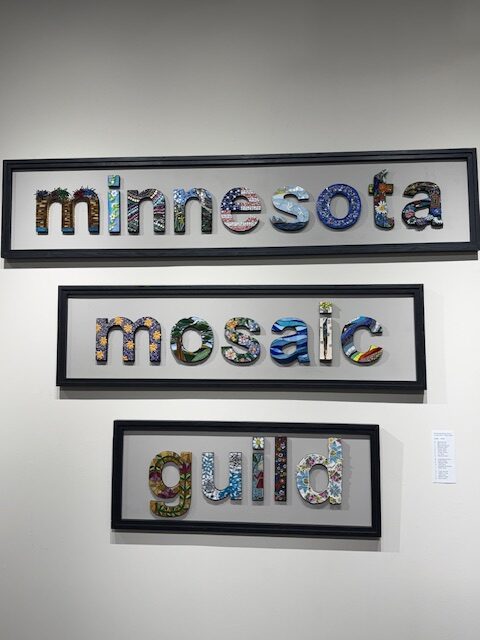
So, when I noticed the Paradise Theatre in Faribault was hosting an exhibit by the Minnesota Mosaics Guild, I was excited to check it out. There were several pieces on display…all of them impressive and one-of-a-kind.
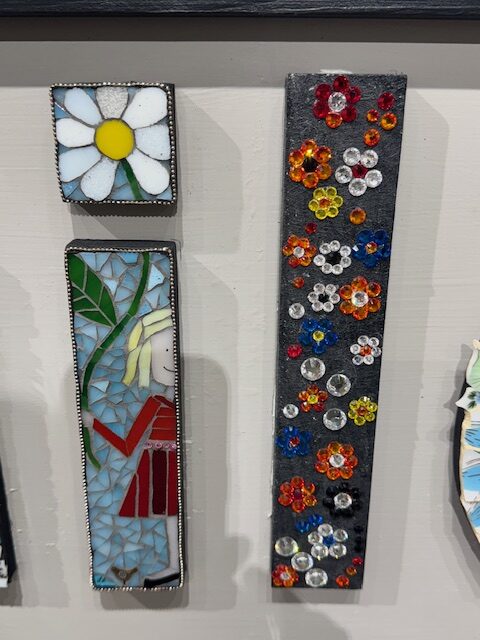
These are two mosaic letters, i and l, from the word Guild.
There were three pieces in particular, that stood out to me.
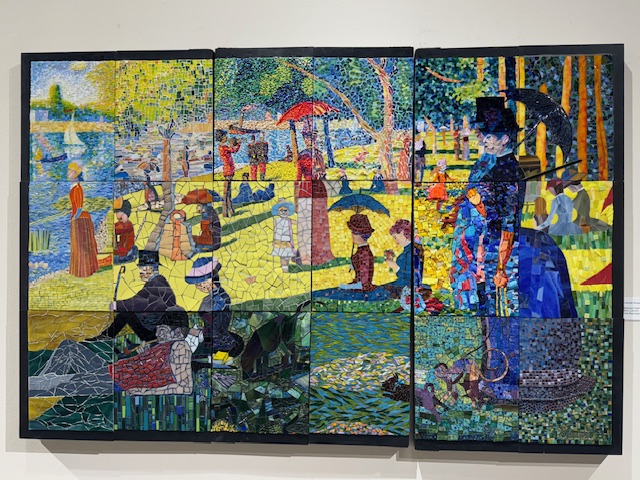
“A Sunday Afternoon” by multiple artists.
The first one was a mosaic made to capture the painting A Sunday Afternoon (on the Island of La Grande Jatte by George Seurat painted from 1884-1886). It was larger than the others on display, and the picture was divided into 18 equal sections, each section representing a portion of the painting.
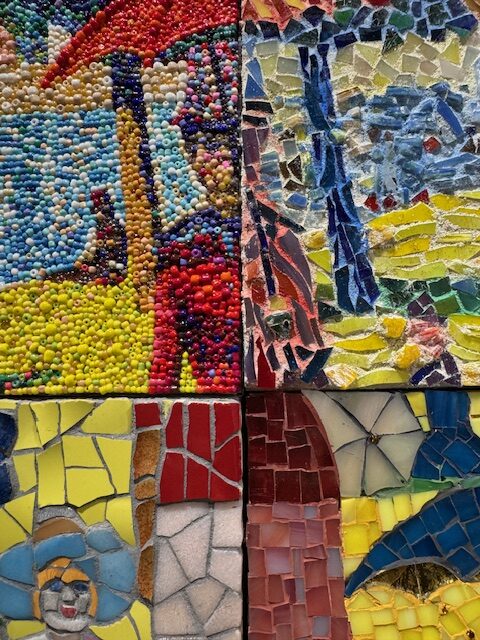
Four sections from The Sunday Afternoon painting made into individual mosaics.
Each section was a mosaic created by a different artist and had its own form of medium to re-create a portion of the painting. Then it was assembled together, like a quilt, for a spectacular piece of artwork.
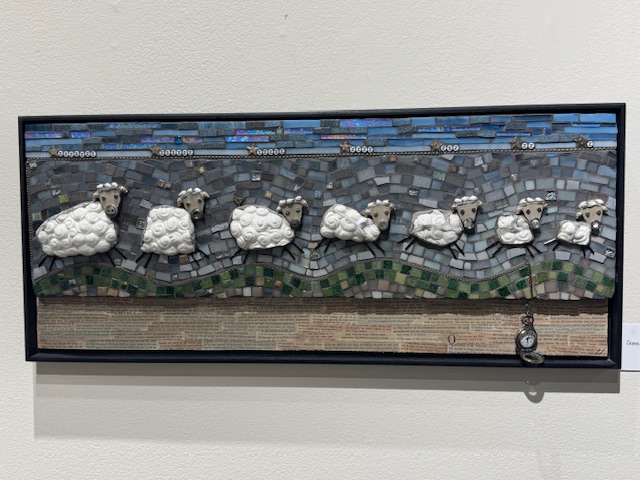
“Counting Sheep” by Laura Lee
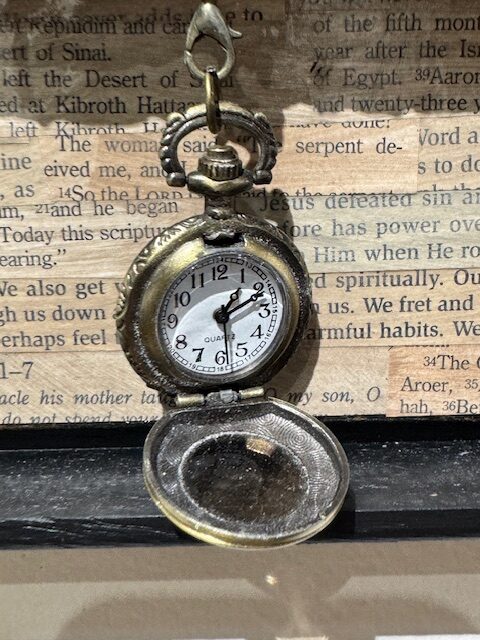
“Counting Sheep” was another a delightful mosaic that used glass, metal, paper, ceramic and shells. It was detailed and creative, with an old watch incorporated into the picture.
An old small pocket watch is a piece of the “Counting Sheep” mosaic. Part of the back drop is made with pages from a Bible.
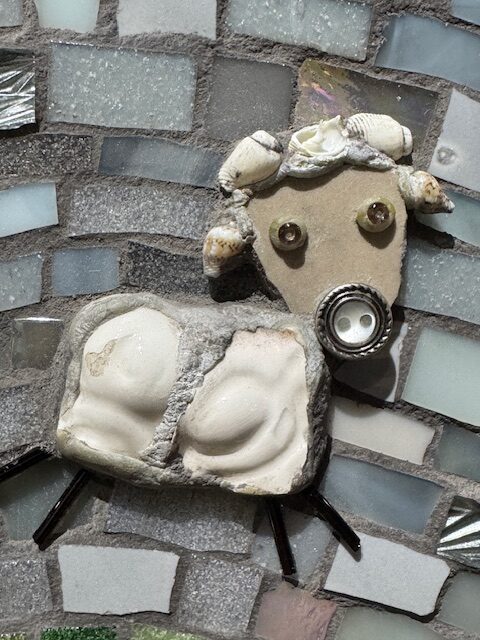
One of the mosaic’s sheep, up close…button nose, shell ears etc…
I would have liked to bring this “Counting Sheep” mosaic home with me.
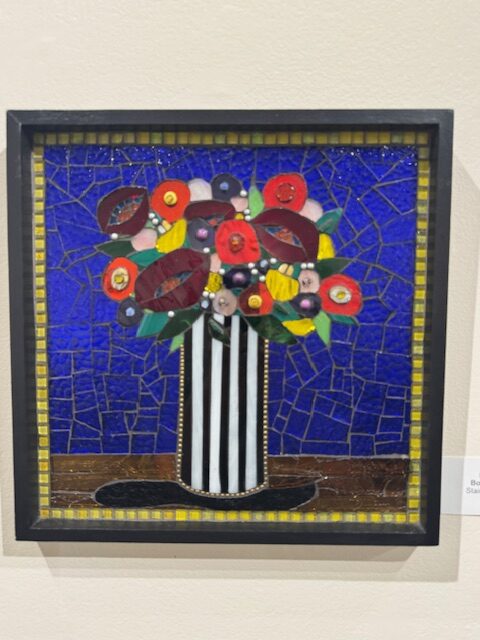
“Bouquet for Mom” by Lisa Van Wyn
“Bouquet for Mom” was bright and colorful, and stood out. It was made of stained glass and beads.
Other great works:
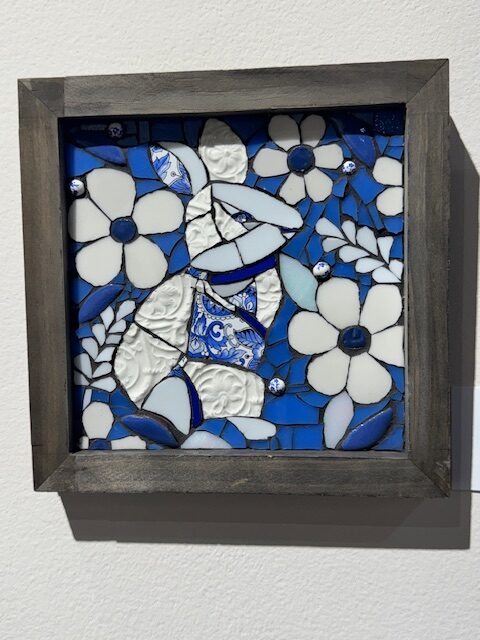
“The Blue Willow Bunny”, using dishes/china, glass, beads, by Lisa Van Wyn.
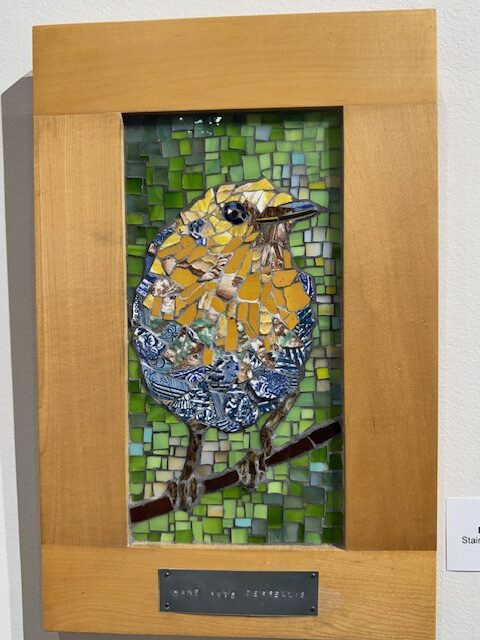
“Mane Avis Tessellis”, using stained glass and broken dishes, by Maureen Rath.
It was fun to read an open invitation from the Minnesota Mosaics Guild to anyone who is interested in this art form, to join the guild and create…whether you have any previous experience with mosaics or not.
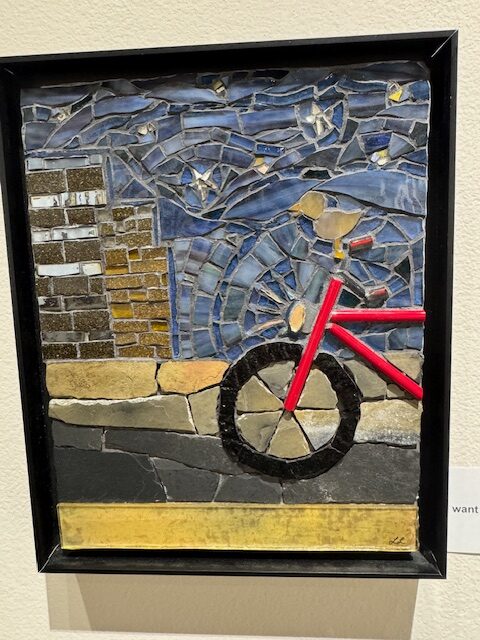
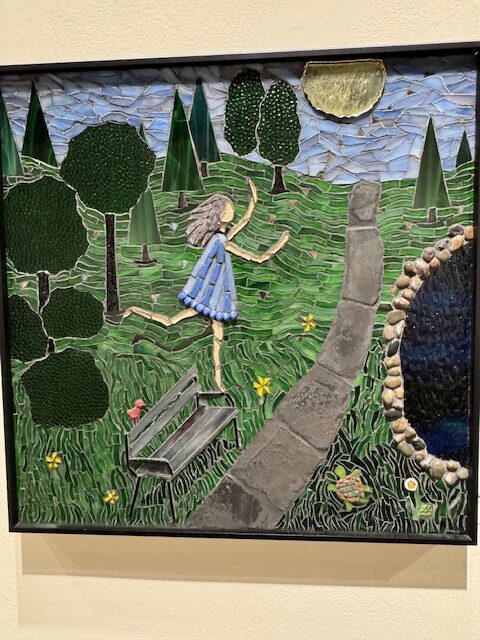
“I want to ride my bicycle”, glass and slate, by Laura Lee
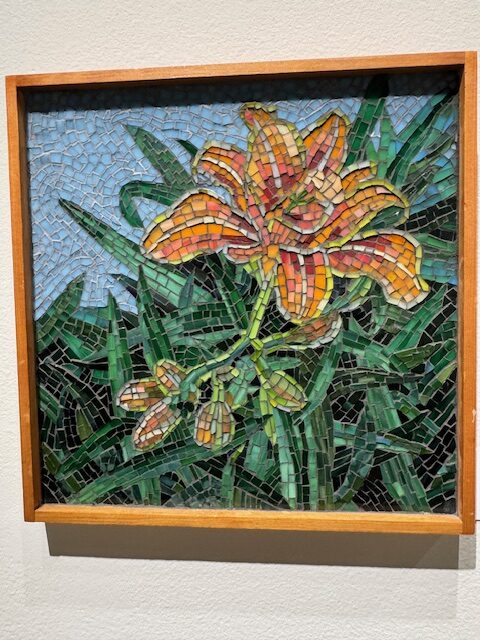
“Lily”, stained glass, by Maureen Rath
The exhibit was not large, but it packed a lot of creativity into one room.
“Madness is meaningless”, glass, slate, stone and shell, by Laura Lee.
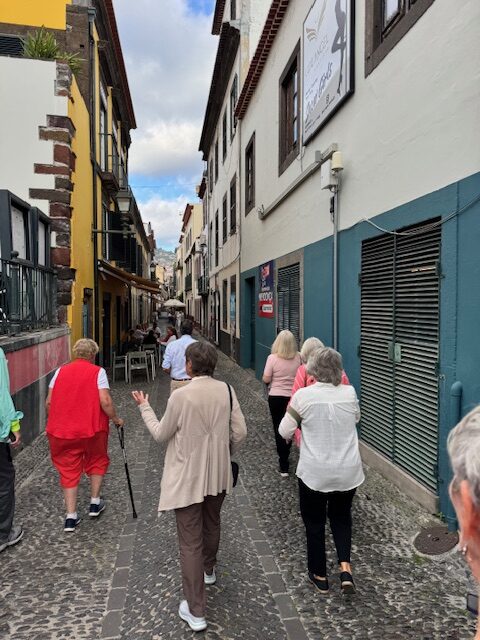
For our last dinner together in Funchal on Madeira Island, we walked to the Mozart Restaurant, located on Rua de Santa Maria. This is one of the oldest streets in Funchal.
On our way down Rua de Santa Maria to the Mozart Restaurant.
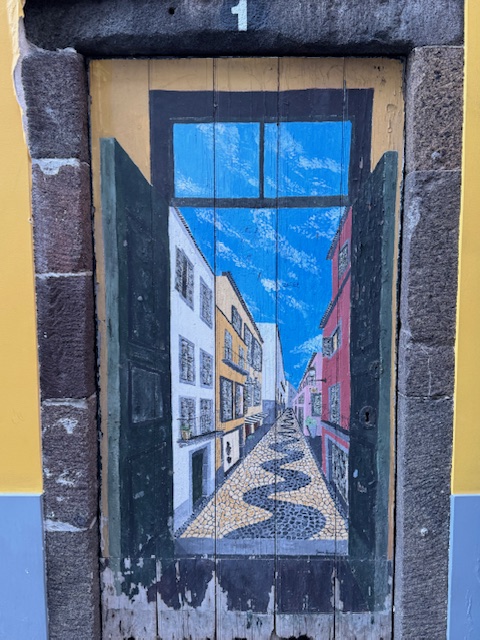
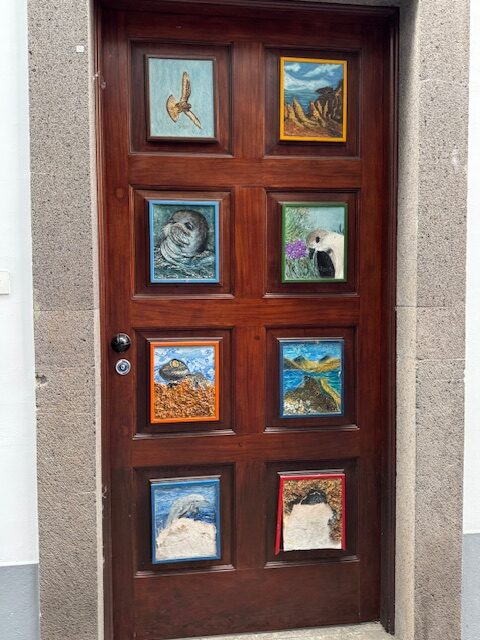
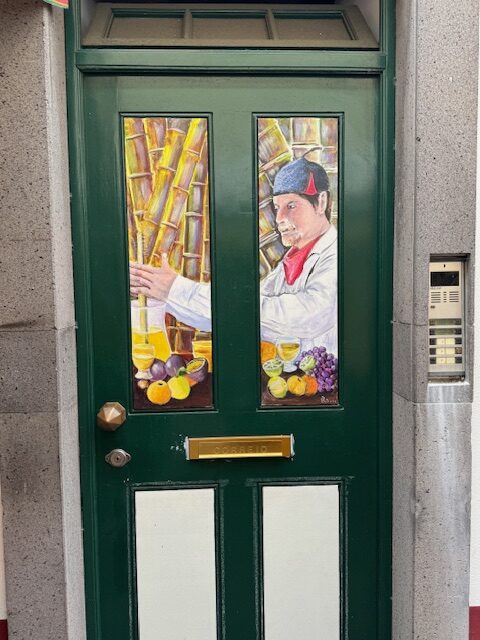
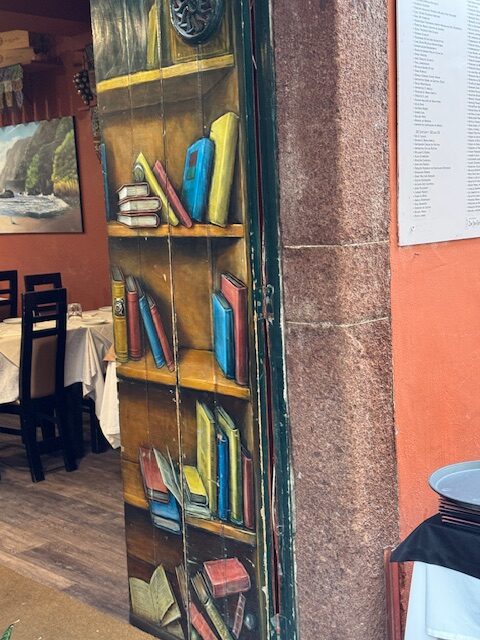
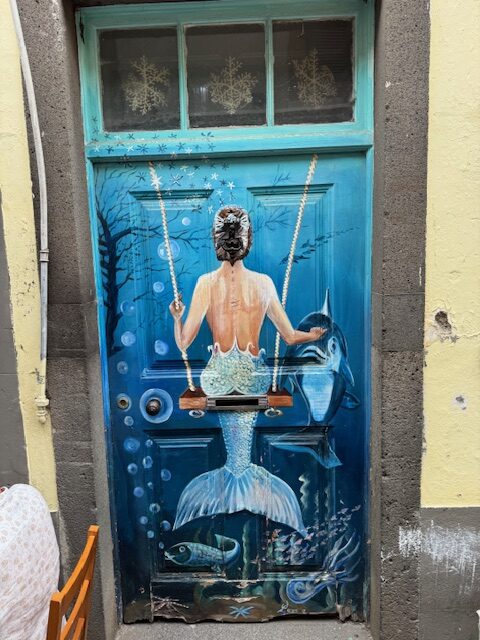
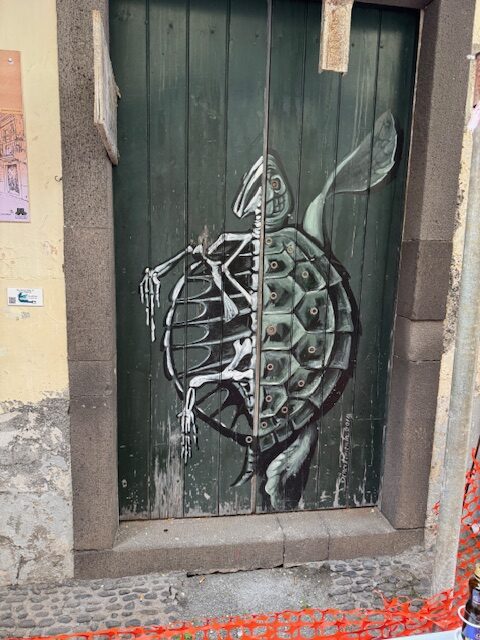
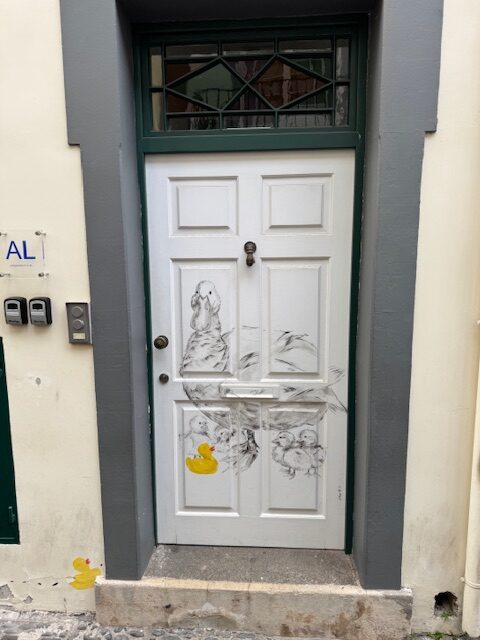
It is a pedestrian-friendly cobblestone street, with some car traffic. It is lined with small restaurants, cafes and a small art gallery or two. It is also known for its painted doors.
The Painted Doors Project began in 2010 with the idea of revitalizing the Zona Velha (Old Town) area, specifically Rua de Santa Maria.
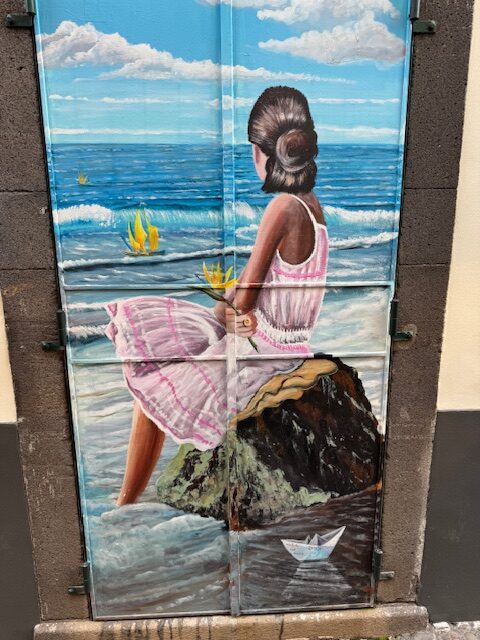
It invited artists to transform old doors into unique works of art. The project was successful and continues today. It features a diverse range of artistic styles on painted doors, creating a vibrant outdoor art gallery.
This public art form continues today, so the street art is ever-changing.
It seems to me that public art does promote community, and I personally, always like to see art in the public.
These photos are a sampling of the many painted doors along Rua de Santa Maria.
It was an entertaining walk to one of the quaint restaurants along this historical street.