Are we in Idaho?

When I was younger, I wrote a letter to Pan Am Airlines (a viable airline at the time) asking to be put on their waitlist to go to the moon. They wrote back (I was amazed), and told me the list was full!
I guess I’ve always been fascinated by the moon. I do enjoy the moon, and especially a full moon. Seeing the moon’s reflection on the water is always spectacular. But, crescent moons are sweet too…like a wink, or smile from heaven.
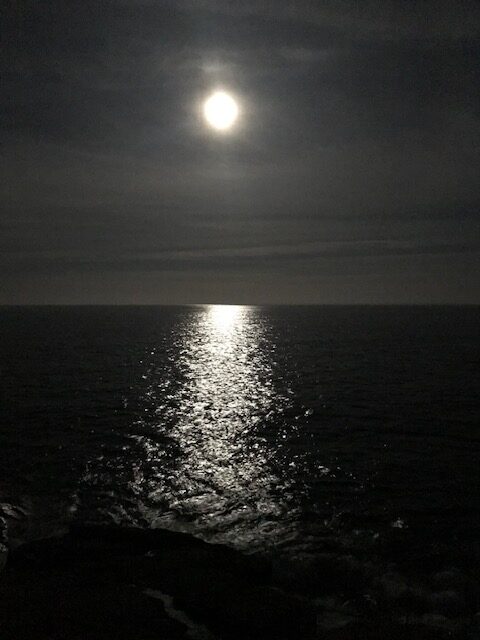
Full moon over Lake Superior, Minnesota 2020.

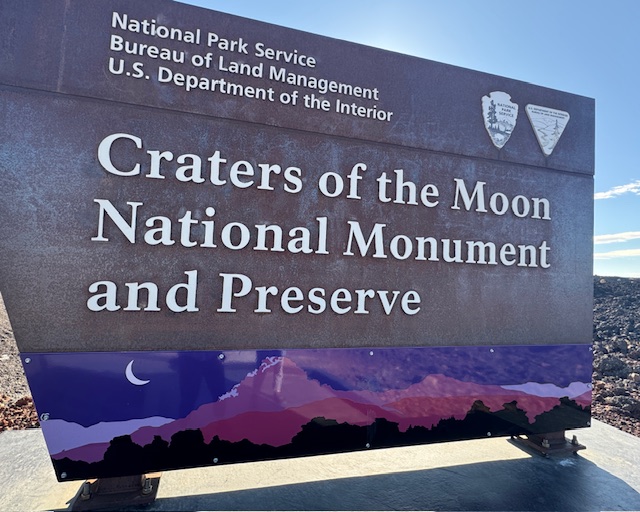
So, when I saw on Idaho’s map, Craters of the Moon National Monument, I added it to my list of places to see in Idaho. It is a 750,000 acre park. According to the internet, the difference between national park and national monument are: 

 “...are their establishment [1] method, [2] primary purpose, and [3] scope of preservation. National parks are created by an Act of Congress to preserve a broader scope of natural and recreational values, while national monuments are designated by the President under the Antiquities Act to protect a singular, significant natural or natural object.”
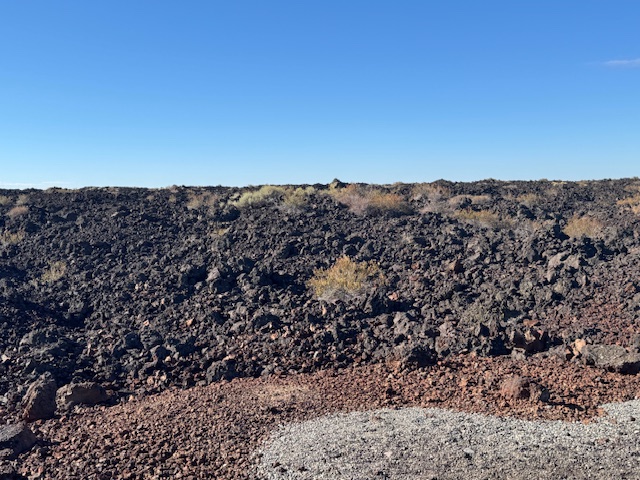
It was a sunny, but chilly day when we visited the Craters of the Moon National Monument. It features vast lava fields deposited from volcanic eruption of deep fissures years ago. At the Visitor’s Center we picked up a map of a seven-mile driving loop through the park. There were designated stops along the way to get out for a scenic overlook, or take a hike. We did both. 
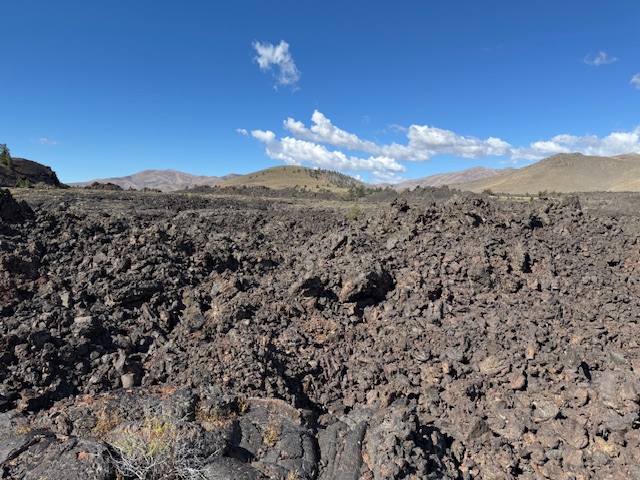
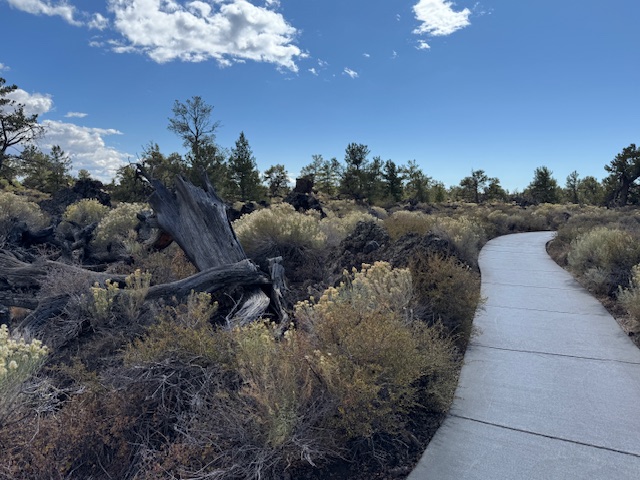
The short hike through Devil’s Orchard was level, and paved, and I felt like we were walking through a strange botanical garden. Although we missed the peak for wildflowers in the park, there is amazingly diverse plant life in these lava fields. Most common is the sagebrush. 
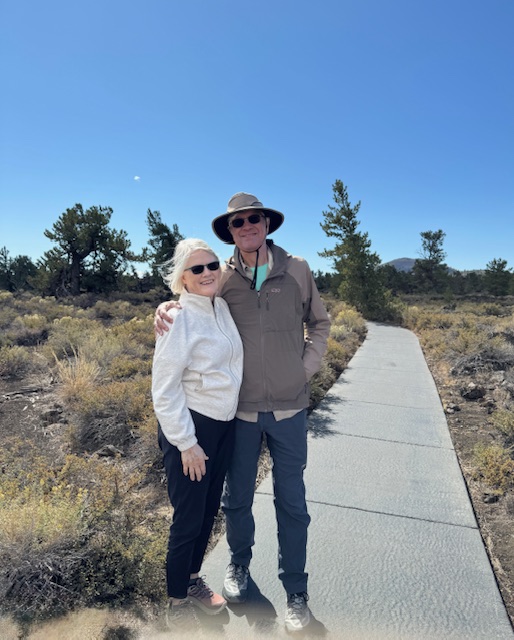
Walking through the Devil’s Orchard.

Dwarf buckwheat is an interesting plant…they look like white spots dotted almost evenly on the black lava rocks…
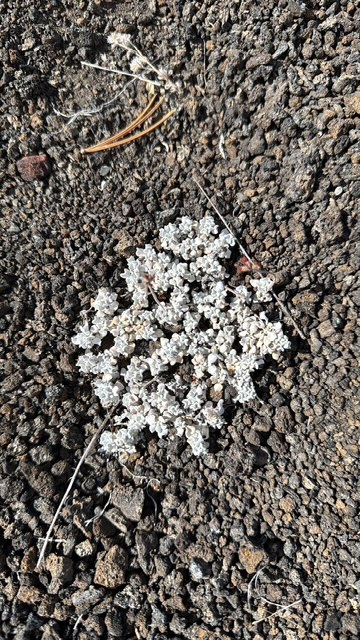
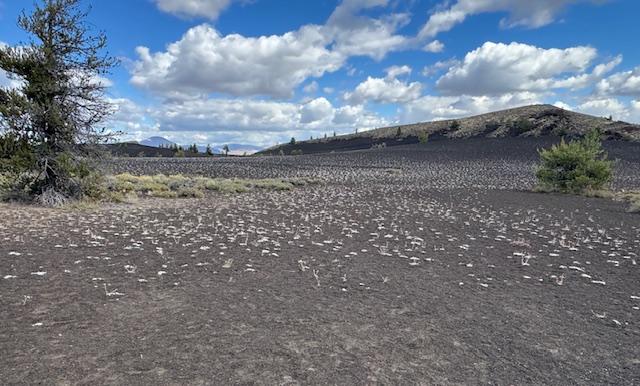
Dwarf Buckwheat
Dwarf Buckwheat growing like polka dots on the dark terrain.

There are numerous mini volcano formations known as spatter cones and cinder cones. We hiked up a cinder cone named Inferno Cone.
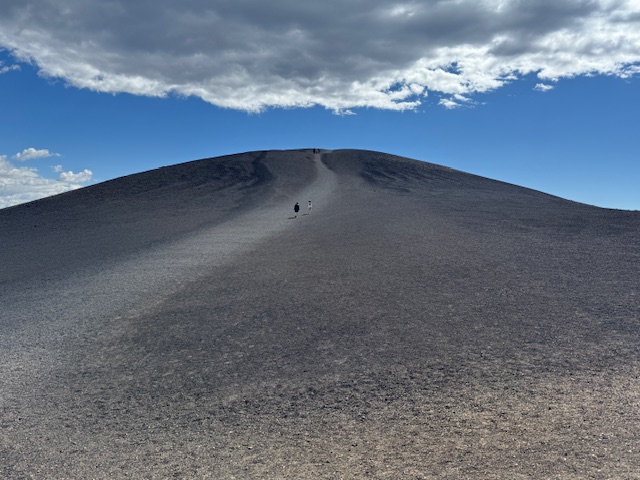
Climbing up Inferno Cone, 6181′.

A cinder cone is formed from the accumulation of gas-charged volcanic fragments (cinders) ejected from a single vent. 
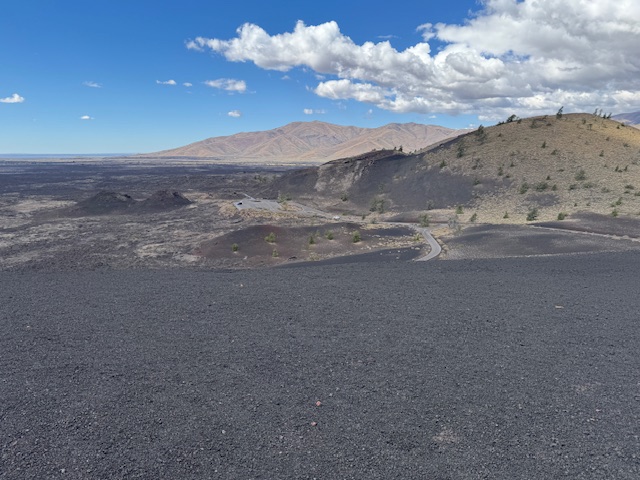
On top of Inferno Cone…the top is level, but the cinder line on this photo is where the steep conical sides meet at the top.

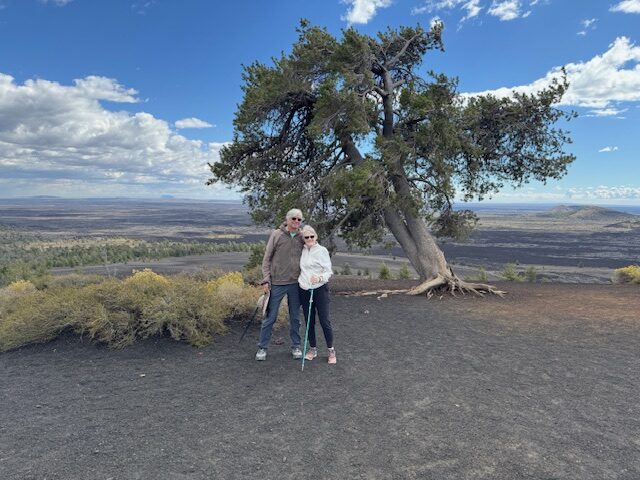
The hike was a steep climb, but worth the view at the top.
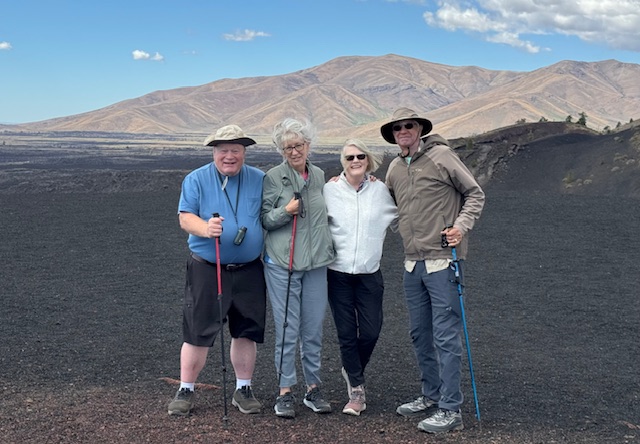
At the top on Inferno Cone.
It’s so hard to show depth in a photo. This tree is hanging over the edge of the cinder cone.

From the Craters of the Moon brochure, “astronauts confirmed that most lunar craters resulted from meteorite impacts, not volcanism. The craters of Craters of the Moon however, are definitely of volcanic origin…. from a series of deep fissures known collectively as the Great Rift that cross the Snake River Plain.”
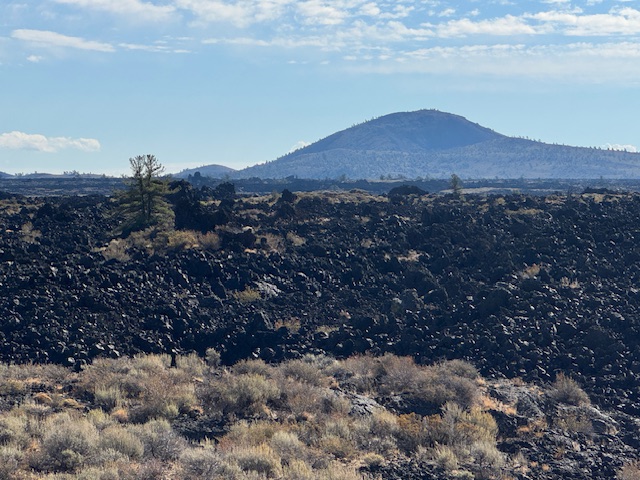
I may not have gone to the moon with Pan Am, but I think I am satisfied with seeing Craters of the Moon and its diverse landscape. When you enter the park and drive through this amazing area, it sure looks like you are on the moon!
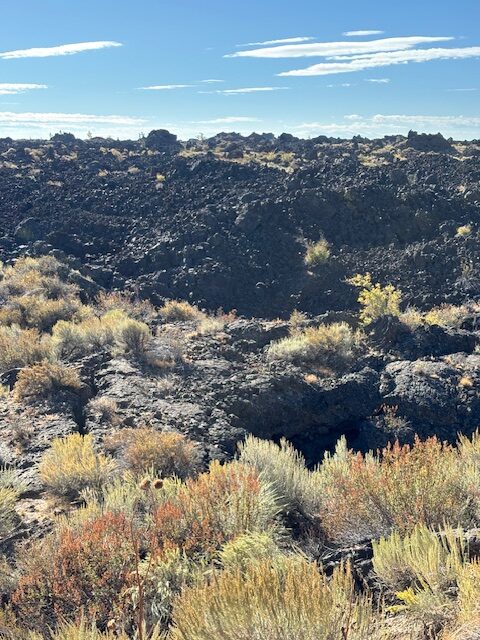
It was a great adventure. 

Although not related to the moon adventure, we visited another site in the Idaho wilderness worth mentioning.
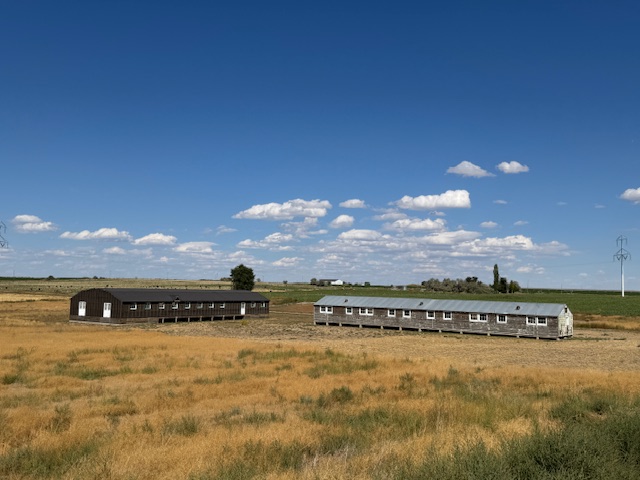
A barrack and the mess hall at Minidoka Internment camp.

The Minidoka National Historic Site is remnants of a Japanese Internment camp. We drove miles into the desert to find the visitor’s center and the remains of a few camp buildings. During World War II this camp held over 13,000 (out of 120,000) Japanese Americans who were forcibly removed from their homes and incarcerated without due process of law.
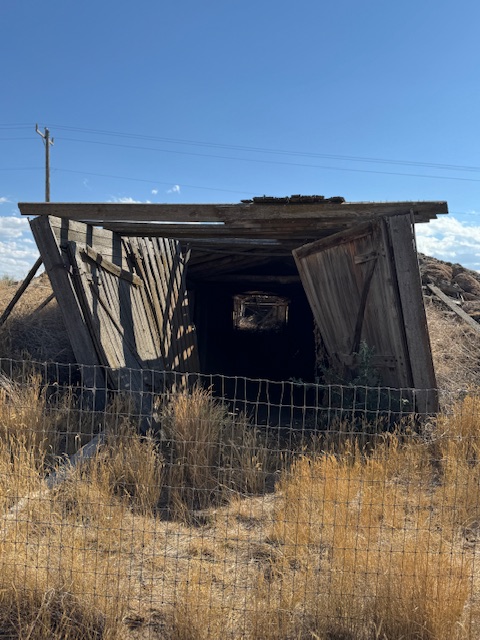
A root cellar built by those incarcerated to store crops grown at Minidoka. It is surprisingly large.

As most Visitor’s Center are, this one was full of information. And to make our visit even more interesting, the National Park ranger we talked with was a granddaughter of one of the incarcerated. Her grandfather was interned at this very Camp Minidoka. She was passionate about its history and she could answer any question we asked. The site preserves a real, but sad chapter in our history.
Idaho

When I told others we were taking a trip to Idaho most people asked why. I explained. “of the fifty states, Idaho is the only state I haven’t been in” (although my brother told me we were on a road trip with our parents and drove through Idaho to get to Washington when we were young. He is four years older so he remembers.)

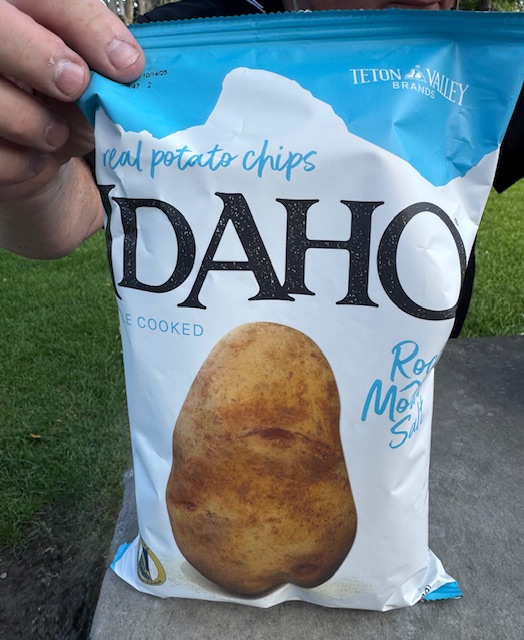
Delicious potato chips, made in Idaho.

Now, if people were to ask me, “Why Idaho?” I would say because it is a beautiful state with a lot to offer…including a large portion of the Rocky Mountains and 3,500 miles of rivers. We spent a lot of time by the Snake River.

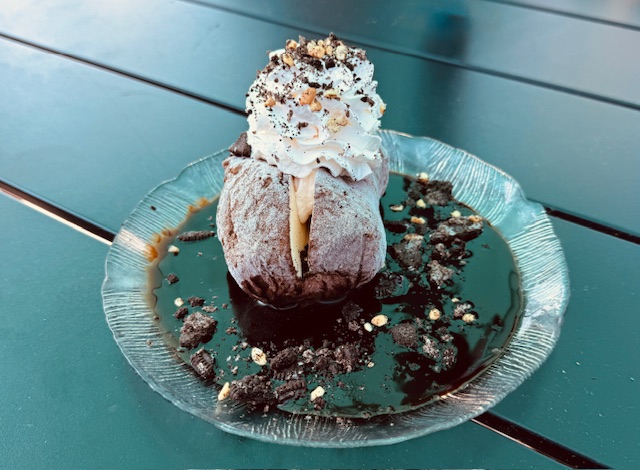
This ice cream is shaped to look like an Idaho baked potato with sour cream. It was fun to try.

Idaho is known for its potatoes. While doing some research I learned about Westside Drive-In in Boise, that offered potato-shaped ice cream. That was curious. We made the drive-in our first stop out of the airport. It was tasty treat and a great way to start our vacation. Then, we drove two hours to Twin Falls and settled into an AirBnB in southeastern Idaho.  We took day trips from there. 

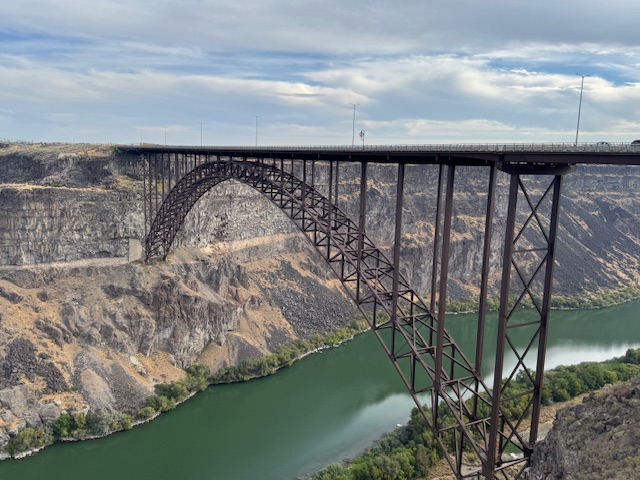
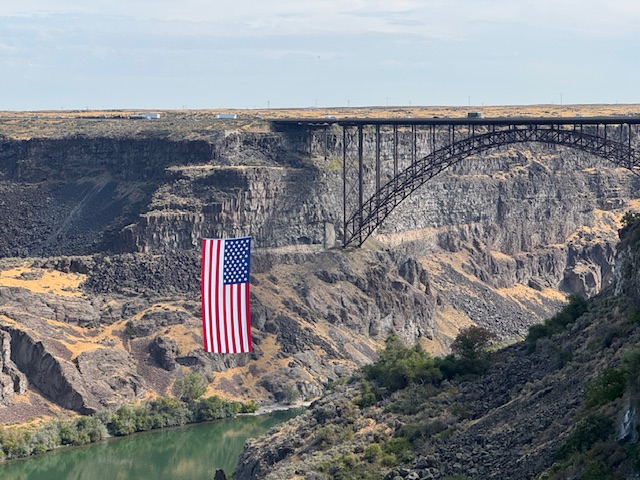
The amazing Perrine Bridge.

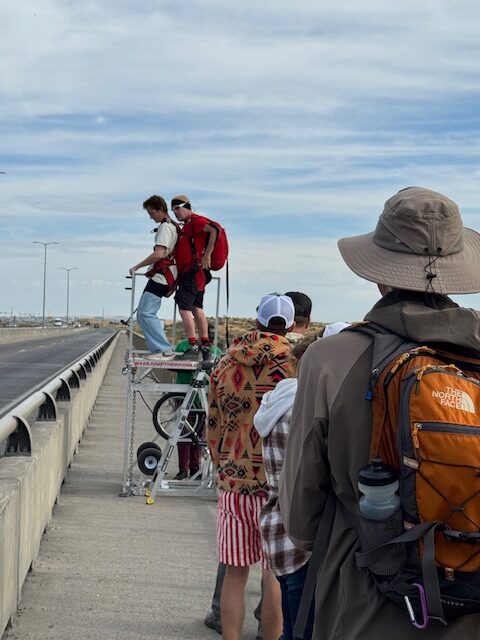
We spent a lot of time along the Snake River viewing canyons, gorges, water falls, and watching Base jumpers jump off the Perrine Bridge…counting on their parachutes to open and land safely on the ground 486’ below. It was fascinating to watch. 

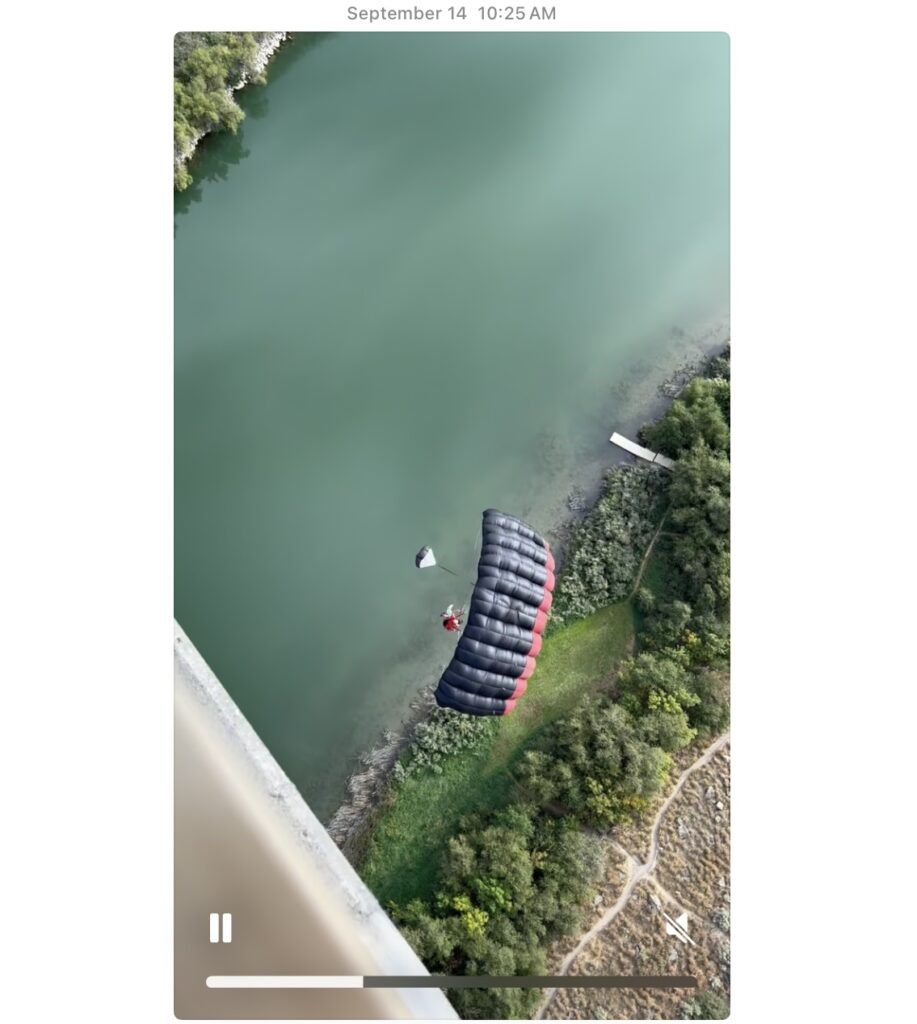
An experienced jumper attaches another person to his harness for a tandem jump. Unfortunately I couldn’t figure out how to post the video of this endeavor.
This screen shot is of the BASE jumper from one of the videos.

The Perrine Bridge is a stunning arch bridge and stands 486 feet above the Snake River, and has the distinction of being the eighth highest bridge in the United States. The Perrine Bridge attracts BASE jumpers from all over the world because it is one of the few structures they [jumpers] can use without getting special permits.

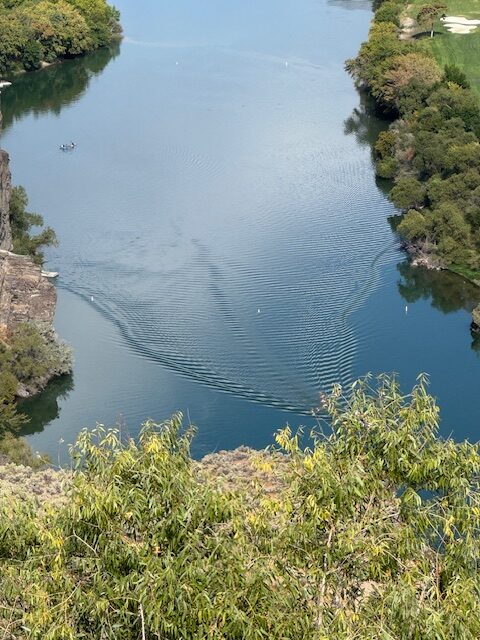
Trying to capture how deep this gorge is…this is looking down at the river…ripples from a motor boat and a kayak in the picture too.

(BASE jumping is an extreme sport where an individual leaps from a fixed object and uses a single parachute to land. The term “BASE” is an acronym for the four types of locations: Buildings, Antennas, Spans (bridges), and the Earth (cliffs).) We were fortunate to witness four jumpers, (one tandem) while walking next to the bridge.

At the visitor’s center, on the other side of the bridge, was a temporary 911 memorial display (we were visiting close to that date). The group hung a gigantic American flag on a cable over the gorge. It was impressive.

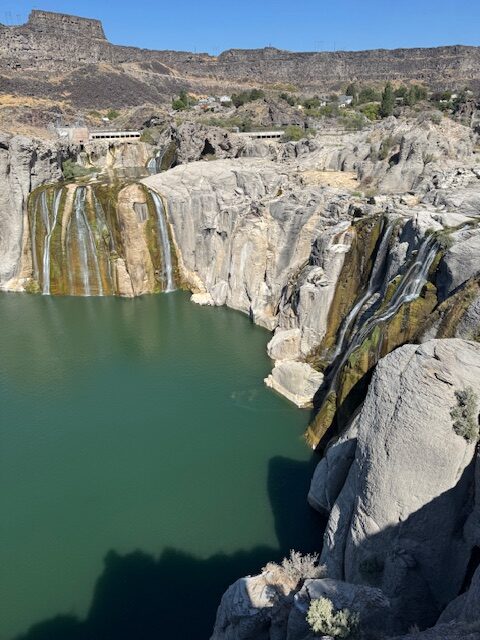
Shoshone Falls…there is not much water flowing over the falls this time of year. (Twin Falls is considered high dessert.) However, in the spring Shoshone Falls is called the Niagara of the west and the falls are gushing and look very full (in photos).

We picnicked at Shoshone Falls, and saw Perrine Coulee Falls and many other miscellaneous waterfalls.

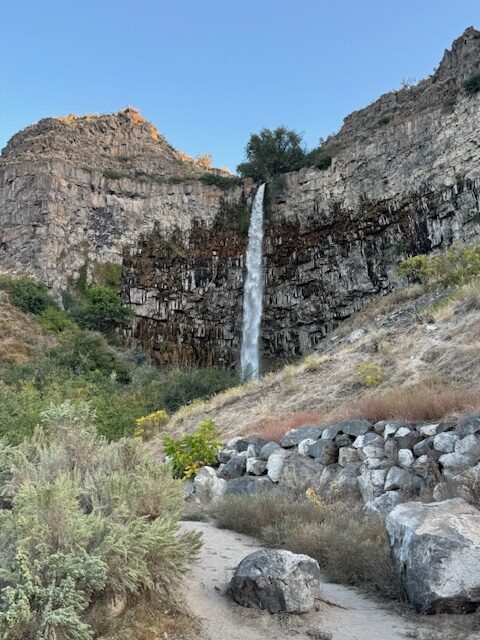
Perrine Coulee Falls.

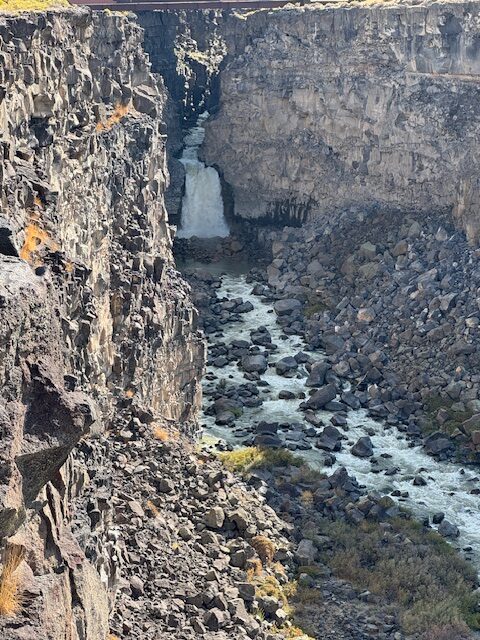
We also walked to the Devil’s Washbowl, a waterfall within the Malad Gorge in Thousand Springs State Park. 

The waterfalls in Malad Gorge.
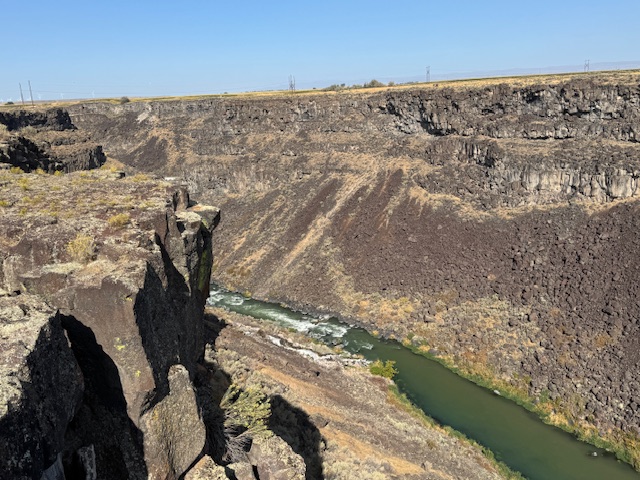
Looking down on Malad Gorge, formed by the Malad River that flows into the Snake River.

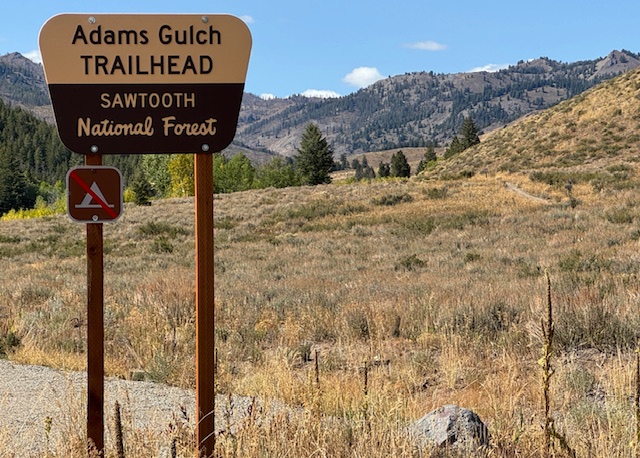
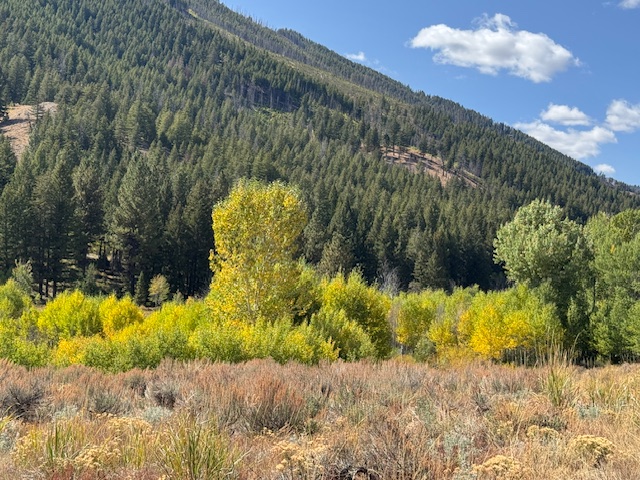
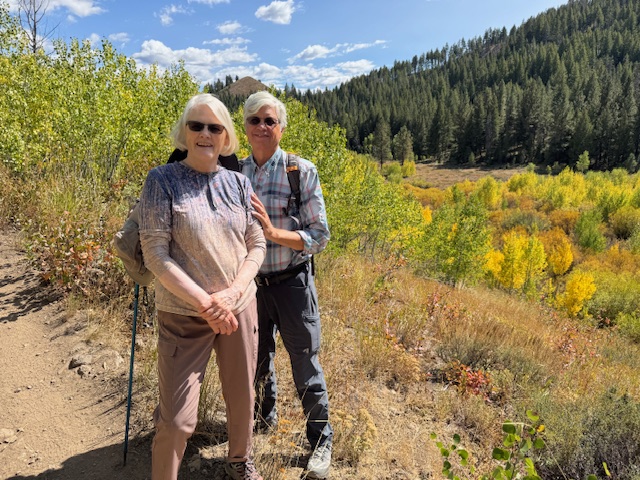
We hiked in Adams Gulch and caught the beautiful sight of quaking aspen trees, their leaves turning from green…to lime green… to a brilliant yellow, that contrast beautifully with the green evergreen trees.

The striking contrast of the yellow aspens and evergreen trees.
We hiked on a well-defined hiking, and mountain biking, trail.

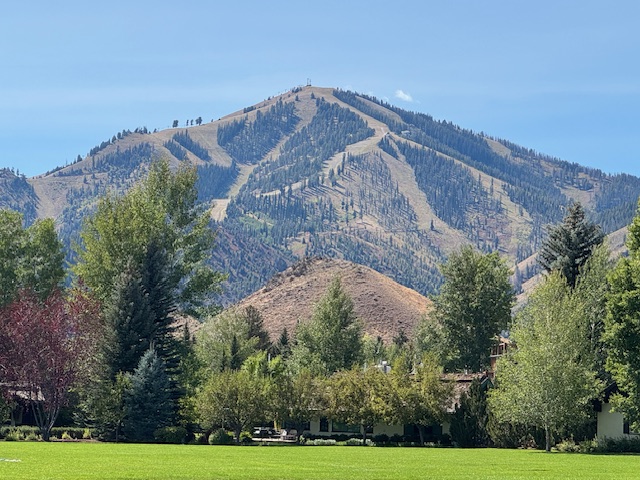
We drove to Ketchum, the ski village near Sun Valley Resort, nestled within the Rocky Mountains, specifically in the Wood River Valley at the base of Bald Mountain.

Beautiful Bald Mountain and the Sun Valley Ski Resort.

Sun Valley was America’s first destination ski resort.

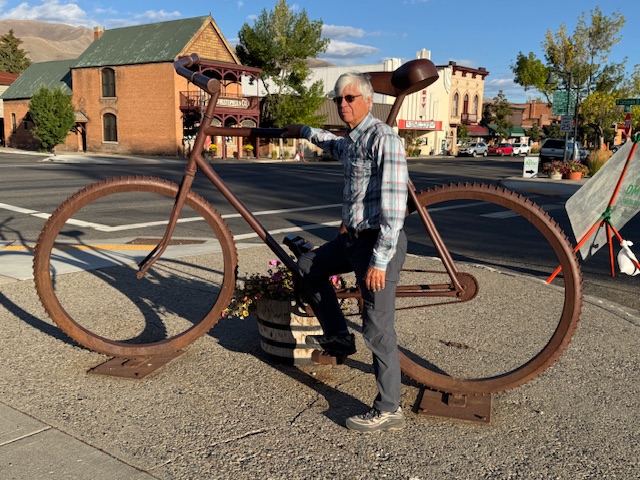
One big bicycle near Ketchum.

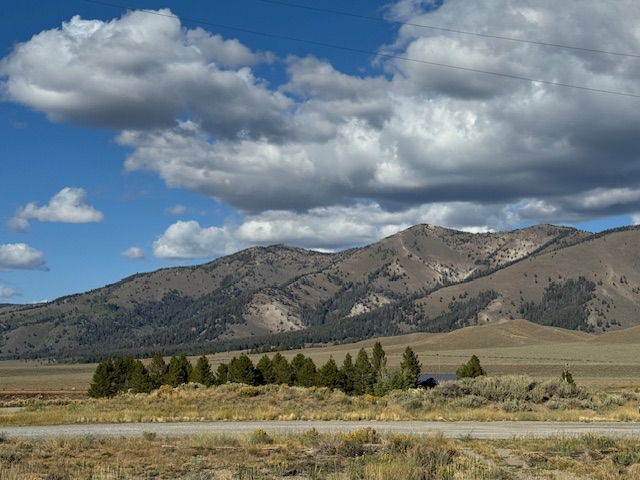
The mountains are inviting so we continued to drive north of Ketchum for several miles to see their majesty.

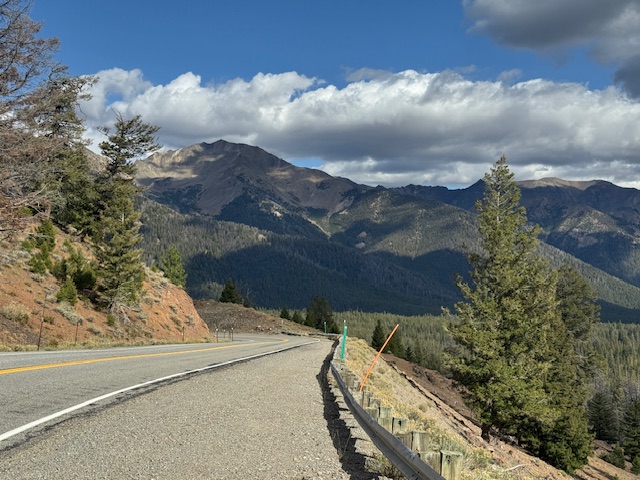
On our way up a mountain…and then down into a valley.
Looking at a valley from Smiley Lodge. We turned around here and drove back up the mountain pass.

We also spent time in Craters of the Moon National Monument. I will write about that another time. 

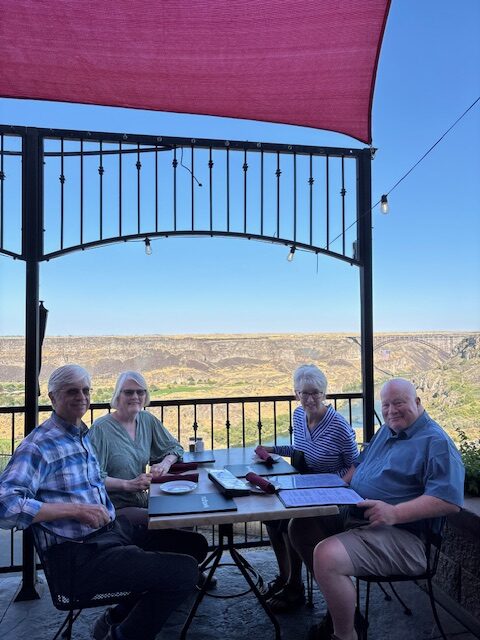
Our final evening, a farewell dinner on the deck at Redhawk Gastropub, overlooking the Snake River.

Our time went fast, as it usually does while on vacation, but I’m glad we were able to see a few of the wonderful sights in beautiful Idaho, and to make some fun memories there. 

And I did it! I can say I’ve been in all 50 states.