Flowers

My interest in flowers did not start when I was a child. Although my mom had indoor plants and some flowers growing outside, it didn’t seem to influence me much. I do remember beautiful window boxes filled with flowers outside the large picture window in front of our house– pretty to look at from the inside as well as the outside. I must have been influenced by that. I have had flower boxes on my decks for 40+ years.
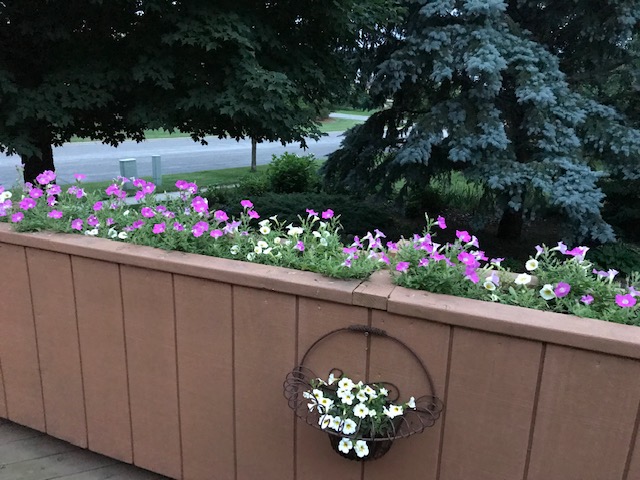
I plant petunias in my flower boxes…this deck gets full afternoon sun and petunias can take the heat! And they are colorful.

I remember my mother’s purple clematis (probably a wonderful, old-fashion Jackmanli) on the side of our house on McKinley Street, along with some other flowers.
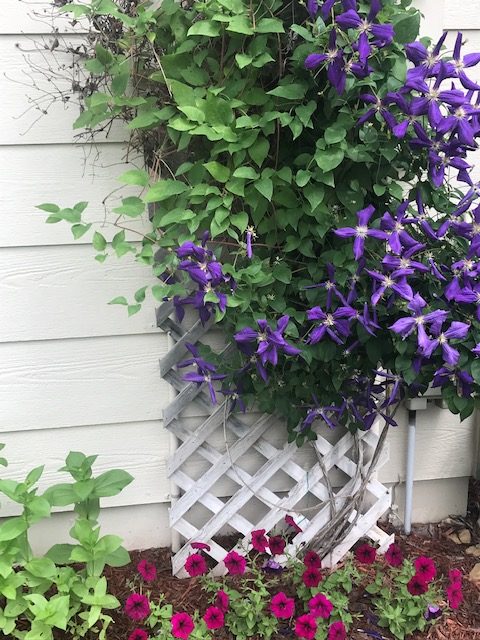
This Jackmanli clematis grows along the side of our house in Northfield.

There may have been a small garden plot in the back corner of my parent’s yard, but I don’t remember the kinds of flowers growing there. I did not have to weed flowers, but I did have to weed around the Poplar trees that lined our back yard. 
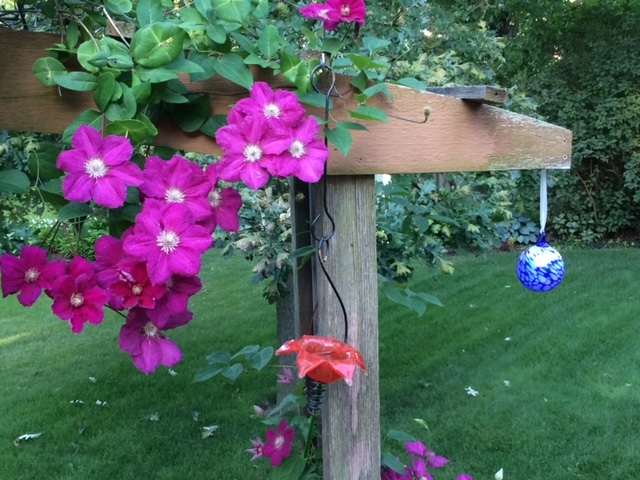
A different clematis climbing the arbor…the lilac bush is behind the hanging blue, glass ball…

My mother did plant a lilac bush and I took a small section from her bush and planted it at our house in Burnsville. When we moved from Burnsville, I took a section from that bush and planted it in our yard here in Northfield. It’s still growing and blooming after 27+ years.
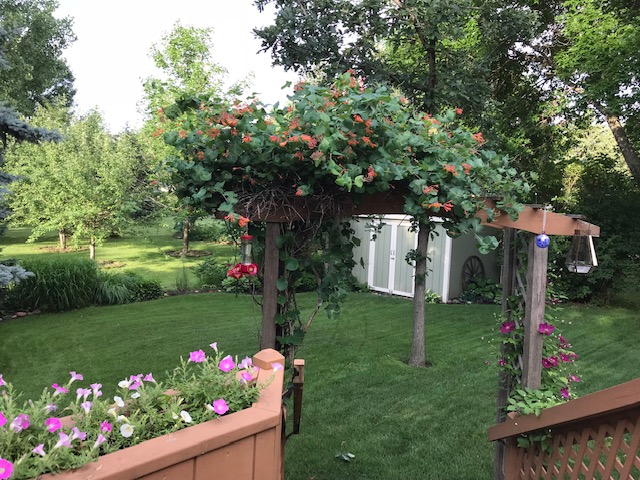
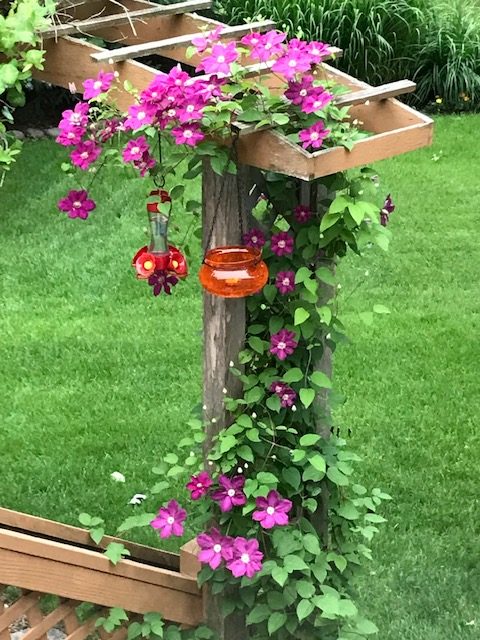
Looking off our deck into our back yard. The lilac bush is near the wagon wheel by the shed.
Such lush green…so amazing to look at right now while outside snow is falling and the ground is white!

I do remember, as a child, picking some tulips from a neighbor’s garden to bring home to my mom…then I had to turn right around and go apologize to Dorothy for not asking permission to cut some of her flowers. Whoops.
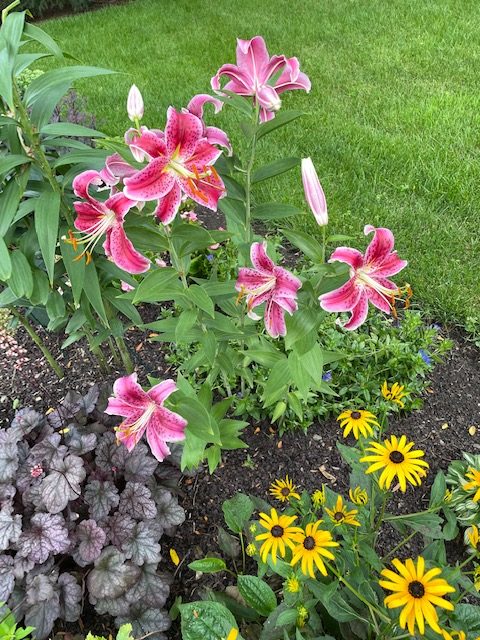
Star-gazer Lily, Coral Bells, Rudbeckia

Recently a prompt from a writing session led me to thinking about when my interest in flowers began. I remembered giving a friend an eight-pack of starter begonias as a housewarming gift. I have no idea why I picked begonias or how they would grow …but when I went back to her house later that summer there was pot on her front porch, blooming with beautiful begonias…the ones I had given her earlier that spring. I had no idea they would grow and fill out so much! This was back in high school. I’ve learned a lot since then. 
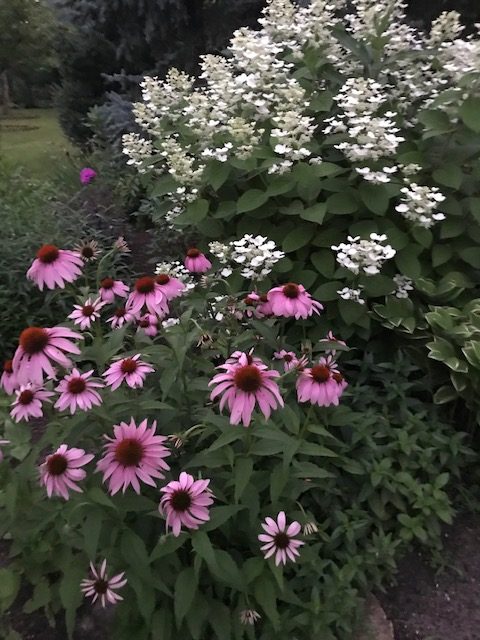
Cone flowers in front of Quick Fire hydrangea.
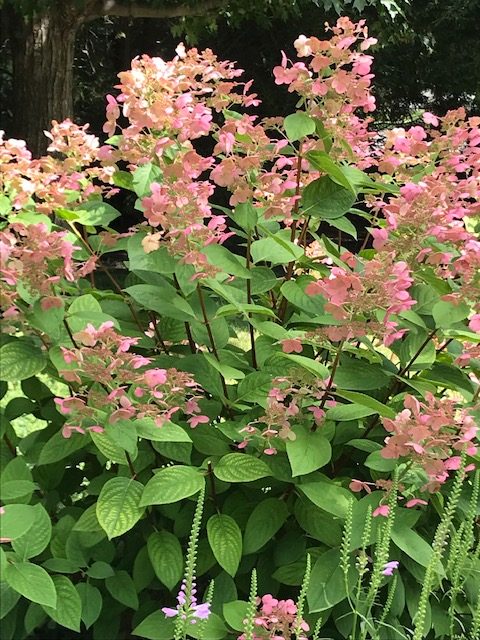
My Quick Fire Hydrangea, later in the season. When this hydrangea begins blooming it has white flowers (see photo with purple cone flowers above) and changes to mauve by the end of the season.

My interest and knowledge grew when we moved into a new house with a vacant yard, almost twenty-eight years ago. As I mentioned, I have always had flower boxes to fill with colorful annuals, so we included that into our deck plans, but I created a few flower gardens, too, and have been playing in the dirt ever since. 
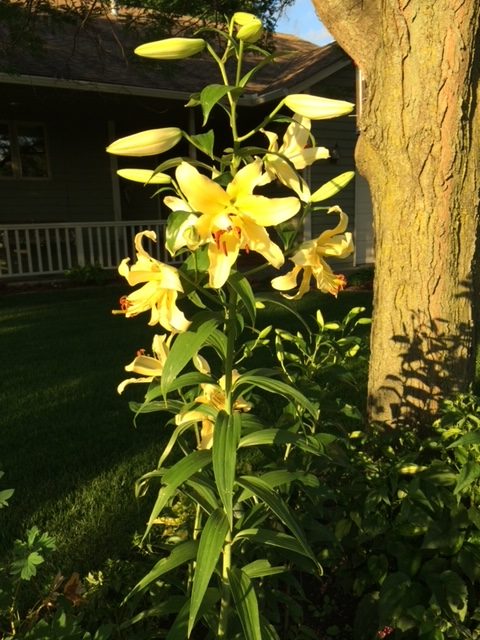
I call these corn lillies.

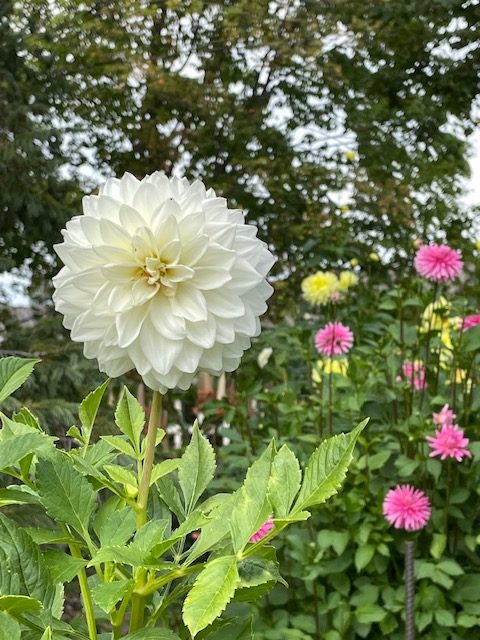
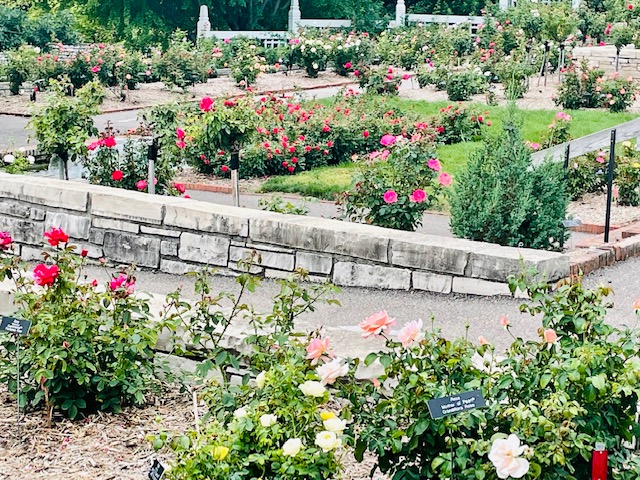
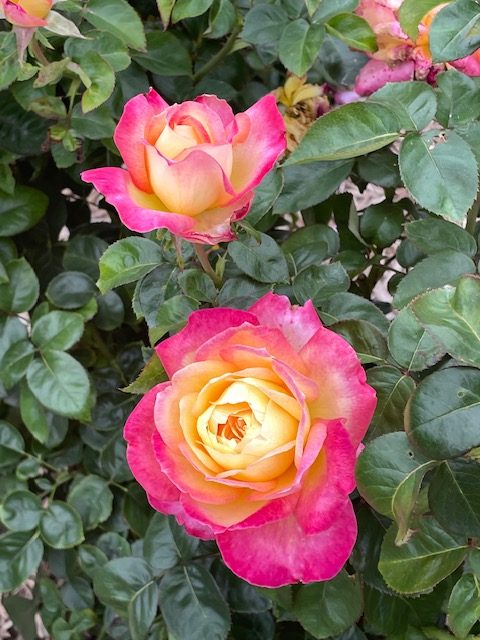
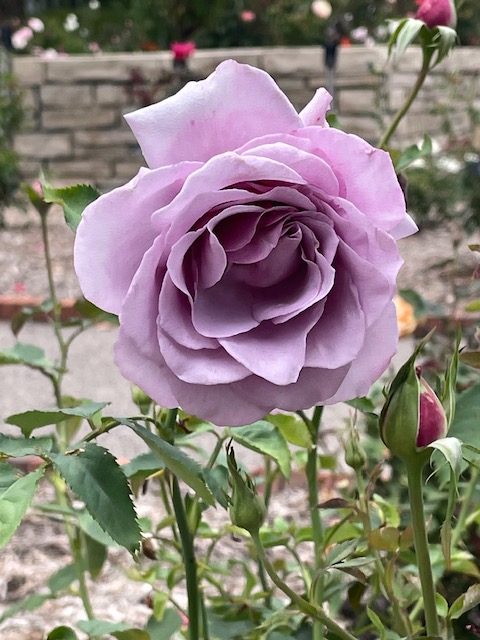
And now I love flowers…tending to them, admiring them in gardens all over the world, and taking pictures of them… 
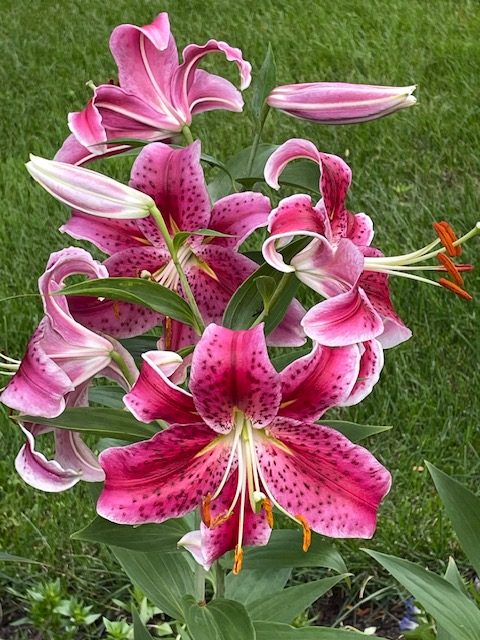
My favorite…Stargazer Lilies

(These photos were taken in my yard at different times and years.)
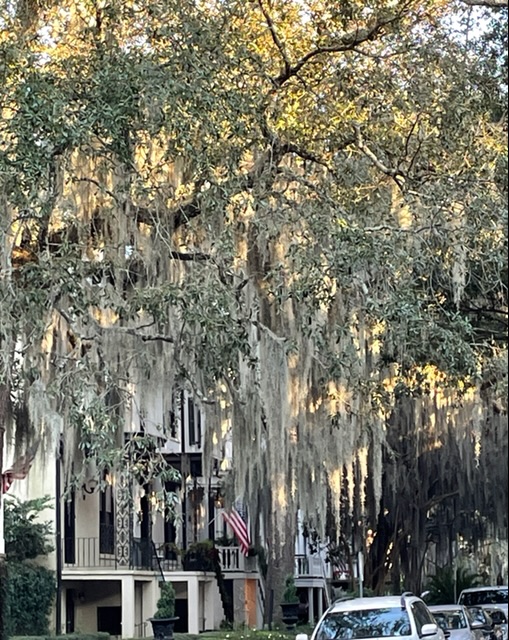
Spanish Moss and Southern Live Oaks

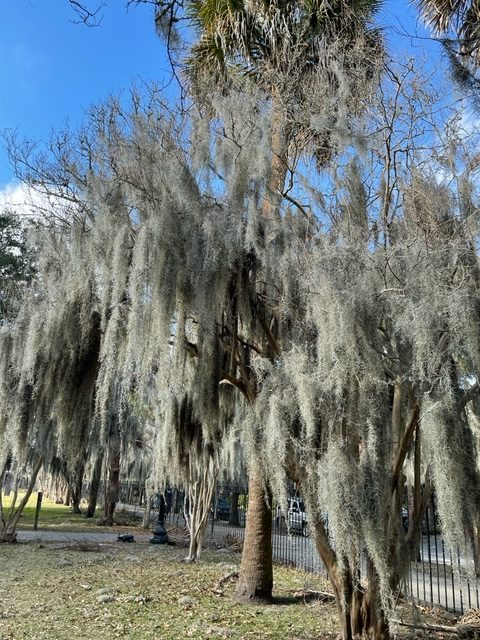
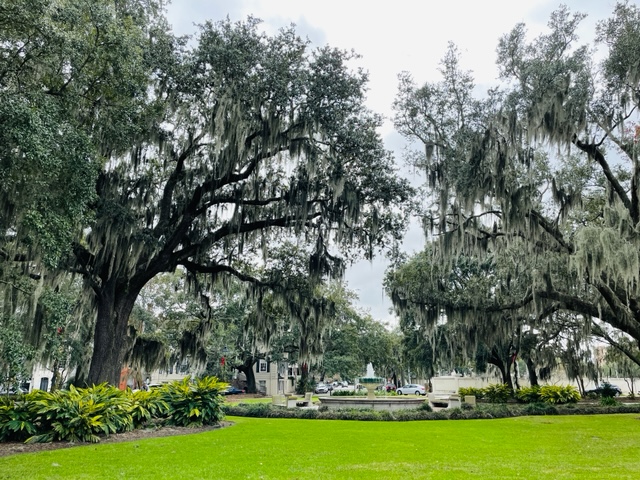
It hangs like icicles dripping from the trees…not a certain type of tree, but any tree. And it’s everywhere in Savannah, Georgia, where we took a mini road trip from our base in North Carolina.

The grey-green moss dripping from southern live oaks.

I admit it took me awhile to come to appreciate the appeal of these plants but I now think Spanish moss is a beautiful sight. It is not Spanish, nor is it moss. Its name is derived from French settlers naming it Spanish beard and later it became Spanish moss.

Spanish moss is a member of the bromeliad family, an epiphyte, or air plant. It uses trees only for support, but gets its nourishment from air, sun, and rain. It does not hurt the trees it grows on. 

A majestic southern live oak tree.

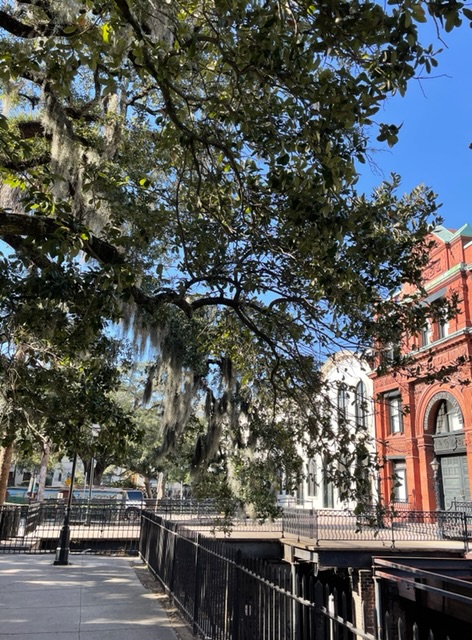
And even more beautiful is when you see the Spanish moss hanging in the southern live oak trees. The Southern live oaks are majestic trees. Although usually identified as evergreens, because live oaks retain their leaves nearly year-round, they are not true evergreens. Live oaks drop their leaves immediately before new leaves emerge in the spring. The leaves do not resemble the oak leaves we find in Minnesota.

Spanish Moss on a southern live oak.

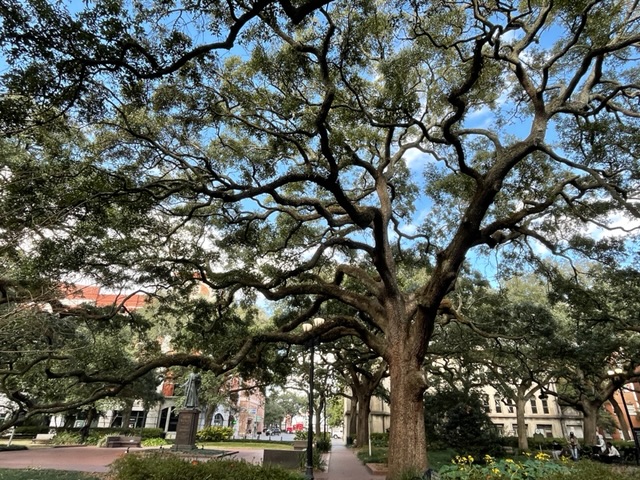
Southern live oaks grow to about 50 feet in height, with large looming branches hanging low and spreading far and wide, its limbs may spread out 100 feet or more.

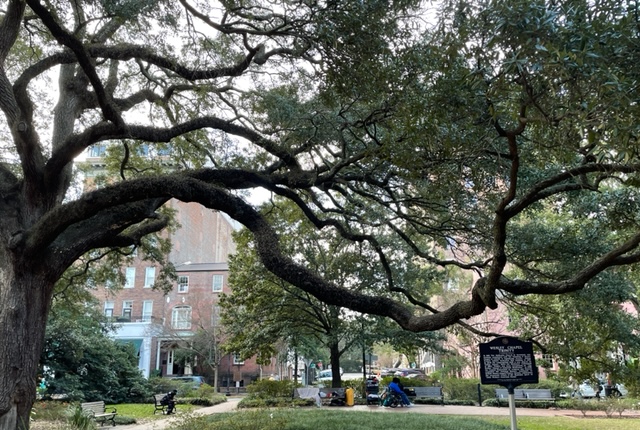
A beautiful, sprawling southern live oak tree.

They can grow to be several hundred years old. They are the official state tree of Georgia. Southern live oaks are magnificent trees, and found all over Savannah, and the deep south we’ve read. They are picturesque.

Orleans Square in Savannah.

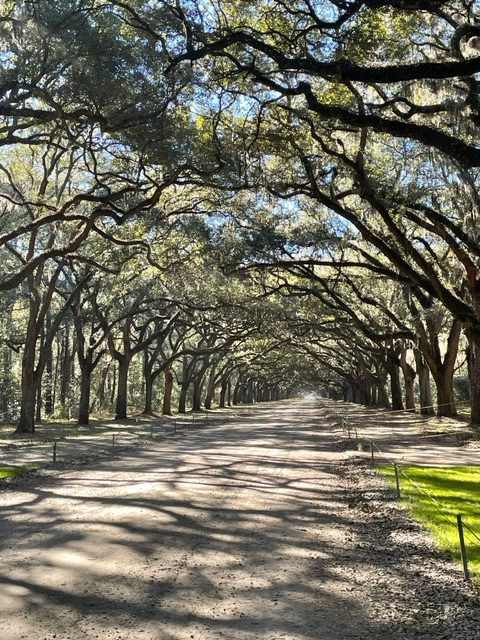
At one historic place we visited, Wormsloe, there was an avenue of southern live oaks lining each side of the road for one mile, forming a canopy overhead. I was in awe as we drove through this exquisite scene.

A mile long avenue of southern live oak creating a canopy overhead.

This is one of the prominent features I will remember about our enchanting trip to Savannah, Georgia: Spanish moss and Southern live oaks. 

Sunsets

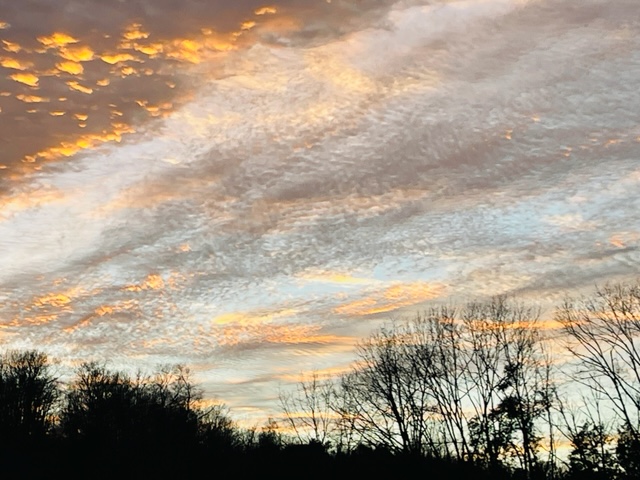
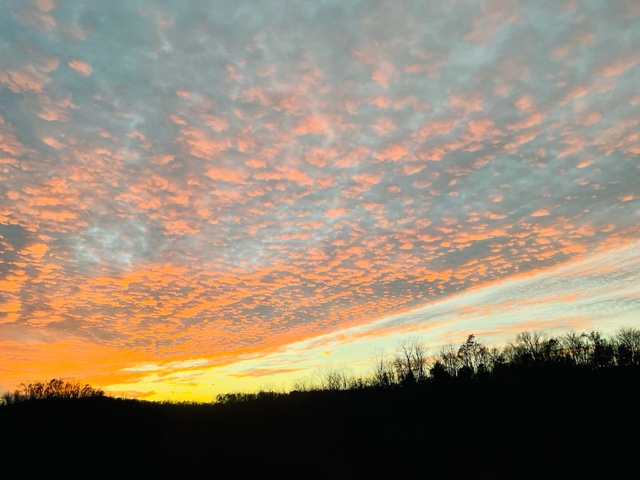
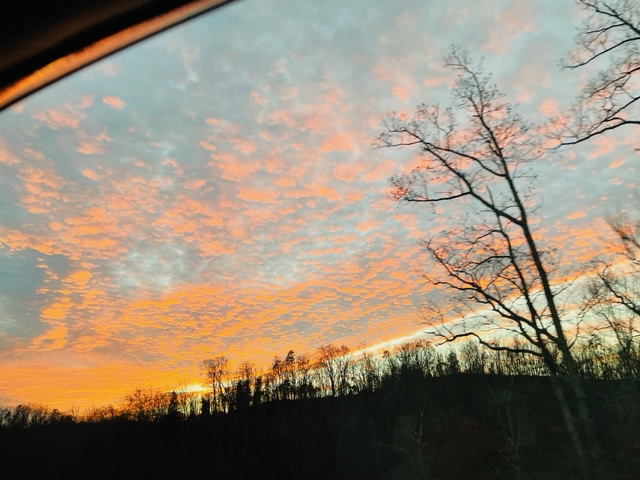
It felt like we were driving through a sunset.

We were on our way to visit our youngest son and his family in North Carolina. Another road trip…YAY. 

As the daylight came to an end on the shortest day of 2021, we found ourselves in the southwestern region of West Virginia. It was very scenic, and we were going up, and over, and down the “lesser” mountains (of the Appalachian Mountains), like a roller coaster, with a lot of curves too.

The sun was setting and the conditions were just right for a gorgeous sunset…poofs of clouds, reflecting the sun, catching the rays, turning red.

It surrounded us, and it lingered for a several miles! It was magnificent. I felt I was on a Disney ride, driving through a sunset. 

It was dark when we drove into Charleston, West Virginia where we stopped for the night. The next stop…grandchildren!

Cannon Valley Wilderness Park

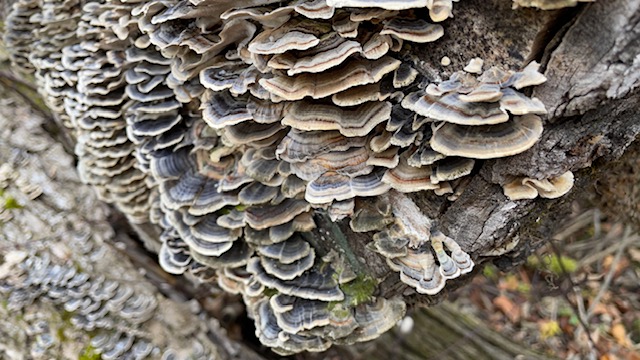
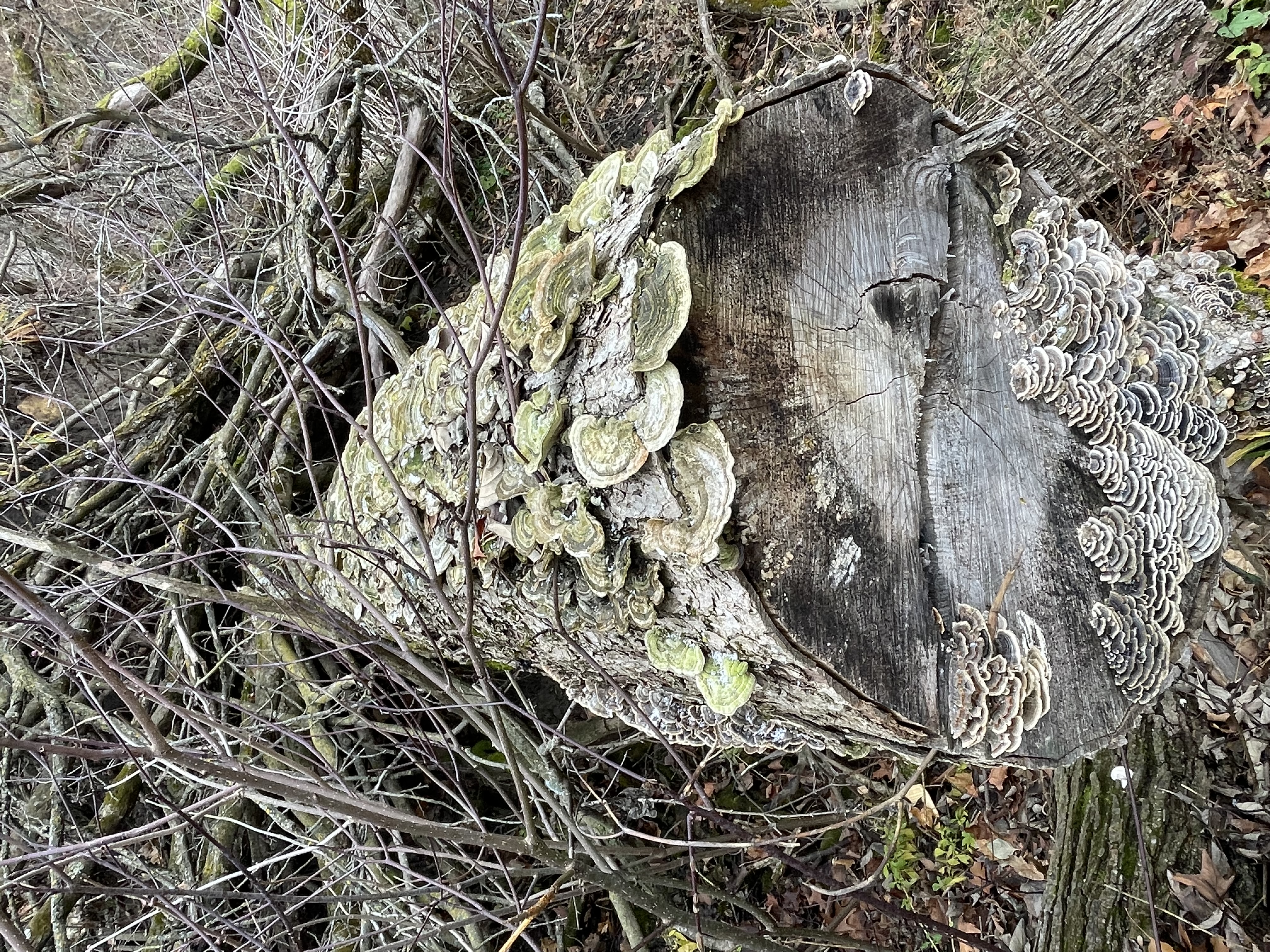
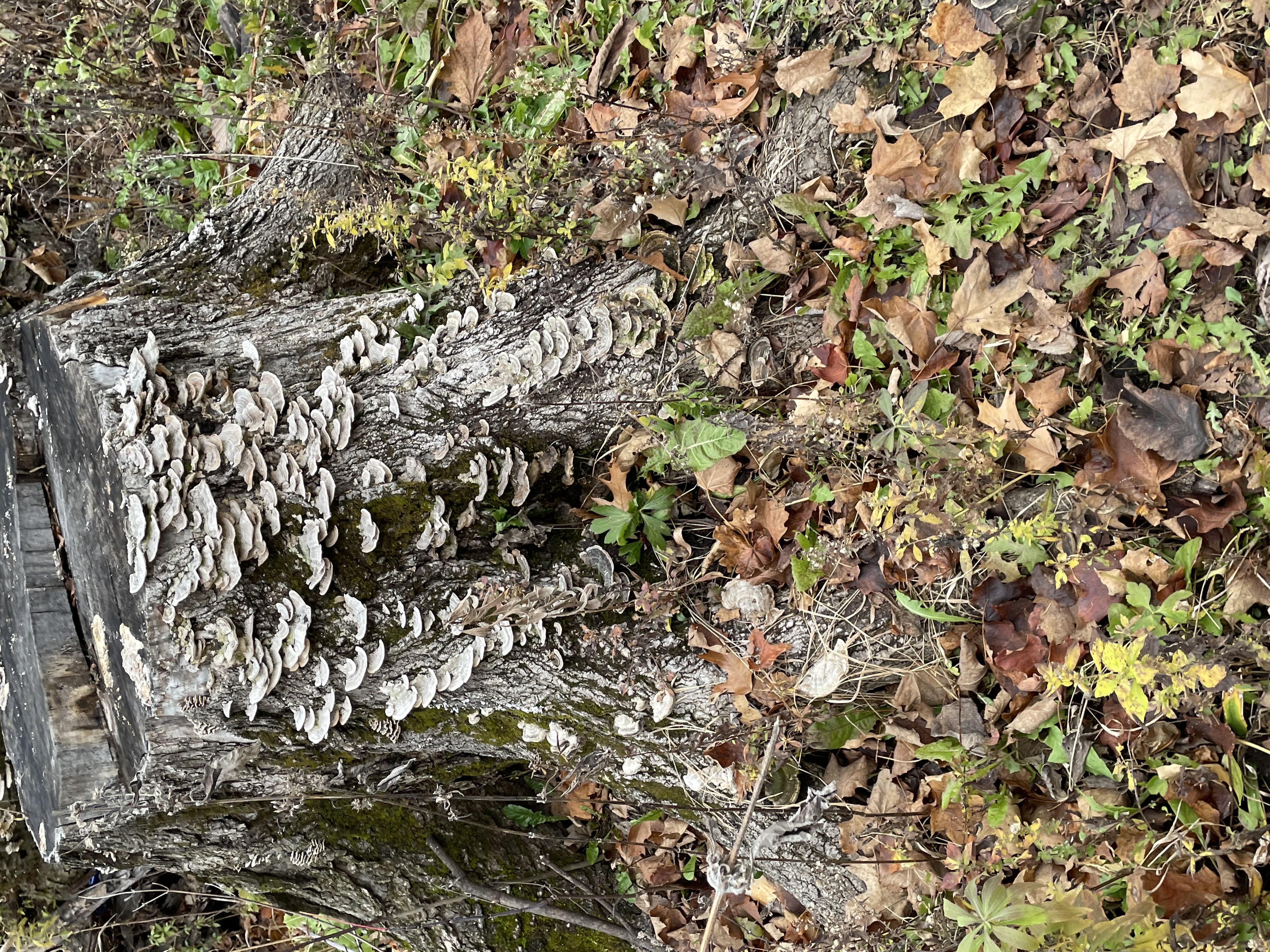
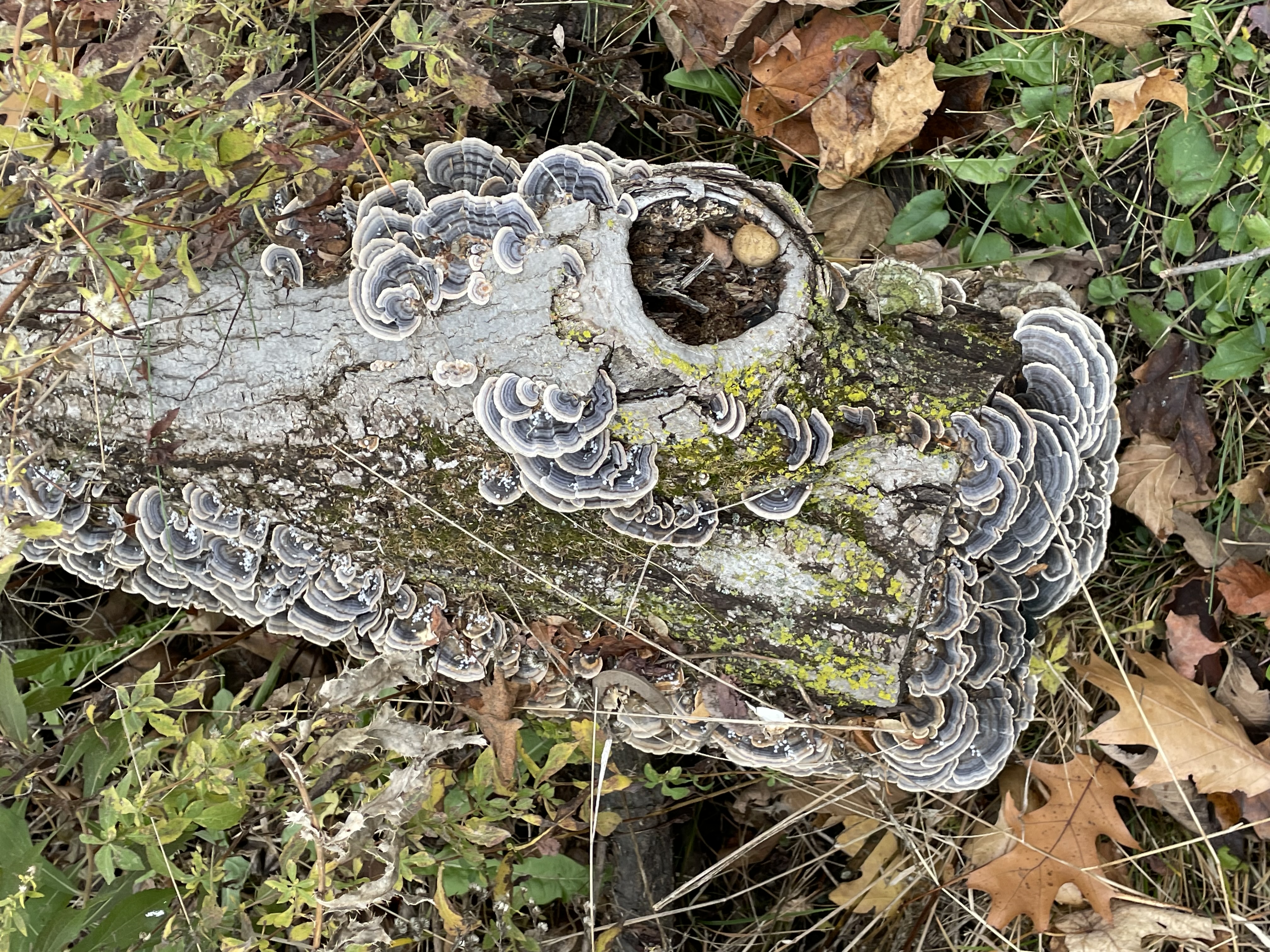
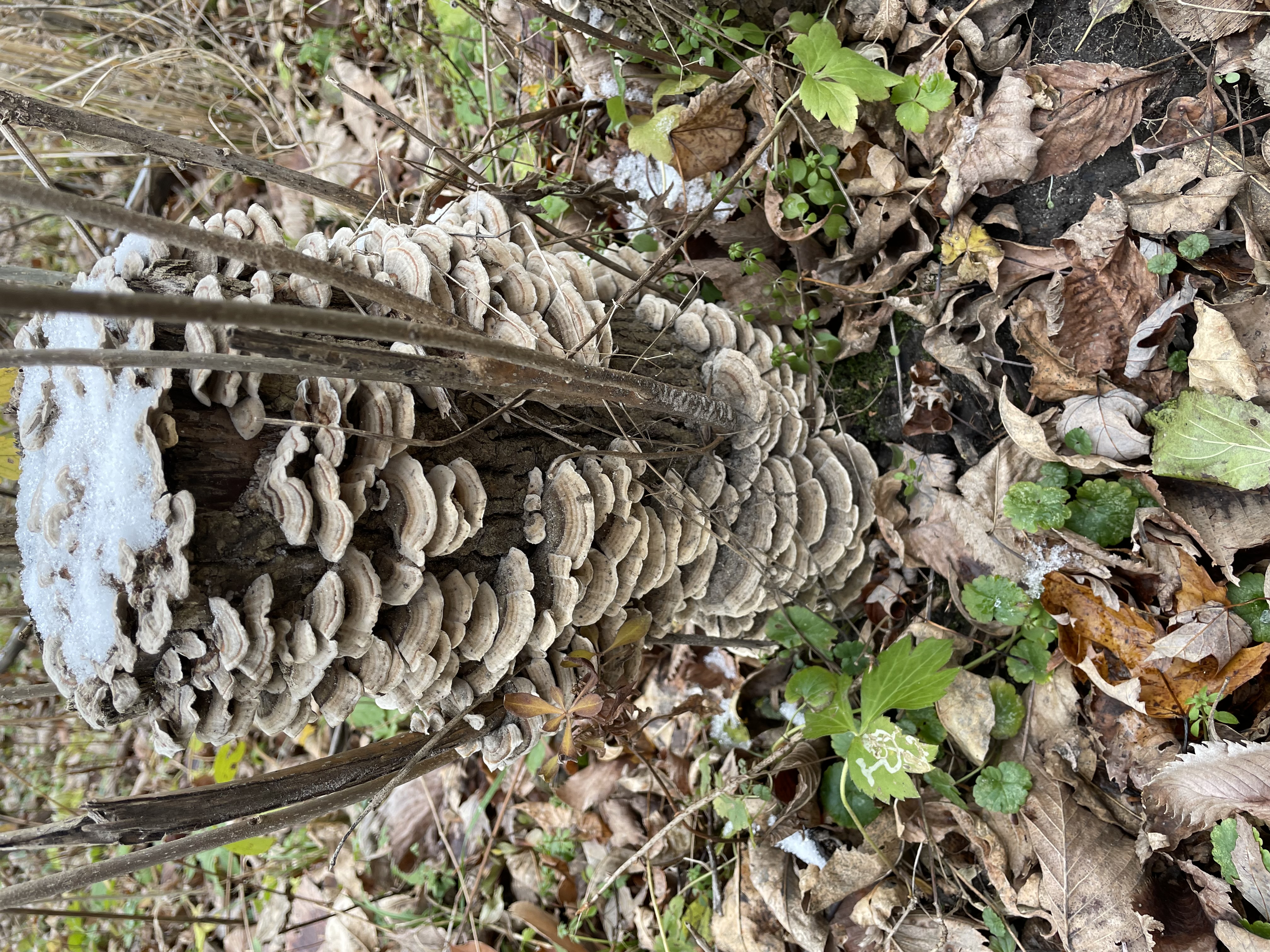
Fungi. I looked up the definition and still not sure exactly what it is – but I learned there are 144,000 known species. 

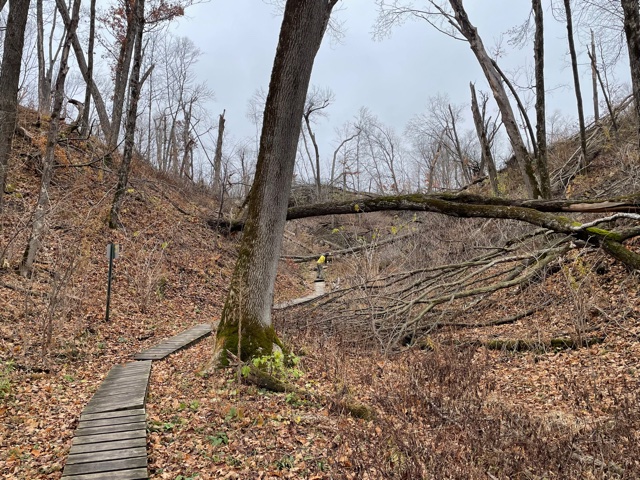
We saw a few of the species when hiking in the Cannon River Wilderness Area (north end) last week. We saw most of the fungi at the beginning of our hike, in the area where a swath from the 2017 tornado took down many trees. It seems to have created the right conditions for growth of fungi. 

We had not hiked this trail since before the tornado came through. There is still evidence of the tornado including many downed trees at the beginning of the trail, and a new parking area.

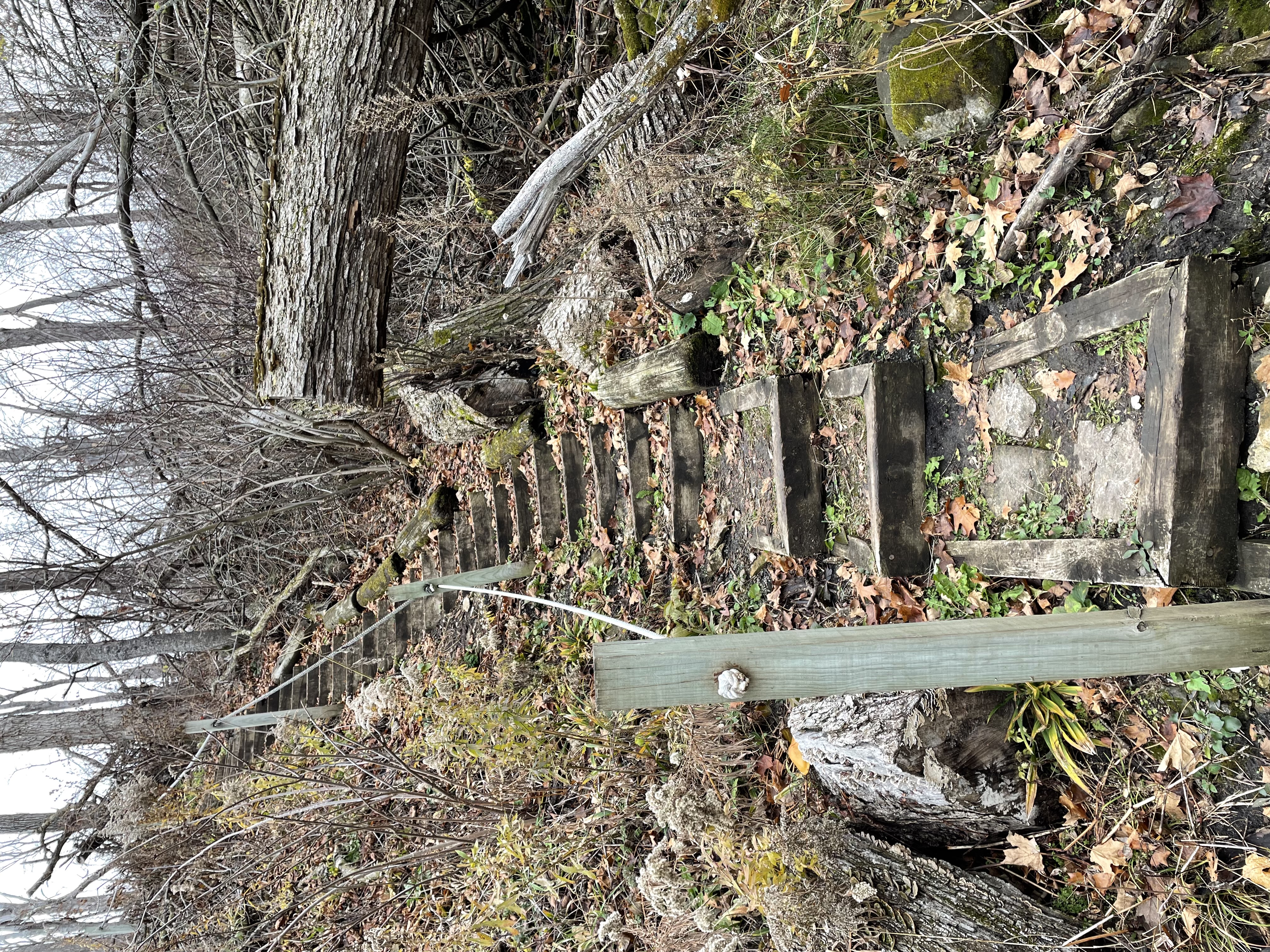
Looking up the stairs.

The steep steps leading down into the park remained intact, but a new rope railing has been put in place, which is a good thing to help get up and down the precarious stairs. 

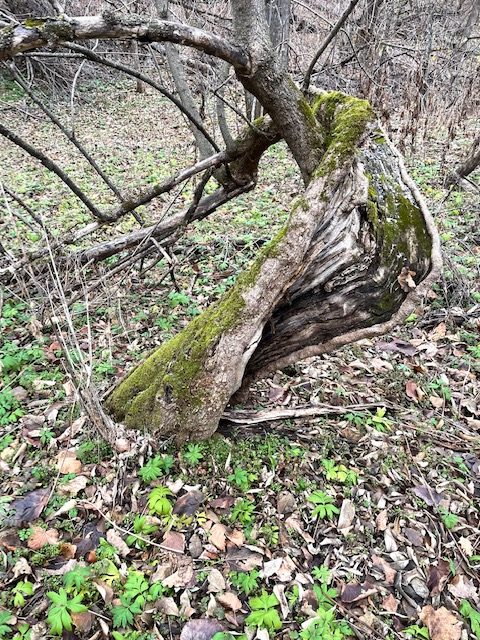
Twisted tree from the tornado?

This section of the  Cannon River Wilderness Park seems to have been taken care of at one time, but now seems neglected…probably due to lack of funds. There were a few minor repairs to one of the bridges.

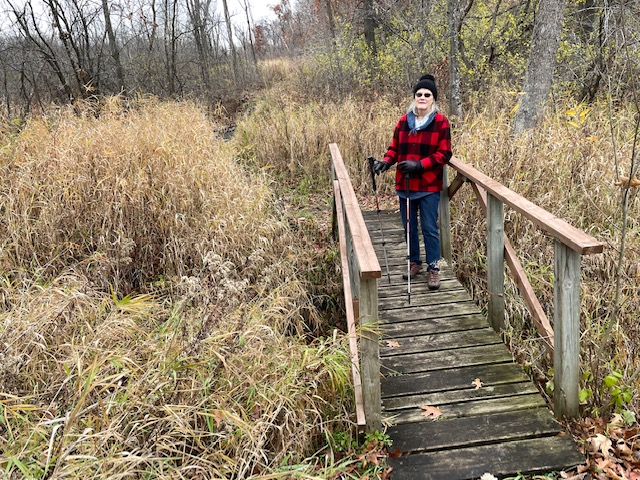
There are boardwalks over many swampy areas, but they are rotting away or warped, and sometimes dangerous to walk on. There is one newer bridge over the creek, built by a boy scout troop and installed in 2006 (according to the plaque). 

There was a good stretch of boardwalk in the park.

The trail was mostly clear all the way to the Cannon River…then at that point one would have to somehow cross the river to get to the other side, which connects to the Cannon River Wilderness Area on the southwest side of the river. We turned around and retraced our steps. 

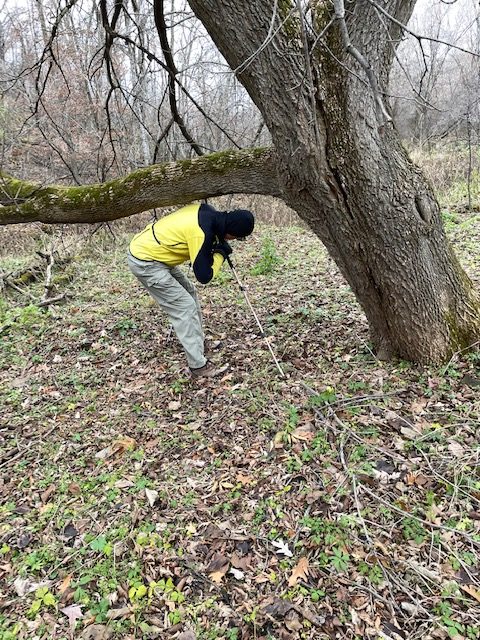
Ducking under….

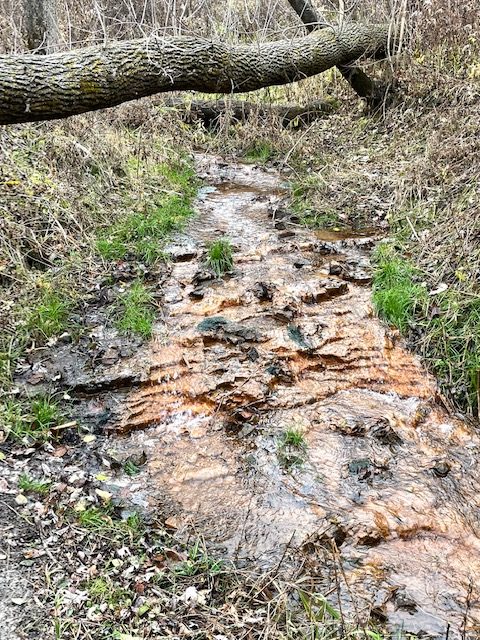
There were obstacles on the trail…some large branches we had to duck under, and some logs we had to step over, and a few streams to jump over… or carefully step on logs or stones to cross.

Forging the streams…

We enjoyed this interesting hike with all its intricacies, and its intriguing fungi.

The next day we hiked in the Cannon River Wilderness Area on the south side of the Cannon River. We have wandered the paths in the southern section many times. The trails are tramped on more, and therefore, well-defined. There are many more routes to hike in this section, including one trail along the river, which is always pleasant.

We did not see much fungi in the southern section of the park, but this was a fun one.

Olbrich Gardens – Revisited

Visiting Olbrich Gardens has become a tradition for me and my friend from Indiana, every time we meet in Madison, Wisconsin.

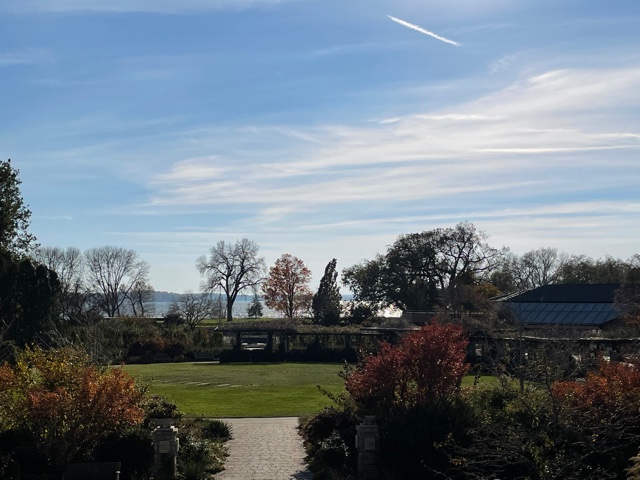
An overview of Lake Monona in the distance, from the climbing tower in Olbrich Gardens.

This botanical garden has an indoor, tropical conservatory, 16 acres of gardens in the outdoor area, and an interesting gift shop. The admission is free if you stay outside, and that is where we always want to be! Some years, when we have visited Olbrich in late October, there has been snow on the ground, but even then, it’s a pleasant walk.

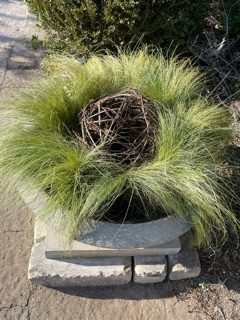
A stone pot with overflowing green grass and a wooden stick ball in the center makes for a beautiful visual display.

This year when we visited, there was no snow, an above normal temperature, and the sky was a beautiful blue with bright sunshine. Although it was later in the season, we did find a few lingering blooms before winter brings it to a halt. 

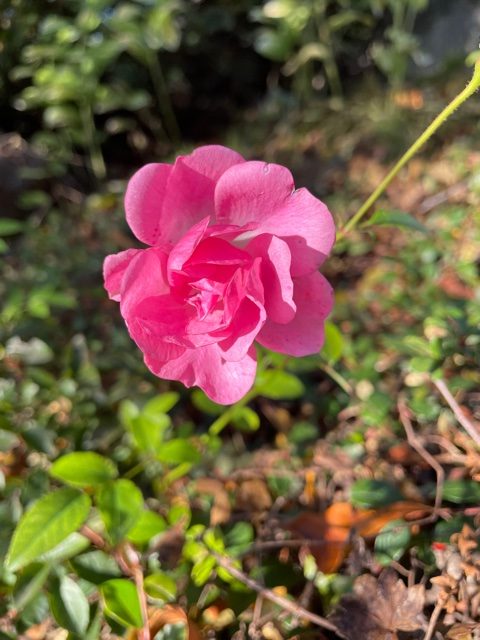
The sunlight on this pink rose blossom made it even more stunning.
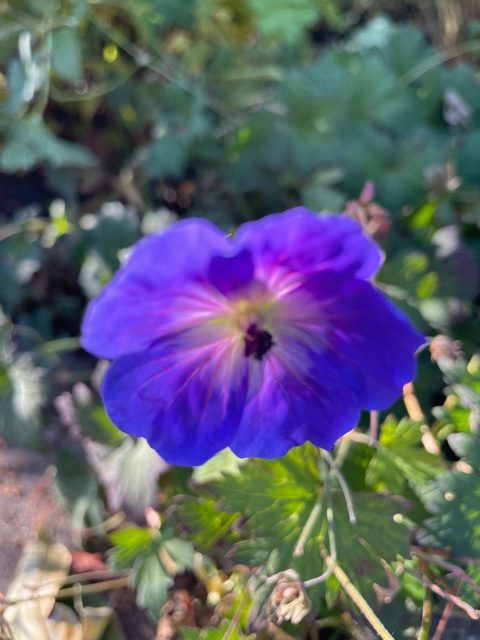
A lone wild geranium bloom.
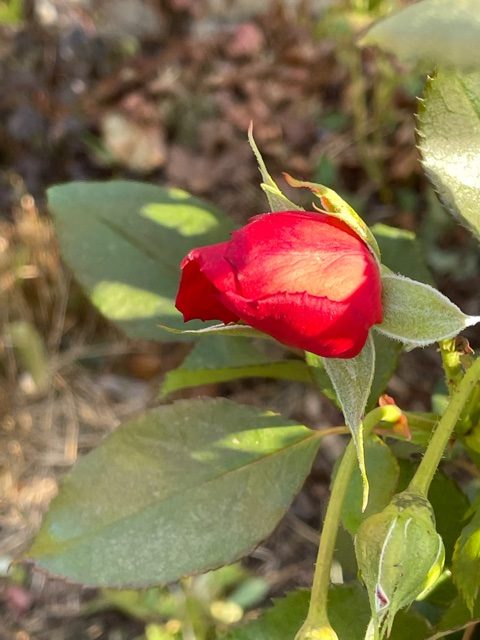
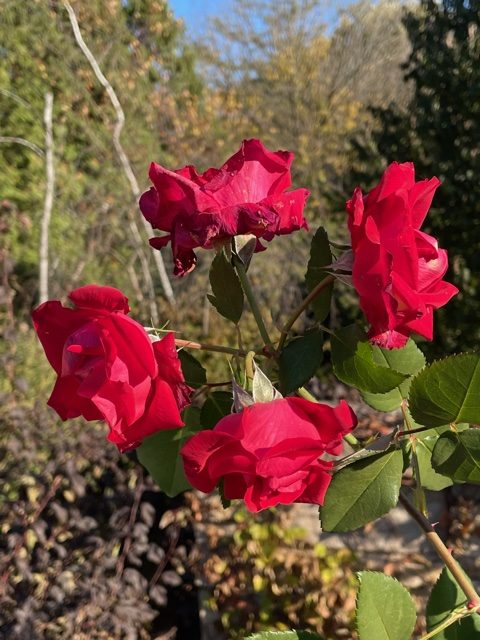
A sweet red rosebud.

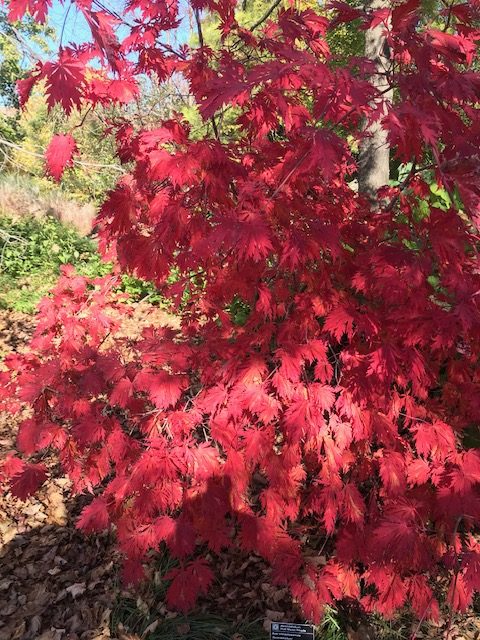
A couple years ago we discovered an interesting tree called the Full Moon Maple. We enjoy its fringed leaves and the vibrant red/orange color it turns at this time of year…and we like the name!

Full Moon Maple. Photo October 2020
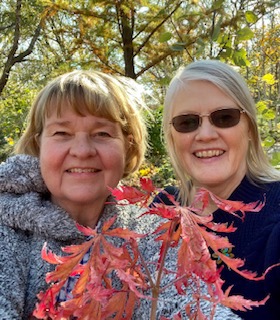
Frances and me near the Full Moon Maple. 2021

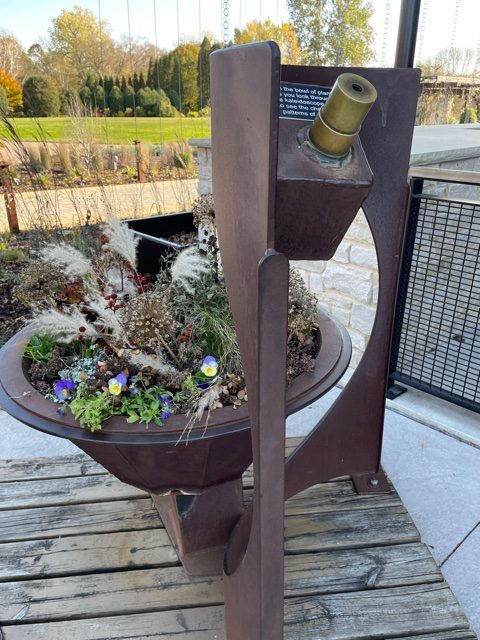
There is a permanent display with a kaleidoscope to look through onto a pot of colorful greens and flowers you can spin around. I always enjoy looking at the geometric patterns through a kaleidoscope, especially when focusing on plants at botanical gardens. I’ve seen these displays at other gardens. What a creative idea someone had.

The kaleidoscope focused on a pot of grasses and flowers.

The gardens are open to enjoy all year. There is a special event in December, “Holiday Express” that would be fun to go back and see…model trains, poinsettias and fresh greens. 

Four blooming red roses.

It’s an easy drive to Madison from Northfield, and Madison always feels welcoming and is easy to get around. It seems to have many interesting things to do and see, including many bike trails. We have more exploring to do!

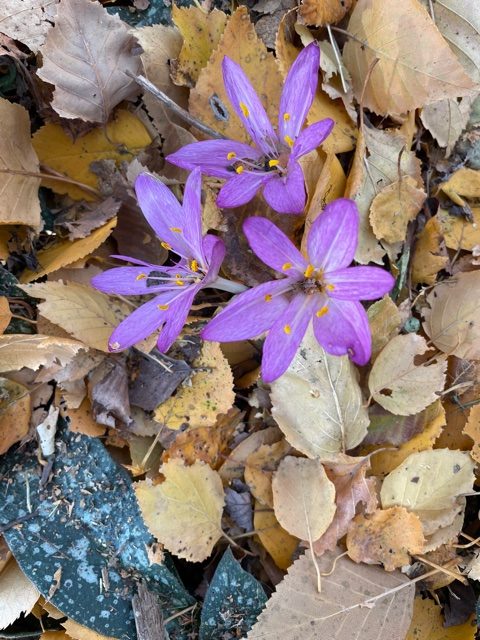
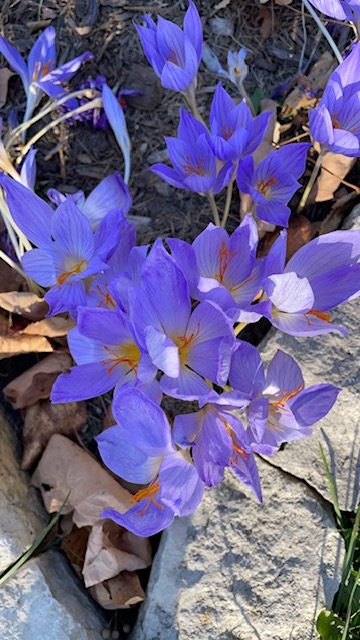
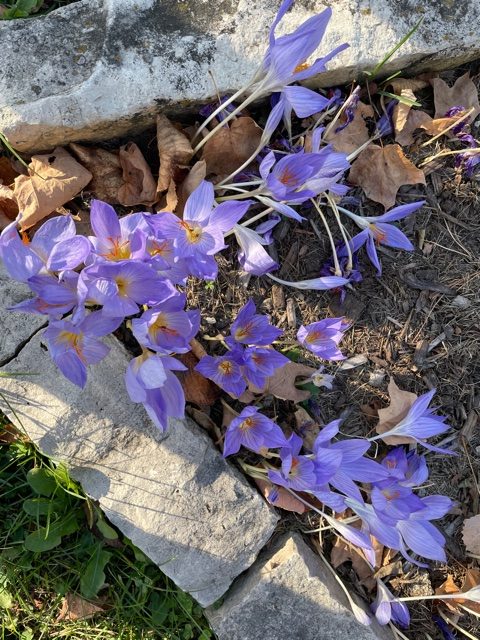
Another trio of fall blooming crocuses. I saw these for the first time a couple weeks ago. It was interesting to see more in another place, never having seen them before this year.

But, it’s good to know we can revisit Olbrich Gardens to find respite, and a peaceful place to enjoy nature, every time.

Confused Crocuses?

As I was on a walk this week I noticed something out of the ordinary…

Blooming crocuses.

beautiful, blooming purple crocuses. It was a surprise to see, what I thought were, confused crocuses because they were blooming in the fall.

After taking a picture of theses perky blooms, I looked on Google and learned there are some crocuses that do bloom in the fall…only they have no leaves.

Autumn blooming crocuses with no leaves.

This was a pleasant sight to see while walking on a beautiful, unusually warm, fall day.

.

Sunrise Over Lake Superior

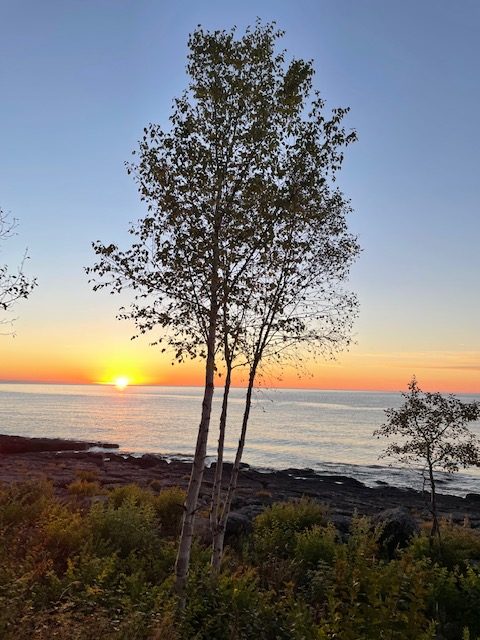
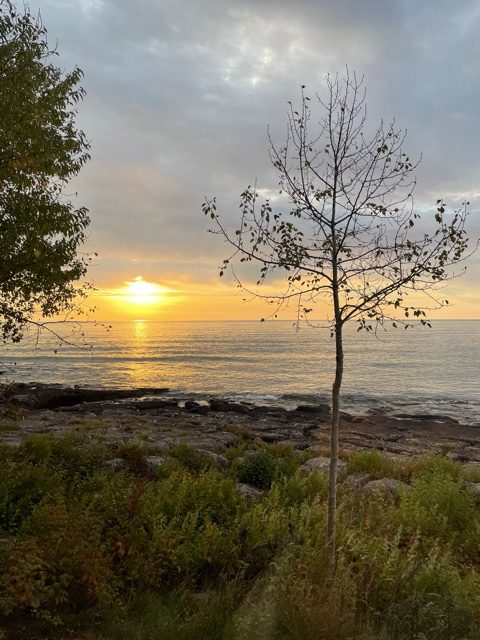
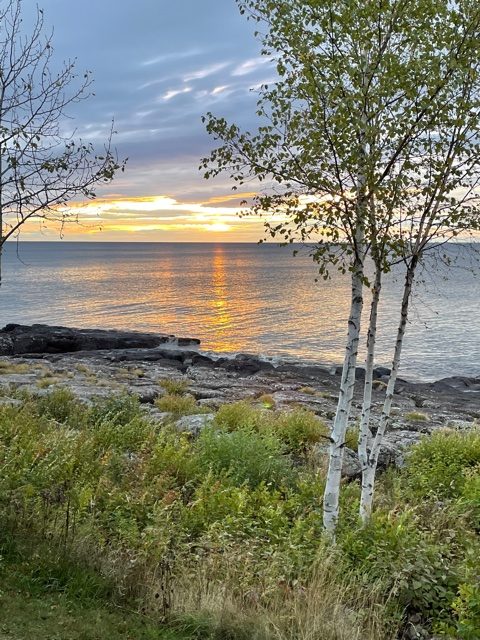
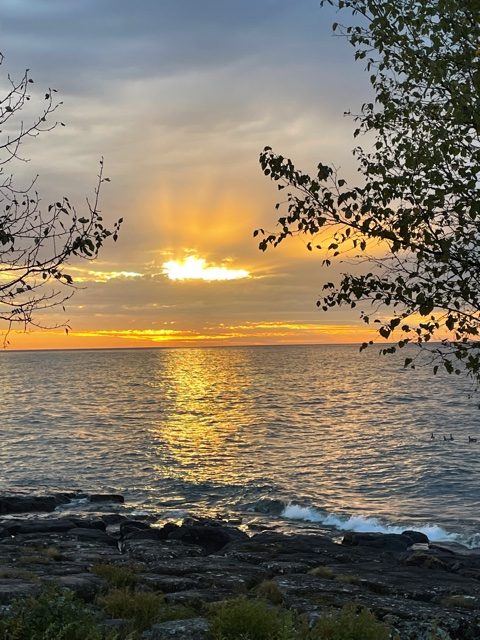
One of my favorite things to do on our annual trek to the north shore is to watch the sunrise over Lake Superior.  I set my alarm – just in case – so I don’t miss it.

Thursday morning…

I love sitting silently, waiting for the sun to come up. It is such a tranquil and quiet time…a beautiful time of enjoying God’s magnificent creation, a wonderful gift. There is a unique sunrise for each unique day…and it can change within minutes.

Friday early morning light. (6:52)
Then Friday’s early morning light filling the sky. (6:53)
Friday’s sunrise. (6:53)
Still Friday Morning… (7:36)

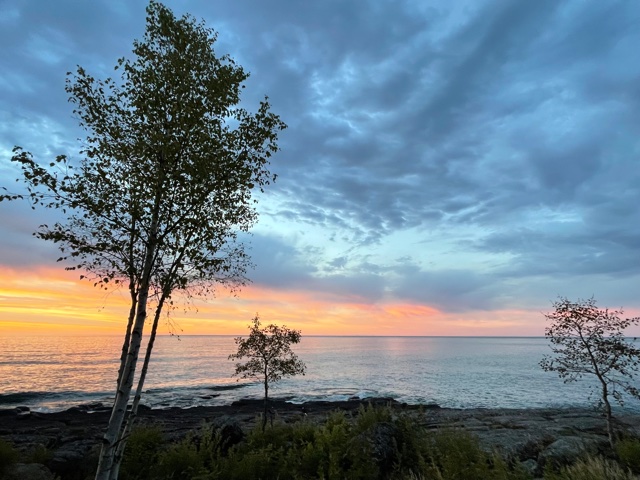
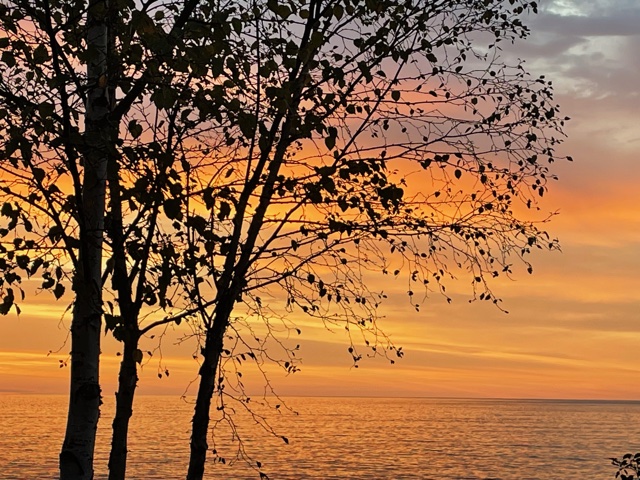
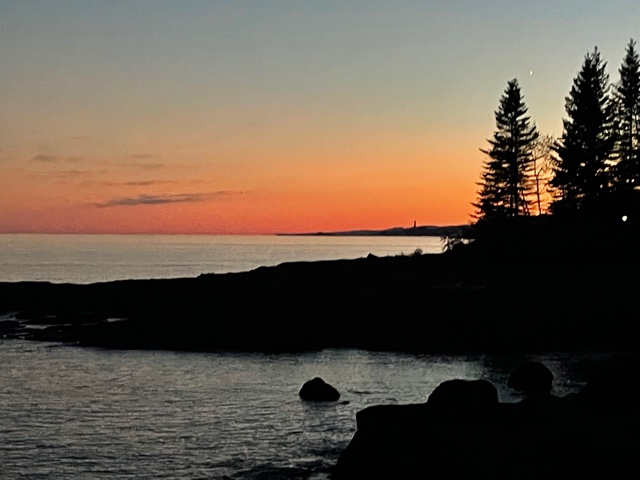
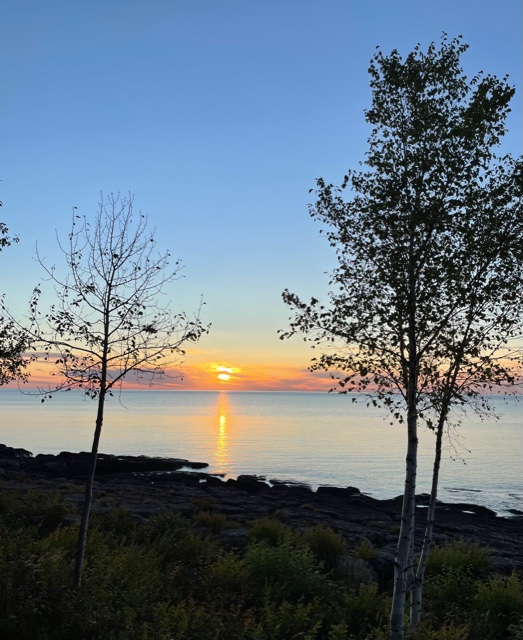
We don’t see sunsets from the location of our cabin, although sometimes we can see some color in the western skies at sunset, creating silhouettes of the trees and rocky shoreline near-by.

Towards the western sky Wednesday evening…sunset silhouettes.
Saturday morning’s sunrise.

In a previous post I showed photos of the moonrise we sometimes see over the lake. We are grateful for those spectacular views too.

Sunday Morning Sunrise.
The sun on Sunday rising through the clouds…
“The heavens declare the glory of the Lord!”

Words cannot describe the feelings evoked witnessing the wonders of the sky.

Monday morning sunrise.

I’m grateful for the sun that rises faithfully every morning, and to see it rise over Lake Superior is a special treat!

Minnesota Landscape Arboretum

We attended a wedding reception at the Minnesota Landscape Arboretum this week.

What a lovely place for the special event. It was held outside in one of the picnic shelters with beautiful scenery all around. We were also invited to come early and enjoy the September gardens in bloom at the arboretum.

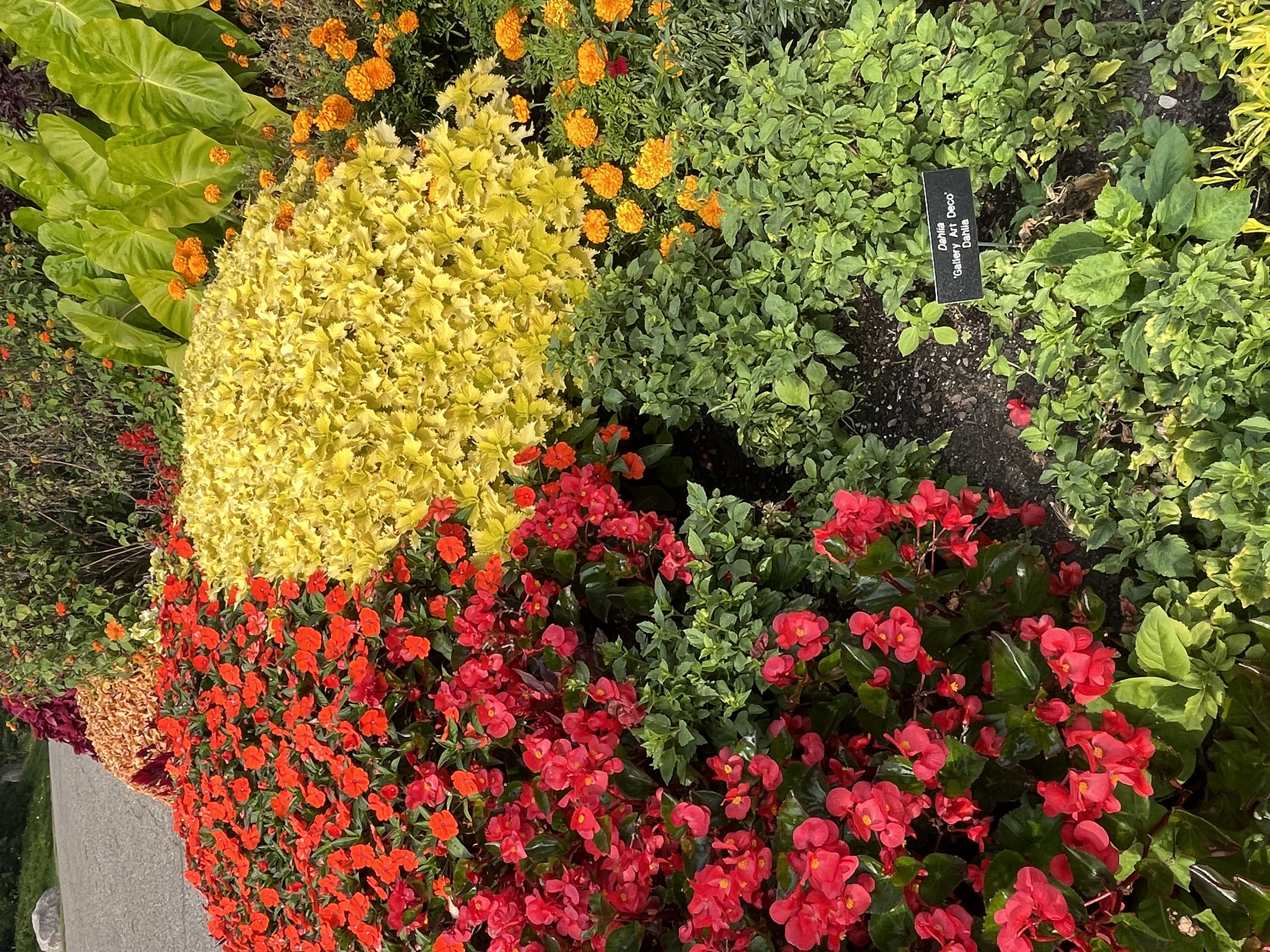
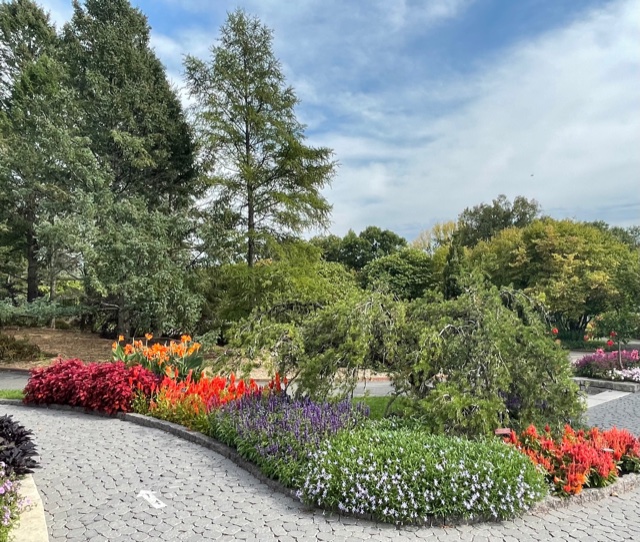
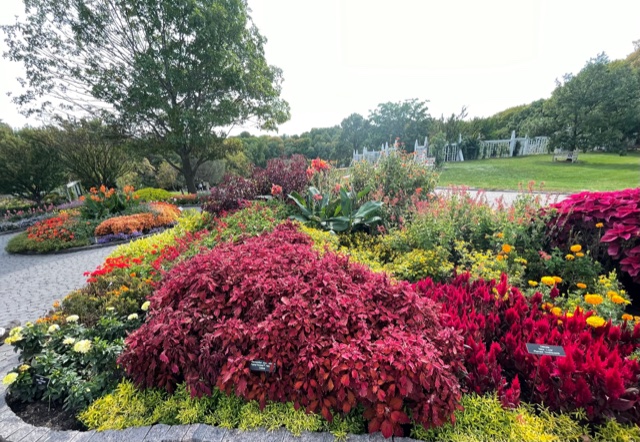
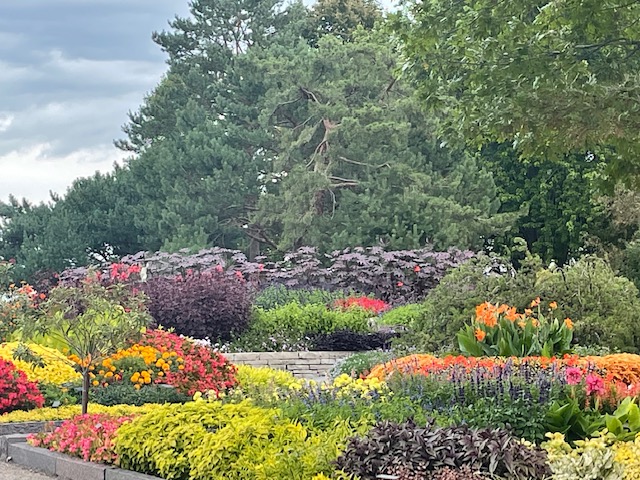
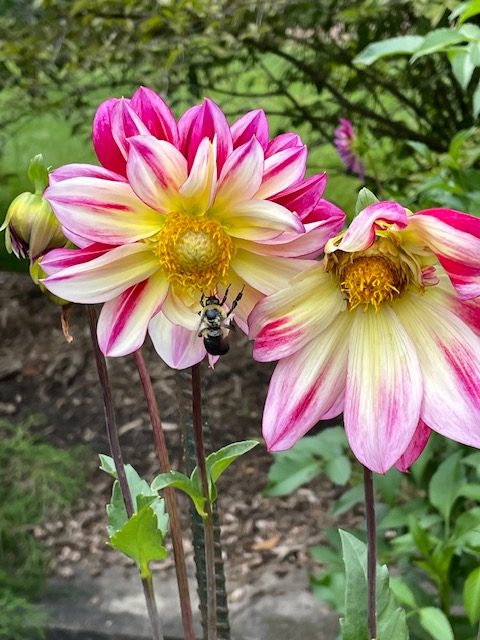
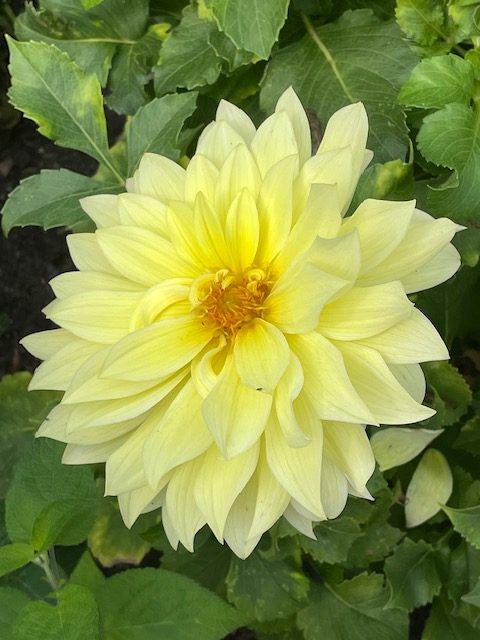
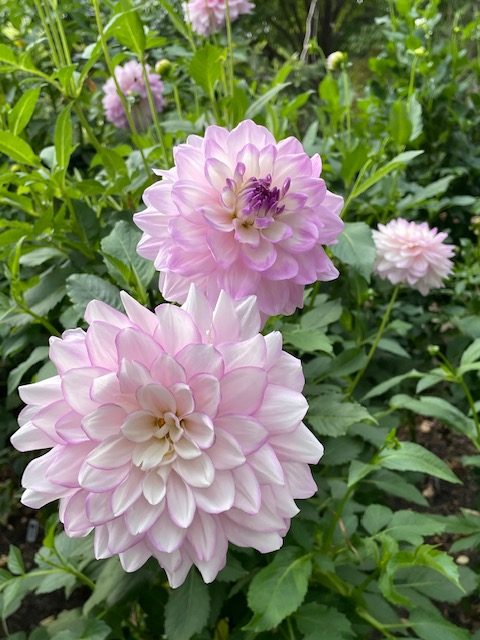
There was much color, everywhere. There were vibrant, annual gardens, as well as rich, colorful dahlias.

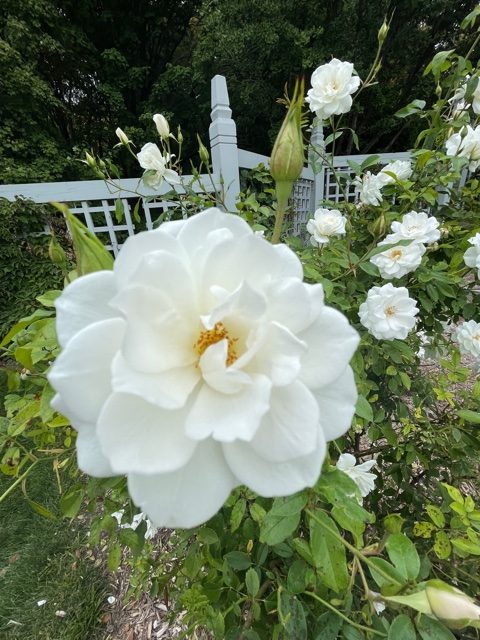
I was surprised to see many showy, rose bushes still in full bloom. I stopped to smell them!

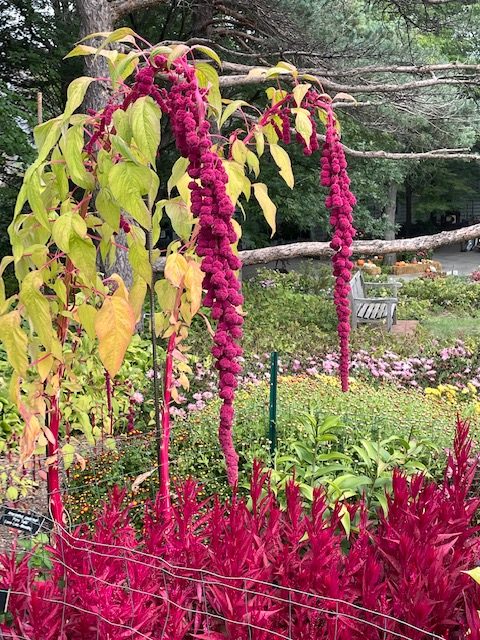
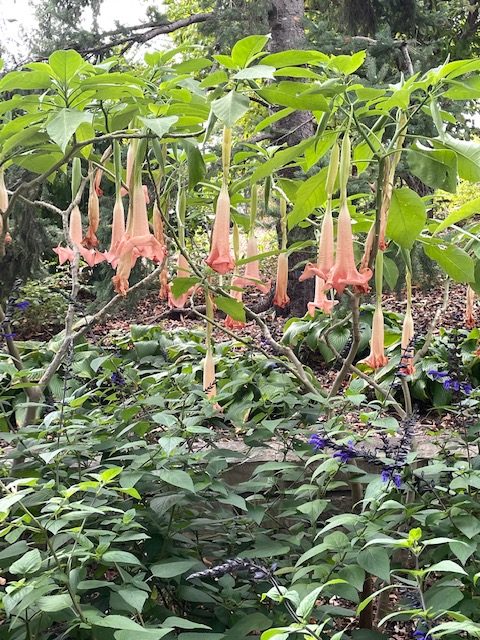
It’s always fun to see a few, unusual plants in bloom. 

Identification sign reads: Amaranthus caudatus ‘Pony Tails’
Love-Lies-Bleeding
Angel’s Trumpets

It was a wonderful afternoon, celebrating two lives joined together in marriage, and celebrating Minnesota’s finest blossoms and the upcoming fall season.  

Braiding Sweetgrass

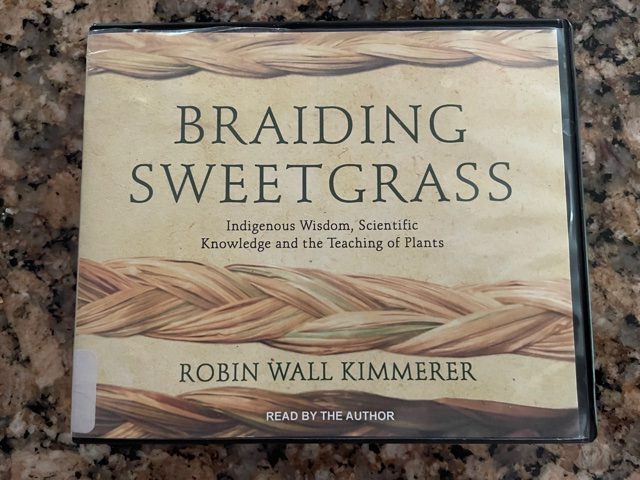
I am reading a good book…savoring it is more like it: Braiding Sweetgrass. A few months ago, I ordered the book from the Northfield Library, and by mistake, I got the book on CD. I was immediately captivated by it and hadn’t finished listening to by the time it was due, so I ordered it again, both the CD’s and the book. I have enjoyed reading the book and listening to the audio version.

The book on CD, read by the author…always a special treat.

The book, Braiding Sweetgrass, is written by Robin Wall Kimmerer; a mother, scientist, decorated professor and enrolled member of the Citizen Potawatomi Nation. 

The book is described as “A hymn of love to the world” by Elizabeth Gilbert. It is a book on “Indigenous Wisdom, Scientific Knowledge and the Teachings of Plants.”

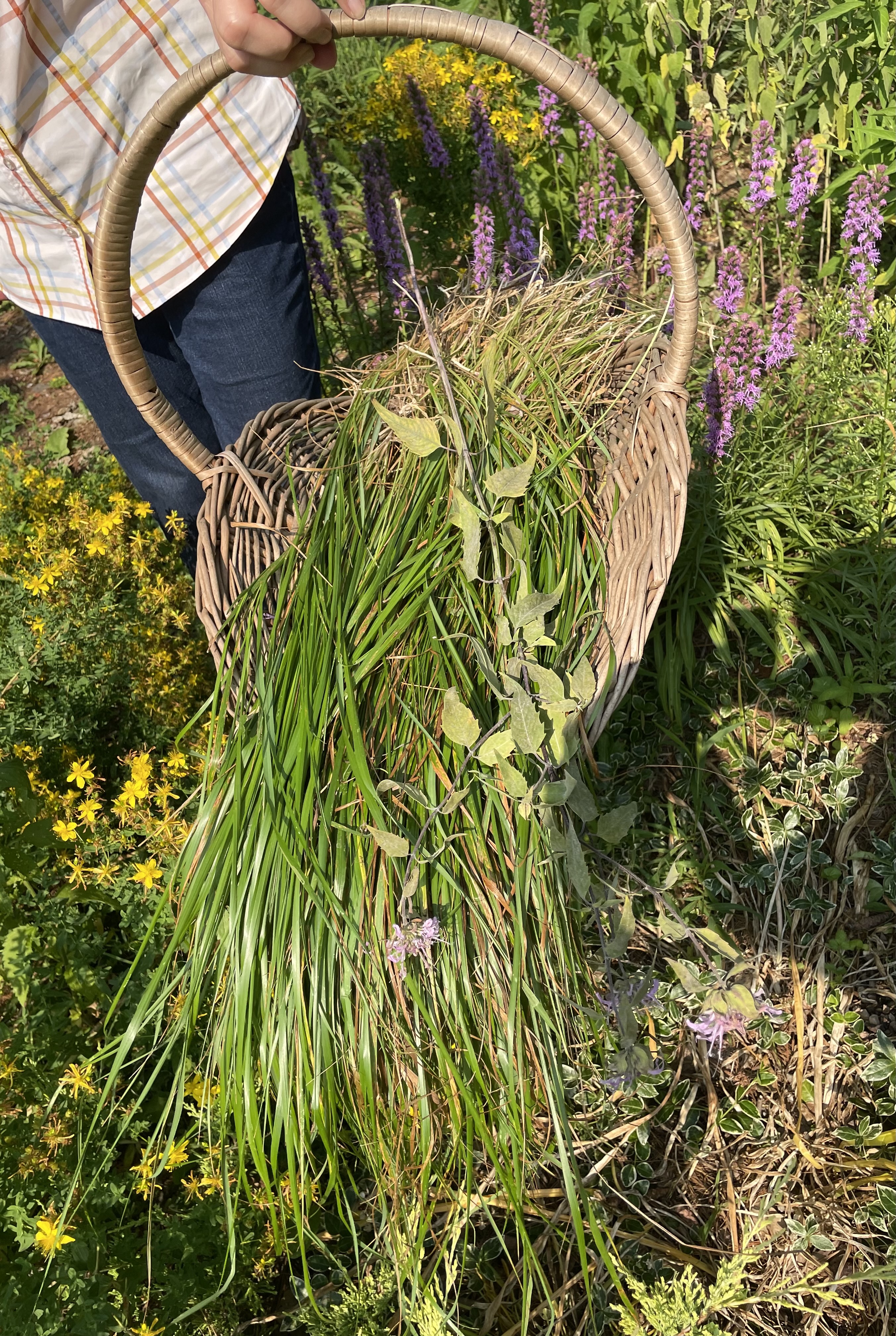
A basket of sweetgrass (and one bee balm stem). photo by LR.

Robin Wall Kimmerer’s vivid descriptions, explanations and metaphors delight the reader. It is a book for nature lovers and anyone interested in learning about the indigenous ways, and teachings from the land and plants. It’s fascinating.

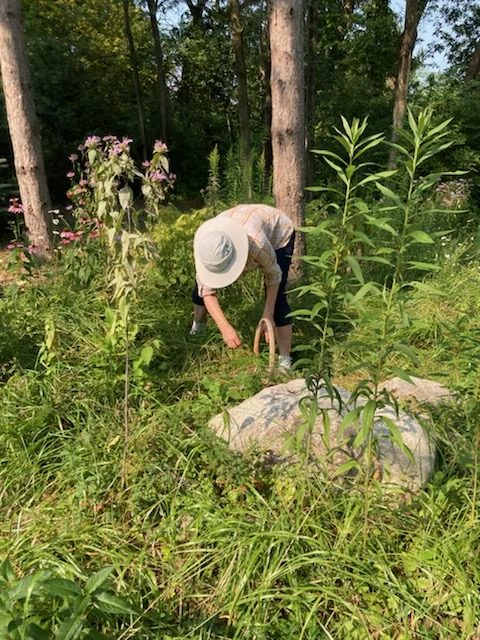
Picking sweetgrass. Photo by LR.

The recurring theme is sweetgrass, Mother Earth’s hair, one of the four sacred grasses for the indigenous people (sweetgrass, sage, tobacco, cedar). Braiding sweetgrass is a tradition, and they believe having braids in the home, or given as gifts, brings positivity and goodwill and kindness…and wards off negativity. Traditionalists also “smudge” the braids, that is burn them, in ceremonies. 

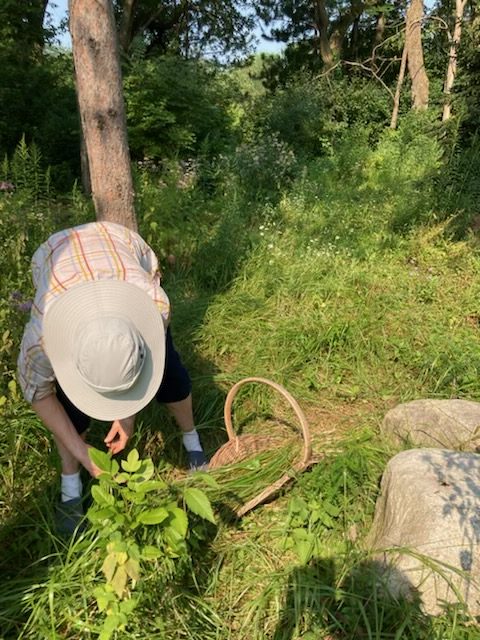
Gathering sweetgrass in the basket. Photo by LR.

While reading through the book I was inspired to braid sweetgrass. I was talking with a friend, an herbalist (her website is https://www.cannonvalleyherbals.com – check out her website for a recent article on sweetgrass under the “Blog” section) and she told me she had sweetgrass growing in her gardens. She said I was welcome to come and pick some sweetgrass for braiding. So I did.

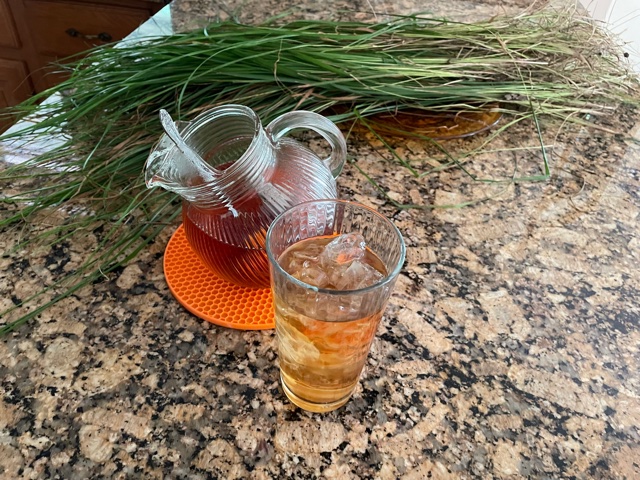
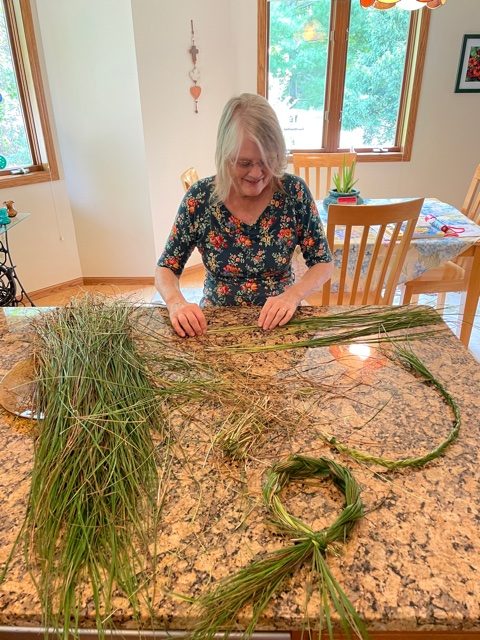
I placed the sweetgrass on an amber, antique glass plate and made herbal, ice tea to create my workspace to braid.

She showed me what sweetgrass looked like (always a good first step!), then how to pull it out by the roots. It has a light vanilla fragrance…and if you taste the root you can taste sweetness. She left me alone to pull a basketful of sweet grass. Afterwards, she took a minute to show me how she has braided sweetgrass. I took my good fortune home and started in. 

Having fun, braiding sweetgrass. Photo by GB.

I had great fun braiding the grasses, using large clumps, and strands of seven in each clump. The scent is pleasant and subtle, and the results of the braids were rewarding.

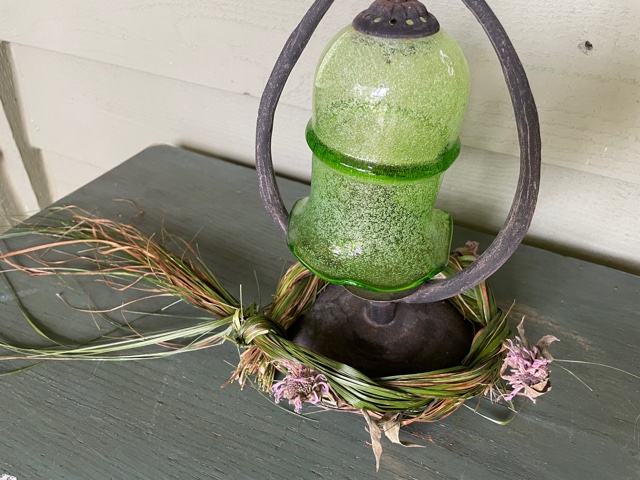
Beebalm blooms, an added touch, to my first braid, now on my front porch.
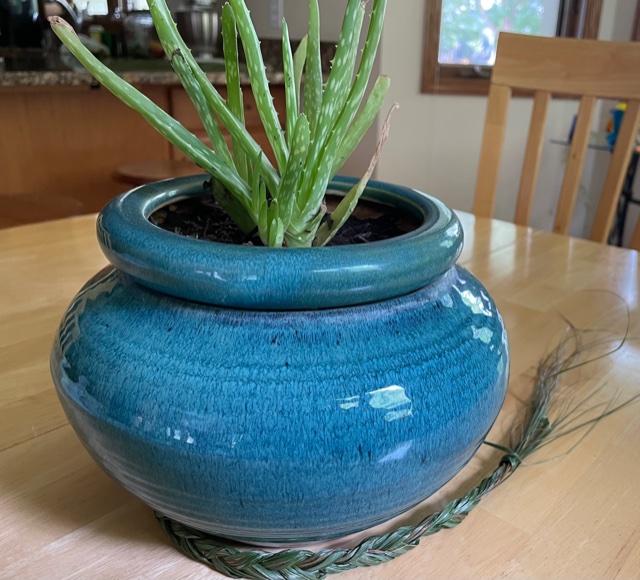
A braid of sweetgrass wraps around the bottom of my aloe vera pot.

I recommend this book. It is a fascinating read.

A Hike in the Desert

When we travel, we like to find area trails to hike and get out in nature. The friend we visited in Arizona likes to hike too, and had a trail in mind for when we came to visit.

The beginning of the trail…we hiked away from this formation.

Due to limited luggage space we didn’t pack our hiking poles or hiking shoes. We took along our good walking shoes, our sun hats, and sunscreen. We knew our friends would provide water bottles for us.

Cacti growing on the slopes, in place of trees.

We set our alarm to get up and get on the trail early one day, before it got too hot to enjoy the hike. (It was hotter than normal when we flew out to Arizona in early April, highs were in the 90’s, but it cooled down significantly at night). We drove to the trailhead (past long-horn cattle roaming) to the Superstition Wilderness in the Superstition Mountain area.

Shadows…

It was a lovely morning for a hike…clear, blue skies and a nice, cool temperature. We stopped to take photos of the unique and open desert scenery…so different and fun to see.  My friend likes to take pictures so it was no problem stopping whenever we wanted to capture a moment…she understands.

Stopping for photos.

On the drive to the trailhead our friend was telling us about her hiking club she joined when she moved to Arizona a year and a half ago. In addition to plenty of water (a staple for hiking anywhere) she learned to carry a fine-tooth comb with her on desert hikes…just in case you have a run in with a cactus. 

All kinds of cacti everywhere.

Well, of course, that happened to me. We were well into our hike, taking pictures of the cacti in bloom, and I got excited about this beautiful, blooming cactus and started taking photos. I could get a better angle if I moved around a bit and, sure enough, I brushed up to a very prickly cactus and a clump stuck to my ankle, through my sock, as I jumped away. It’s called the Teddy-Bear Cholla and I had admired it previous to our hike. The Teddy-bear Cholla looks so cuddly…but it’s not! Thankfully my friend had followed the advice from her fellow hikers and put a comb in her backpack.

My only photo of the Teddy-Bear Cholla. There are others that look more cuddly than this one. This is not the one I bumped against.

It worked slick! Many prickly needles came out easily with the comb. There were a few strays that I took out with Duct Tape when we got back to her place. It was quite comical that we would need a comb after her telling us about it on our way to the trail.

My friend and I.

The hike in the desert was unique and strikingly beautiful. We enjoyed it…and learned something too. 

A wonderful hike.