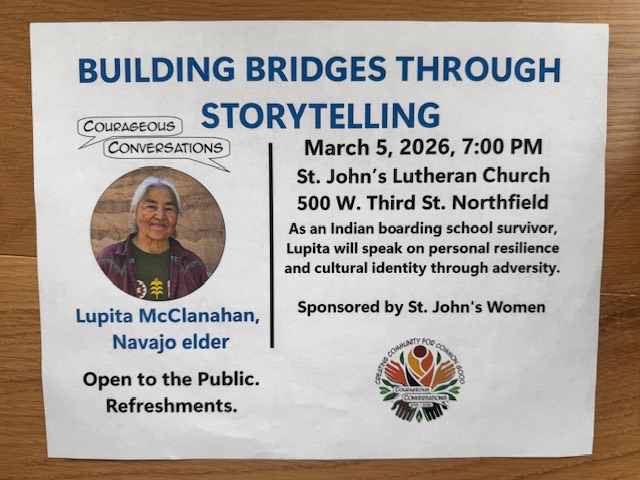
St. Johns Lutheran Church in Northfield hosts a monthly event called Creating Community for Common Good – Courageous Conversations, and it is open to the public. Their focus is to invite speakers who will “enlighten local and national implications for education, housing, health care and the environment, as well as freedom of expression and equality.”
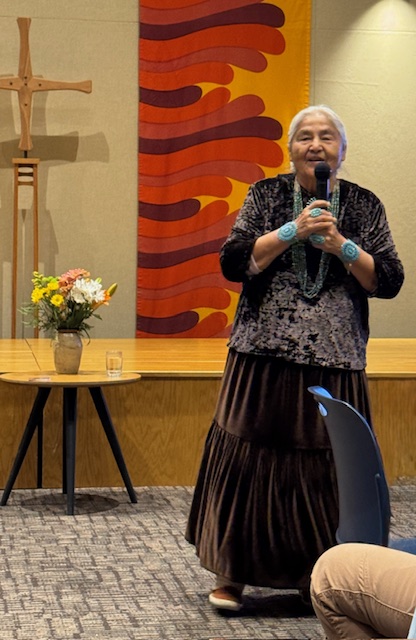
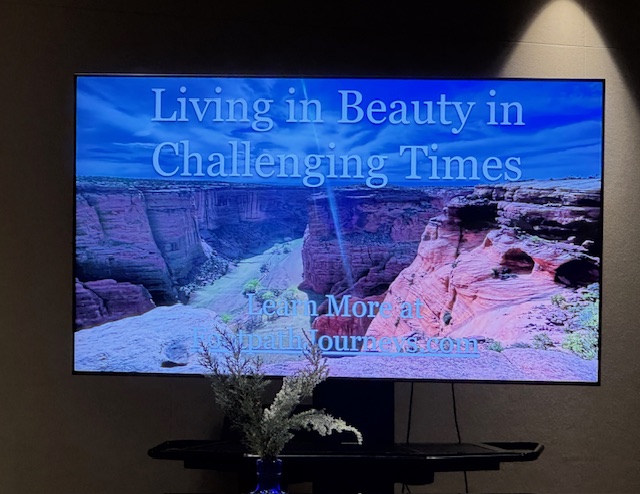
On this evening, Lupita McClanahan, a Navajo elder from Arizona’s Canyon de Chelly, was the speaker. She’s a storyteller and cultural historian and she drew a crowd. The room was full. Her event was focused on personal resilience and strengthening culture identity through adversity.
When I learned a native American elder was speaking, I knew I wanted to attend and hear first-hand stories of her experiences. Lupita focused on her people’s way, her upbringing. She grew up in a world that doesn’t exist anymore.
Lupita McClanahan, Navajo Elder
She explained her people are the Diné people (clan of Navajo) and her upbringing was known as Beauty Way. She told antidotes…how her people would introduce themselves including four pieces of information: first your clan name, then where you come from, who your grandparents are, and finally your name. She told how a baby’s name was whispered into to baby’s ear and not revealed to the community for a long time, how they would hold a celebration for the baby’s first laugh, and many more.
She talked about her experience in boarding school. “They” couldn’t pronounce the names so “they” called people by a number. Her name was Number 55. She was at the school for nine years. She overcame the trauma and chose to become a bridge-builder between cultures by sharing her stories.
She talked about the belief that their purpose in life is to take care of the earth and its four elements; earth and water, air and fire. They believe that the land owns us, we do not own the land, and we must take care of it.
Picture from Canyon de Chelly National Monument, highlighting organization footpathjourneys.com
Lupita currently lives in NW Arizona, when she is not on speaking tours. She lives with no electricity, she tends sheep, grows corn and hauls her own water. She also guides public tours of her native land through the organization footpathjourneys.com
Canyon de Chelly National Monument (Four Corners Area) is considered one of the jewels of the Navajo Nation.
I always enjoy hearing other people’s stories. An hour and a half went quickly and I’m glad I ventured out on this evening to hear Lupita and learn about her Beauty Way.
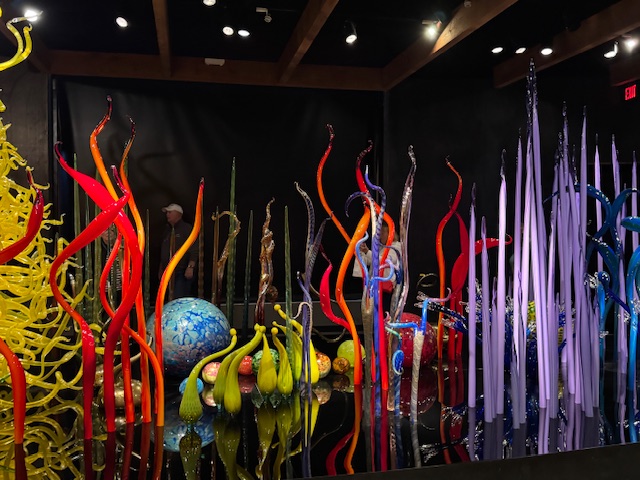
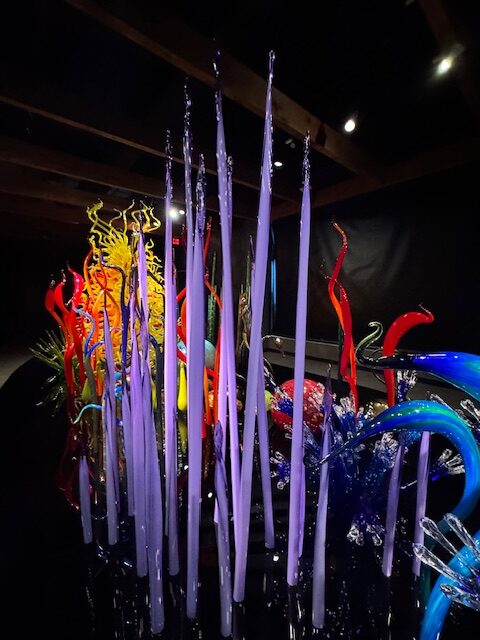
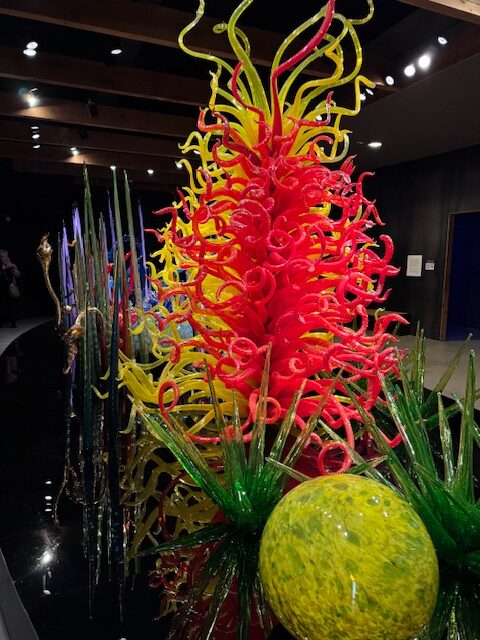
Chihuly’s Collection in St. Petersburg, features the “Glass Garden” a 40-foot-long, 15-foot-wide, and 15-foot-tall installation of vibrant glass art.
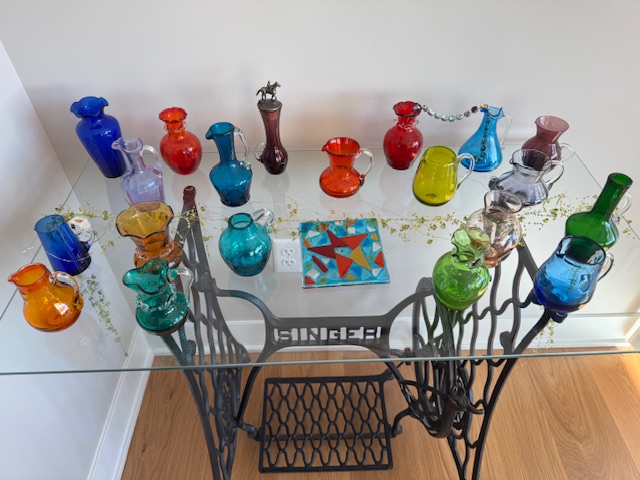
I can relate to this quote. I have a fondness for colored glass. I have been collecting colored glass for years. And although my collection of colored mini-vases is small, it makes me happy every time I see it. In addition, I have multiple colored glass dishes that I like to use. I still enjoy scouting out antique and thrift shops for my next find.
My small colored-glass collection.
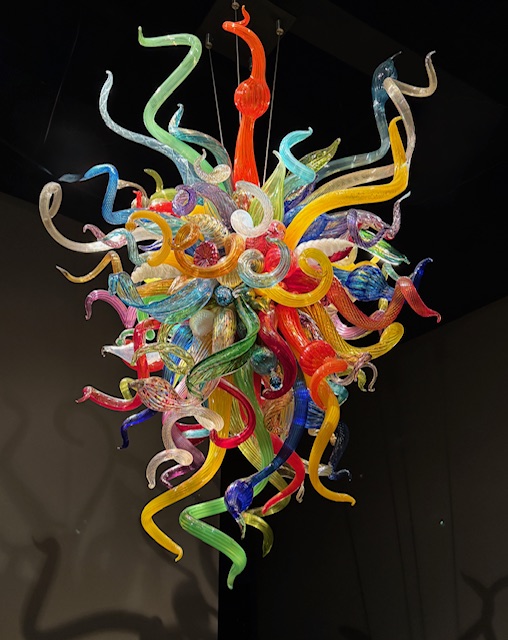
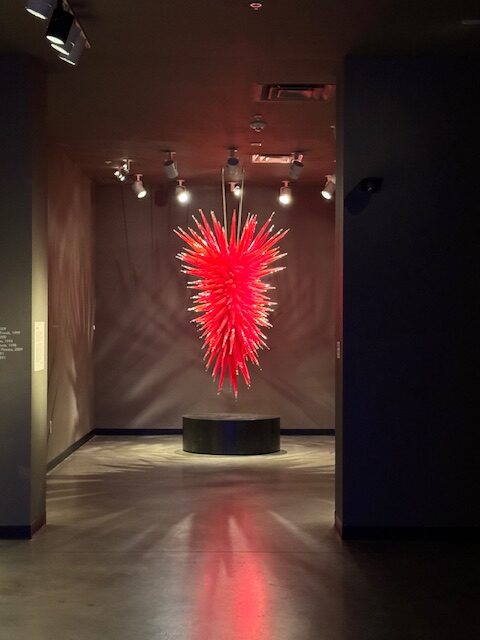
Dale Chihuly is an internationally renowned artist, known for his colored glass sculptures (and many other creations with colored glass). His art can be found in over 200 museums in the US, with major installations in Tacoma, WA and Oklahoma City, OK and St. Petersburg FL.
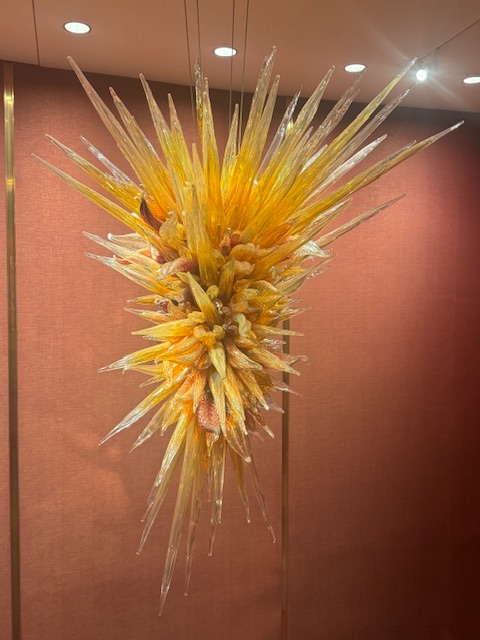
A colorful Chihuly chandelier.
I was first introduced to Chihuly’s art several years ago, by attending a special art exhibit of his works. I immediately was captivated with his work.
Ruby Red Icicle Chandelier.
While visiting friends in Florida, I was excited to go to St. Petersburg to tour the Chihuly Collection there. It’s spectacular to stroll in and out of the rooms and visually take in all the bold colors and whimsical designs of this Chihuly Collection.
Another perspective of the Glass Garden.
And another perspective of this large glass garden.
We did attend a glass blowing demonstration before touring the museum, included in the ticket price. It was fascinating to see what a delicate, and fine-art, glass blowing is. It was fun to watch, and interesting to apply what we learned to how some of the art work was created as we looked at the variety of glass works in the museum.
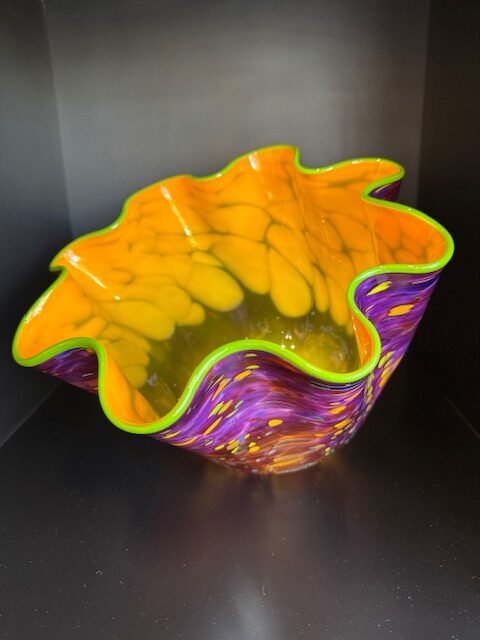
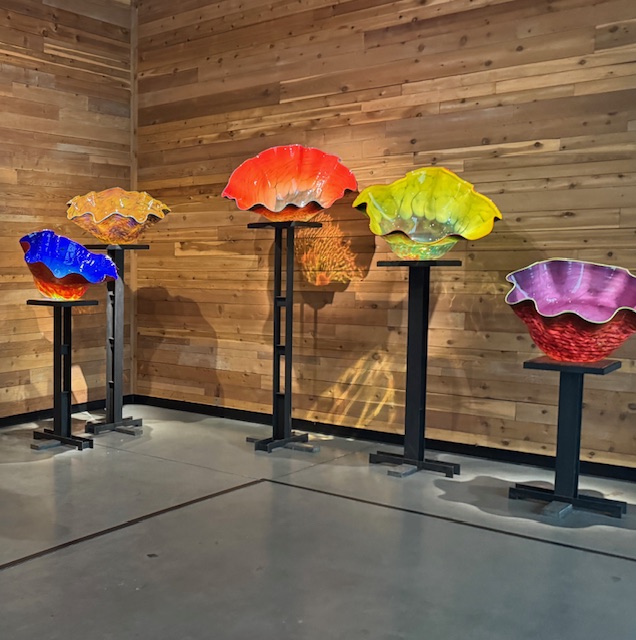
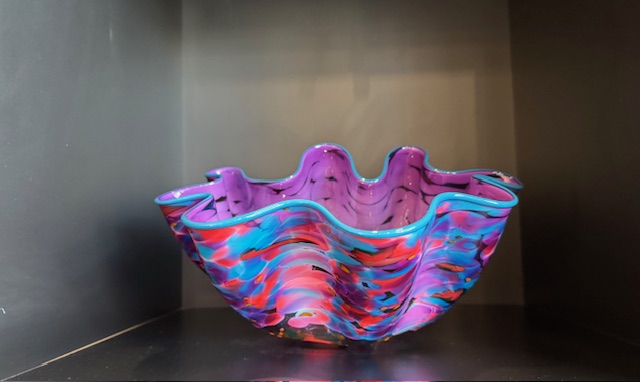
Chihuly also renowned for his glass bowls… asymmetrical forms, bold color combinations, and vibrant.
A room full of striking bowls.
Chihuly’s work is usually recognizable for its unique and whimsical designs, and bold colors. There is a Chihuly chandelier hanging in the Minneapolis Children’s Theatre lobby.
I recognized this piece as Chihuly’s when we toured the Kennedy Performing Arts building in Washington DC last November.
I also noticed a Chihuly chandelier in the Kennedy performing Arts Center last fall while in Washington DC.
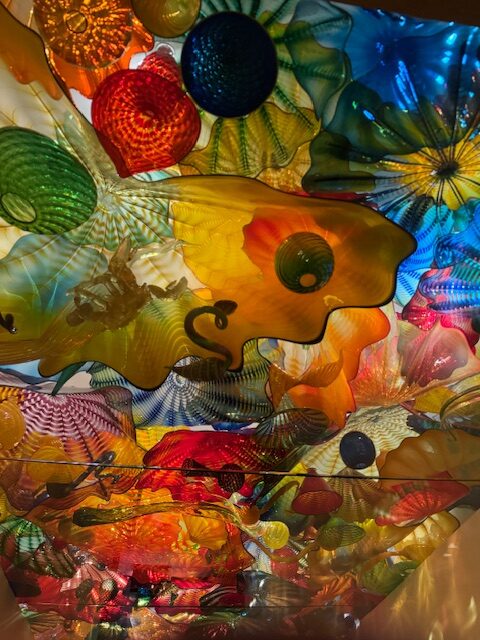
Look up to see this “Glass Flower Ceiling”
It warmed my heart to be able to tour this Chihuly collection in St. Petersburg Florida, on one of the coldest days in Florida this season.
To continue the public artworks post, here’s more I’ve seen in the past few weeks.
We took a quick trip to Florida to escape the Minnesota winter…only to be greeted by unseasonably cold weather there. O well, we had a good time. 😉
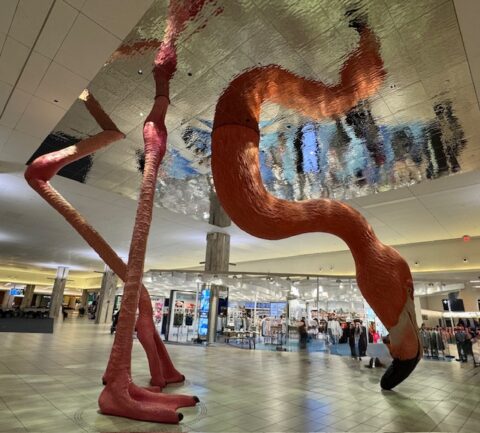
When we arrived in the Tampa (TMP) airport we were greeted by an oversized (floor to ceiling!) pink flamingo. His long pink legs and long pink neck bending down to the ground was fantastic.
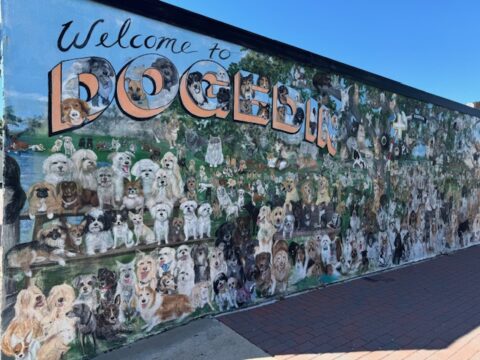
In Dunedin, Florida there is an outdoor mural of dogs painted on a building in the downtown area. It takes up two outside walls of the building (one was in the shade and too dark for a photo). The artist called for photos from dog owner’s and then painted the mural depicting everyone’s dogs for all to enjoy.
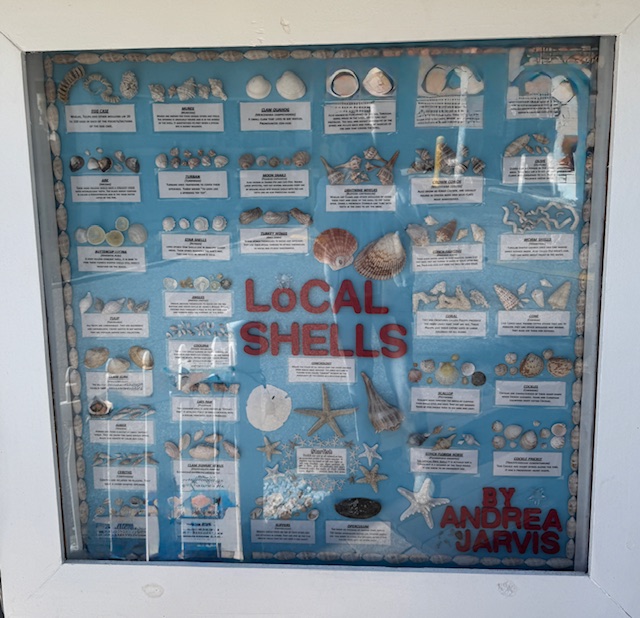
Also in Florida, there was a well-done public shell exhibit close to the beach. I appreciated the collector’s willingness to educate the public on all the different types of shells found in the area.
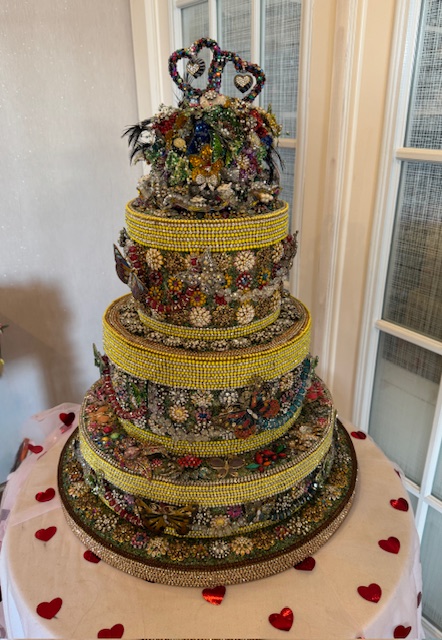
Inedible, exquisitely decorated, layer cake.
Inside a restaurant, for all who entered to enjoy, was a tall, beautiful layer cake made of costume, sparkly jewelry. People come up with very creative ideas.
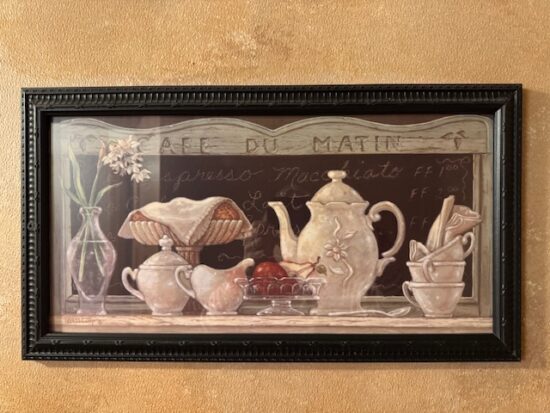
There was a sweet picture in a coffee shop’s public bathroom. A framed print someone probably found just to fill a space on the wall, but this simple piece spoke to me that day. It felt like an invitation to a tea party.
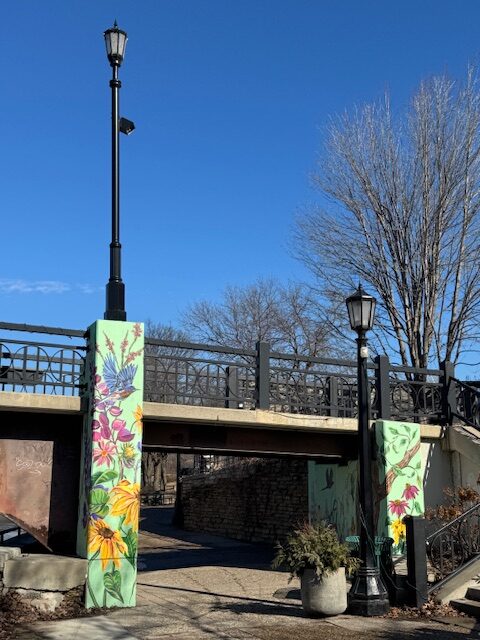
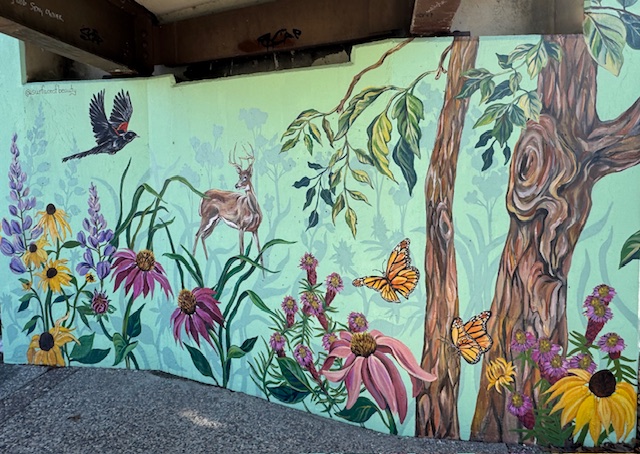
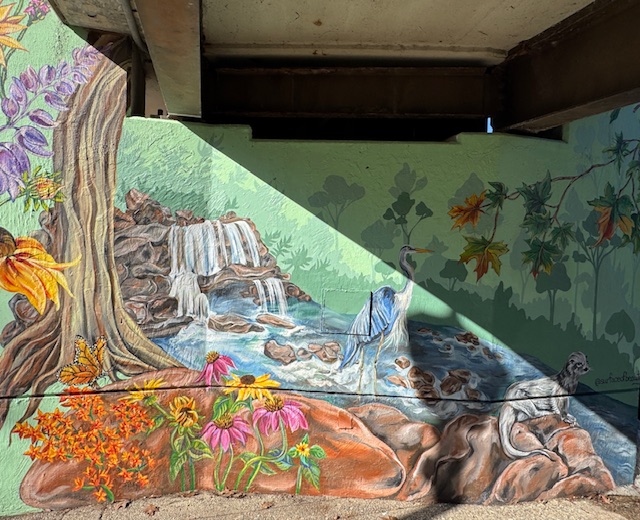
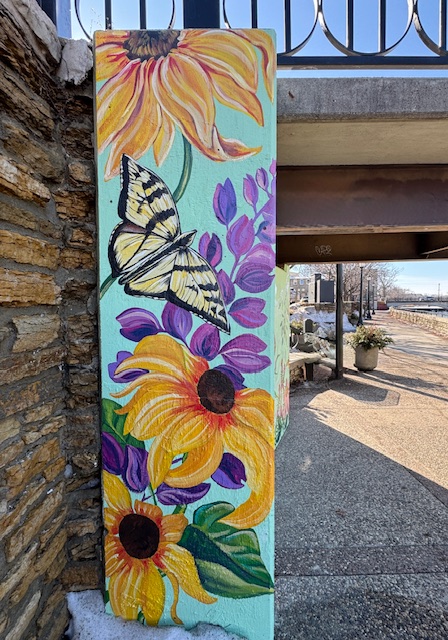
And finally, just the other day we went for a walk in the unseasonable 54* warm weather, along the Cannon River in Northfield. There, new to us (how long has it been there???) was another mural painted on a bridge abutment. There were several beautiful nature scenes.
The credit was only listed @surfaceofbeauty. What I could glean from online was the artist is Natasha May Platt, @surface of beauty, a floral mural artist…from New York!
We so enjoyed the public artwork of lovely floral and fauna paintings that bring hope for spring.
I plan to continue to look for different public artworks that speak to me. May you enjoy looking for all the public artworks in your ordinary days.
“Let yourself be silently drawn by the strange pull of what you really love; it will not lead you astray.”
                Rumi 1207-1273
“You’re only given one little spark of madness. You mustn’t lose it.”
                Robin Williams
“Have I gone mad?” asked the Mad Hatter
“I’m afraid so,” replied Alice
“You’re entirely bonkers, but I’ll tell you a secret. All the best people are.”
                 Lewis Carroll
Somehow these quotes speak to me of enjoying wonders of ordinary living. Living with abandon and paying attention to all that surrounds us.
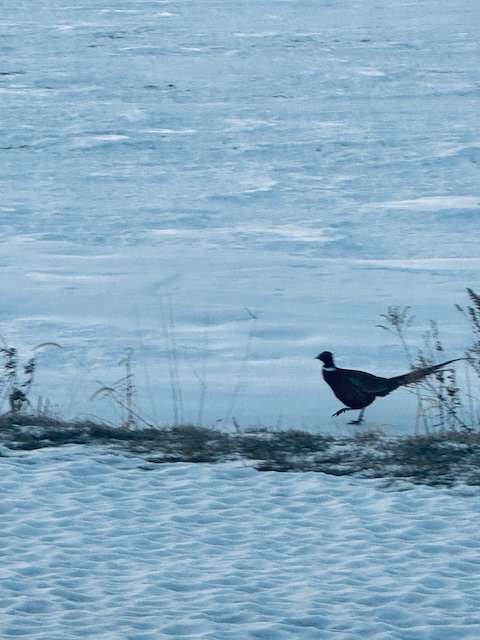
One of a “nide” of pheasants that gather in the field in back of our house. I learned a group of pheasants are called a nide.
I do love nature…oh so much. Recently I have enjoyed seeing up to 15 pheasants in the field behind our house. There is so much beauty in nature, and its proven to help our mental acuity when we stop to appreciate it.
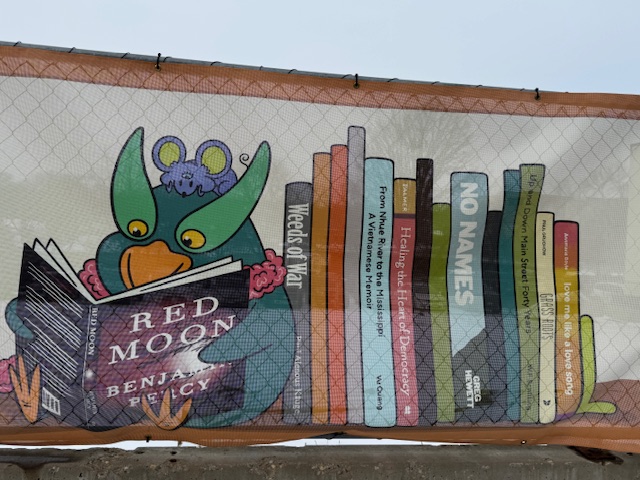
Then there are made-made public artworks. I’ve taken more notice in the past few weeks as I’ve tried to be more in tune with my surroundings.
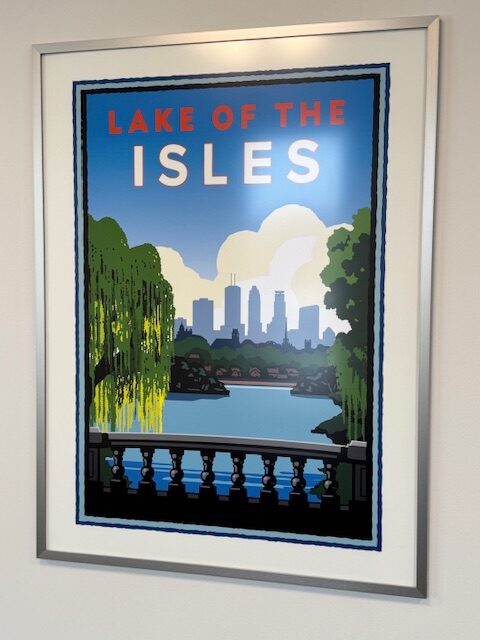
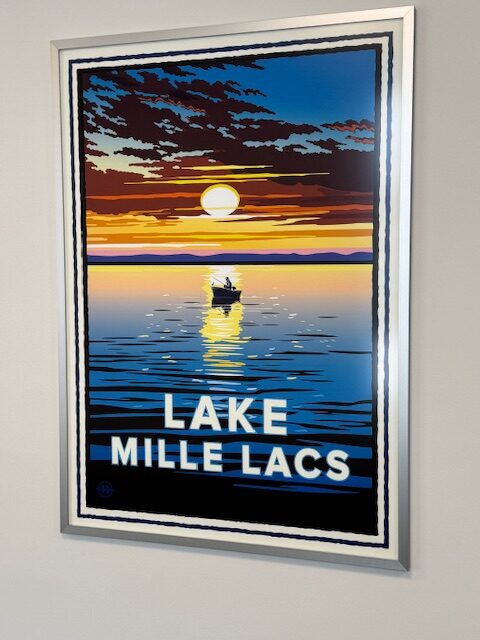
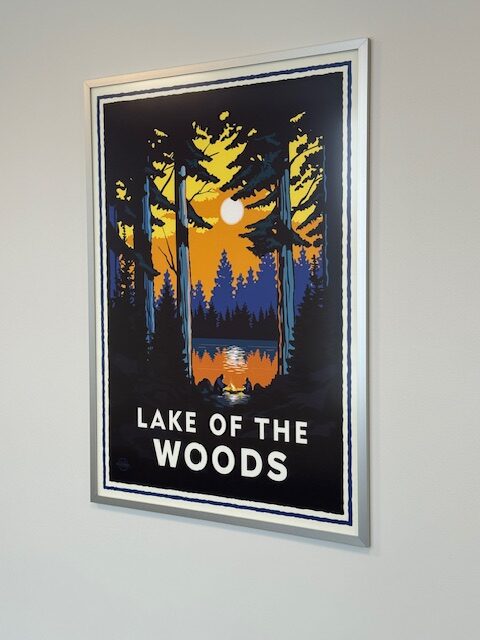
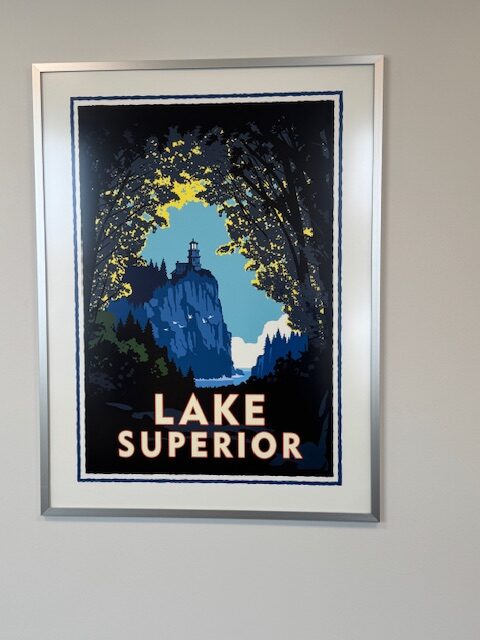
I had an appointment at the Park Nicollet Clinic in Burnsville recently. It is a fairly large facility so there is some walking involved to get from the parking garage, through the covered walkway into the building. There is a wall of posters hanging in the entry hallway. Many people walk on right by this display…I have before. But once I noticed the posters, I enjoyed looking at different Minnesota lakes on this cold winter day, when the lakes are frozen over now.
I’m posting four of the eight posters depicting different lakes in Minnesota.
As I stood admiring them an employee walked by and said to me, “I claim this one” pointing to the Lake of the Woods poster. I replied, “OK, I’ll take the Lake Superior poster.”
I took notice of several other works of arts on display throughout the clinic that day.
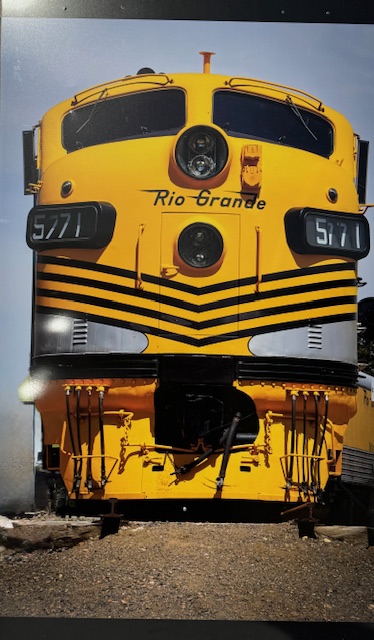
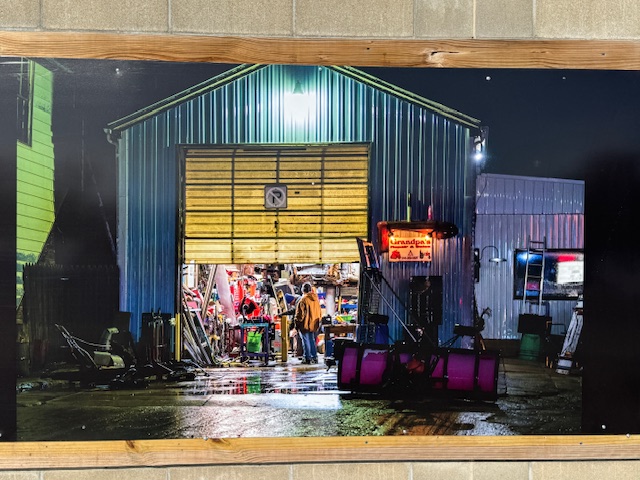
Other public artworks that caught my attention these past few weeks were huge (approx. 4 feet X 8 feet) photos printed on metal and posted along an antique store parking lot in Mantorville, of all places…
Rio Grande No. 5771 Photo by Brian Hindal, a local Mantorville resident.
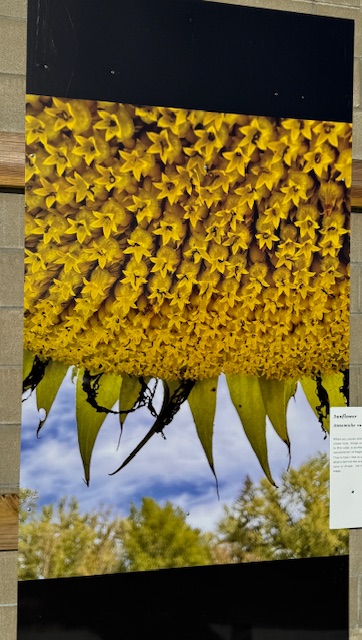
Each photo is taken by a local person with a description next to the photo. There were ten huge photos and a variety of subjects… I’ve included three favorites…
Americana Photo by Cory Ingram, a local photographer, writer, fisherman, and physician.
Sunflower Photo by Annemieke van der Werff
These public artworks are a wonderful way to display local artists and create a warm and welcoming space…even in parking lots!
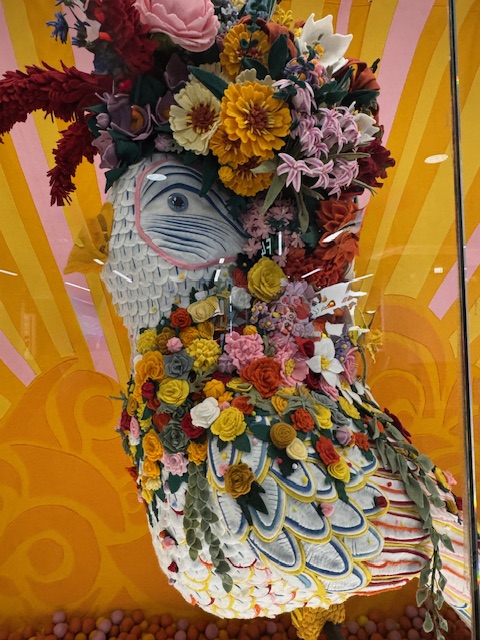
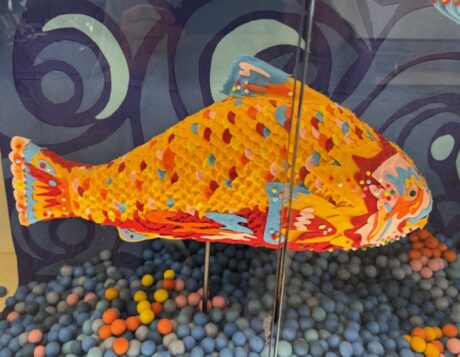
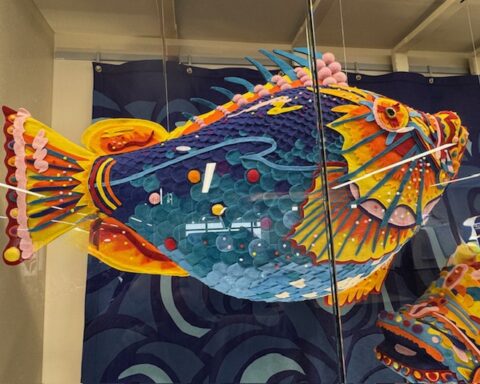
Also, there is a wonderful exhibit on display at the MSP airport, entitled The Felt Menagerie;
The bird is all made of felt…flowers, feathers, feet and beak.
A collection of unusual creatures by Dustin Black.
Felt fish and felt pebbles.
These pieces were so whimsical. They made me smile…and made me marvel at the work involved using all felt material.
Whimsical felt fishes.
Once you start looking…it’s amazing what you see all around on ordinary days.
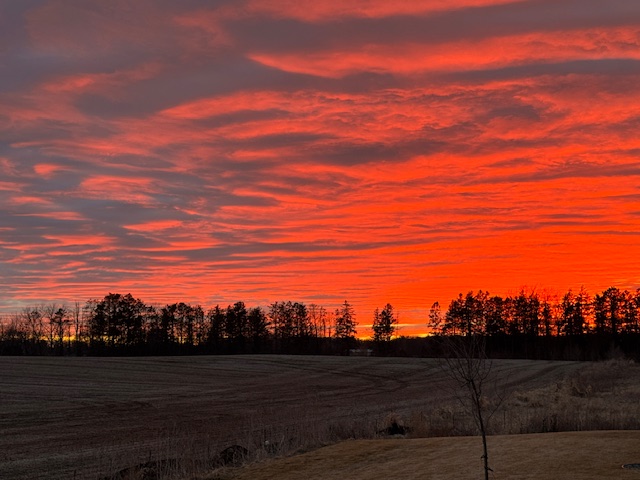
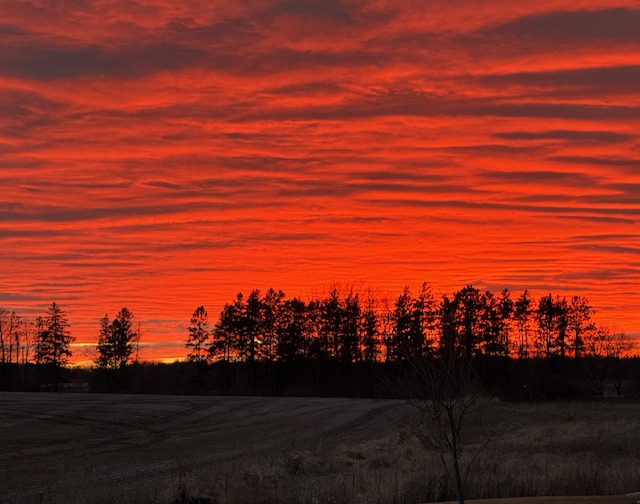
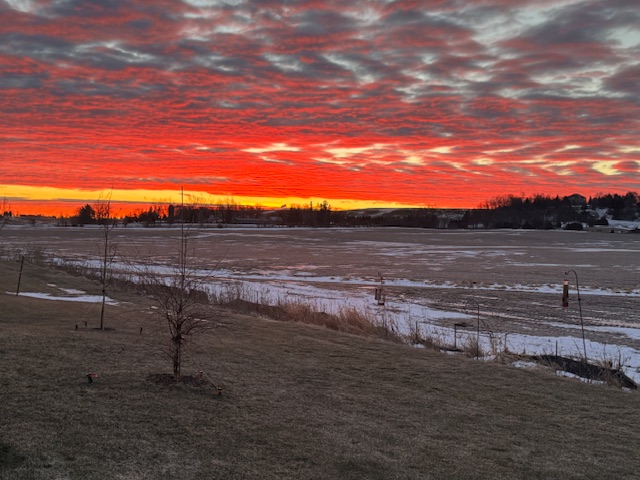
The dawning of a new day….7:32 am, January 15, 2026
“To begin, begin”
and
“Fill your paper with the breathings of your heart.”
Both quotes are from William Wordsworth (1770-1850)
These two quotes resonate with me as a writer. I call myself a writer loosely…I like to write and I write, therefore I am a writer. Maybe not a great one, but it is a creative outlet for me.
Sometimes I get stuck…and I’m feeling that way now. But many “successful” writers offer the same advice as Wordsworth…To begin, begin. Just begin to starting writing. And it usually works…words flow!
My friend, who is a very good writer, expresses herself succinctly all the time, even during times of trials, and she finds it therapeutic. I also find writing therapeutic, to “fill my paper with the breathings of my heart” and sometimes that means to vent frustrations, but I do it for myself and not for others to read.
And that’s where I’m at during these turbulent days we’re experiencing in Minnesota, with killings of Renee Good and Alex Pretti by ICE. I felt the need to post something on my blog…as to why I’m not posting something on my blog. 😉
When we moved from our house of 30 years into a one-level (no basement) twin home we had to downsize. It was a good exercise, but it’s hard to do unless you are actually going to move. You need to ask yourself about everything you own, “Do I really want to move this item?” When we came to our old sled we decided “Yes, we would take it with us. We do use it occasionally, for sledding with the grandkids, or pulling our winter picnic supplies.”
When our grandkids came down a couple weeks ago, we decided it would be a great day to go sledding. We went to out to the garage to get our sled, but couldn’t find it. “It must be hidden behind storage boxes on the high shelf in the garage.”
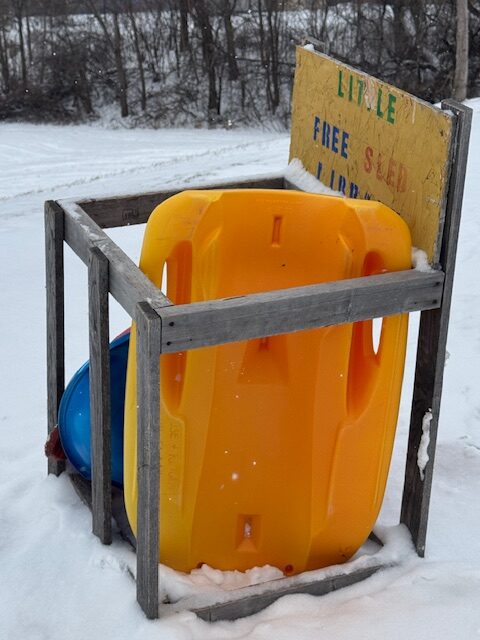
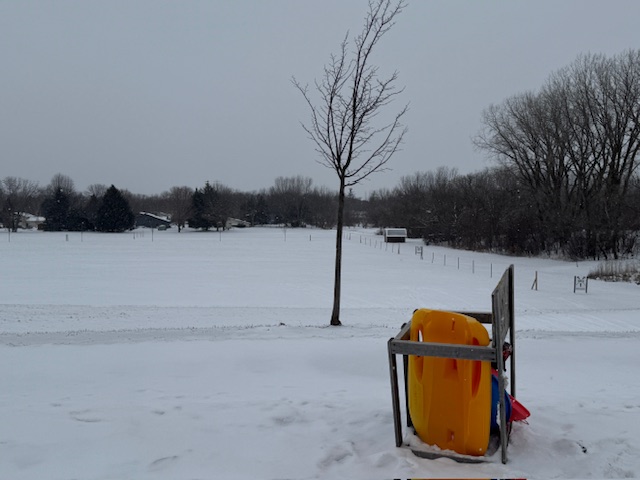
Since we were all excited to take on this sledding adventure, I was happy I remembered seeing a Little Free Sled Library at the hill where we were going to go. The sled library works like Little Free (book) Libraries. You borrow one or two sleds and put them back when you are done using them, for the next person who may need a sled.
We bundled up and crawled into the car and went to check out the Little Free Sled Library in hopes there were some sleds available. I was grateful when I saw there were three of them in the box for us to use. An added benefit was we had the hill to ourselves. We had a lot of fun sledding down the hill…even this old grandma went down a few times (the hardest part is getting back up the hill!)
I’m delighted the Little Free Sled Library has been set up here in Northfield…Isn’t this what community is all about? Sharing our resources? I’m so happy others shared their sleds for us to use this day so we could create memories with our grandchildren.
Today we celebrate Martin Luther King Jr. by honoring the civil rights leader’s birthday and legacy. He had many wonderful quotes…so going along with my quote theme…I’m posting a few of his quotes today.
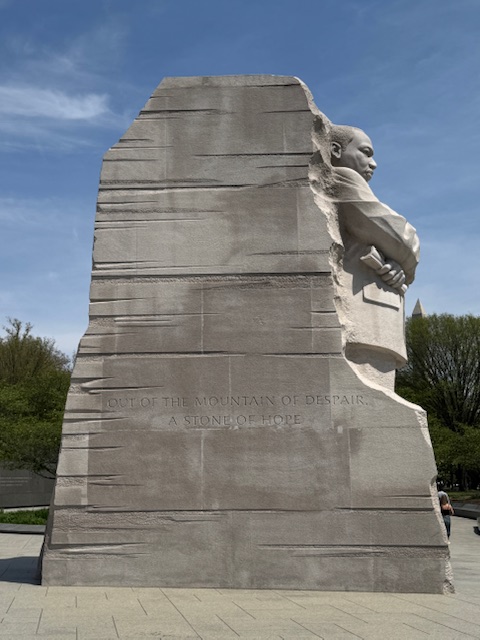
The Martin Luther King Jr. Memorial in Washington DC. April 2025
This is one of his most popular and a favorite, which goes along with my word for the year (light)…
“Darkness cannot drive out darkness; only light can do that. Hate cannot drive out hate, only love can do that.”

From his 1963 book Strength to Love.
One about peace and justice…
"True peace is not merely the absence of tension; it is the presence of justice."

From his 1957 book Stride Toward Freedom.
Here’s one about not giving up…
"If you can't fly then run, if you can't run then walk, if you can't walk then crawl, but whatever you do you have to keep moving forward.”

From his April 1960 address at Spelman College.
On the side of MLK Jr. Memorial is another quote etched into the stone. It reads “…out of the mountain of despair a stone of hope.”
And one more about love and hate…
"I have decided to stick with love. Hate is too great a burden to bear"

From his 1963 book Strength to Love
These quotes are timeless. They ring as true today as they did when they were spoken or written. May we take them to heart.
I read a book recently that included many quotes scattered throughout its pages. What does one do with all these interesting quotes? I decided to occasionally post different quotes that I’ve enjoyed over the years on my blog. 😉
I’ve included two quotes on this post. They are very different from each other (and were not included in the book I read recently), but they have hung around me for a long time and are two of my favorites. So I’ll start with these.
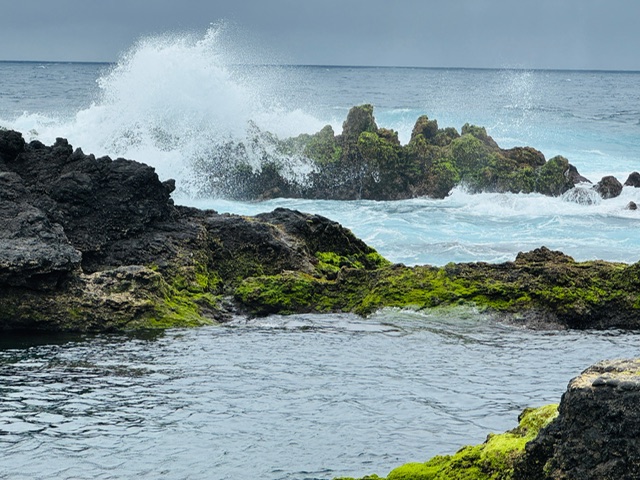
The Azores in the Atlantic Ocean…
“The cure for anything is salt water:
sweat, tears or the sea.”

Isak Dinesen
While I understand salt water, sweat and tears do not cure everything, especially diseases, I do believe they can be good cures for emotional ailments. For me, I think escaping to the sea (or any body of water) is beneficial; “There’s no place I would rather be than by the shore or on the sea” is a line from a poem I wrote, years ago.
Tears are also cleaning for me. They don’t come easily, but when they do, it’s significant.
And then, there’s this quote on listening:
I like this beautiful picture of Two Sisters, caught unaware, and listening. (photo used with permission).
To “listen” another’s soul into a condition of disclosure and discovery may be almost the greatest service that any human being ever performs for another.

                                            Douglas V. Steere
Listening was the main focus of a ministry I was involved in years ago: Stephen Ministries. I try to continue to practice to this day, the lessons I learned back then.
Along that line – although not a quote – someone pointed this out:
Silent has the same letters as the word listen.
It’s a good reminder… to take time… to be silent (so we can hear) and listen to one another.