Athens was the focus of our first five days in Greece. We met up with our friends at the hotel we were all staying at on the afternoon of our arrival. We hung out and toured Athens charming streets and many ruins, including, of course, the famous Acropolis.
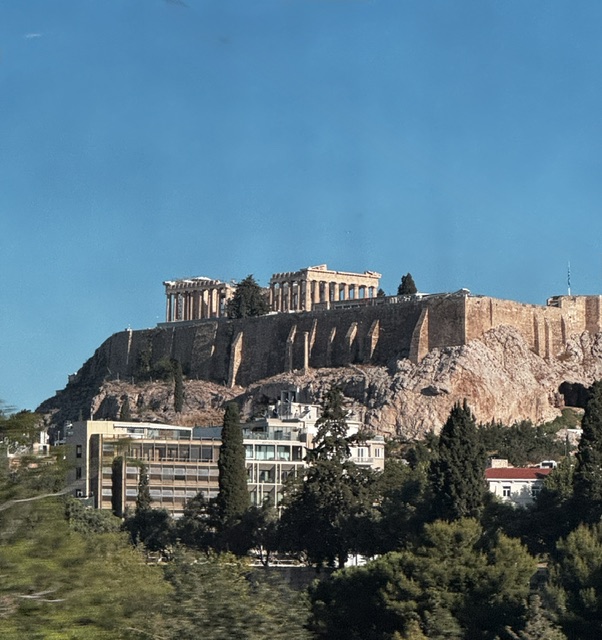
The Acropolis in Athens. Acropolis means any fortified citadel built on an elevated area of an ancient Greek city.
It’s hard to comprehend how old some of the ruins are…going back centuries…
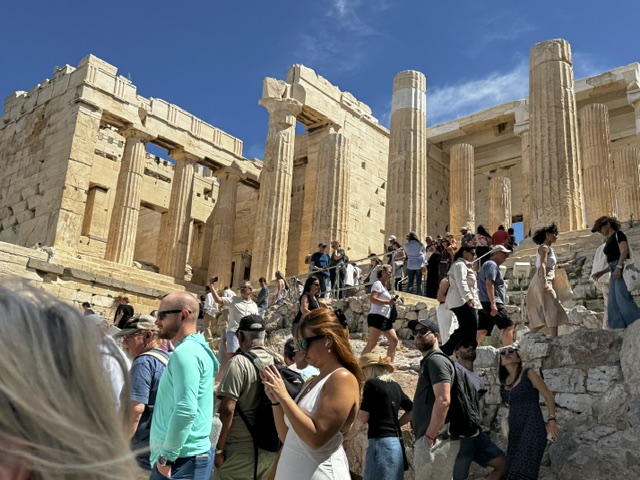
The propylaea (grand gateway).
The Temple of Athena Nike.
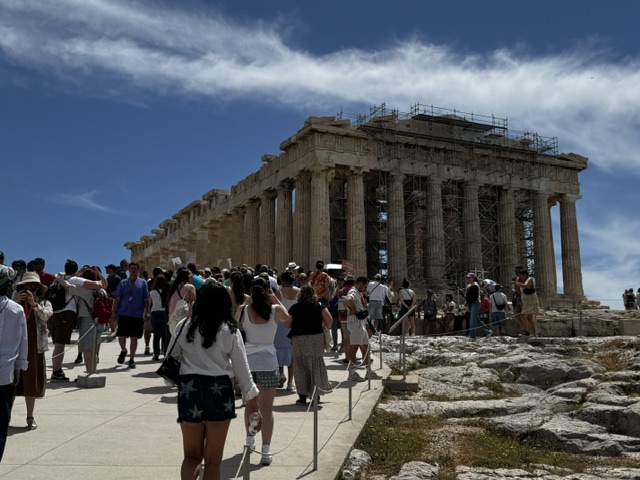
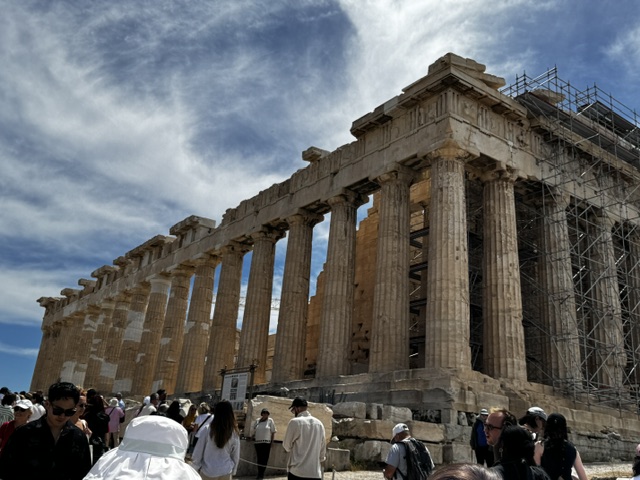
Approaching the parthenon.
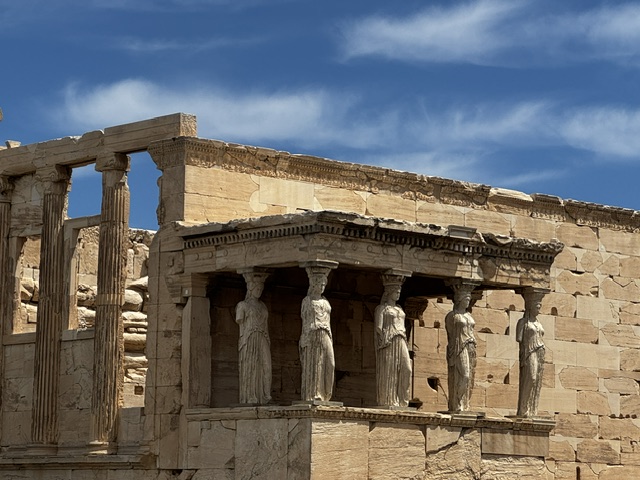
We visited the Acropolis museum (very well done) on a guided tour, before we climbed up to see the Parthenon and The Temple of Athena Nike, The propylaea (grand gateway) and The Erechtheion, another temple.
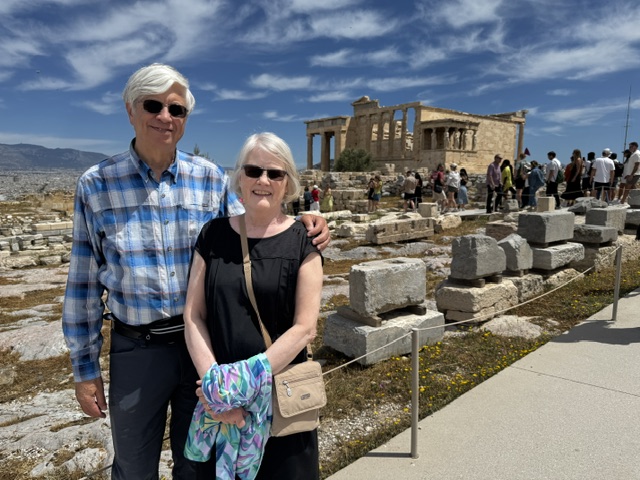
The Erechtheion, is a smaller temple/shrine to Athena Polias, Poseidon, and the mythical king Erechtheus. The six female statues support the roof. The originals are now in the Acropolis Museum in Athens.
The Parthenon.
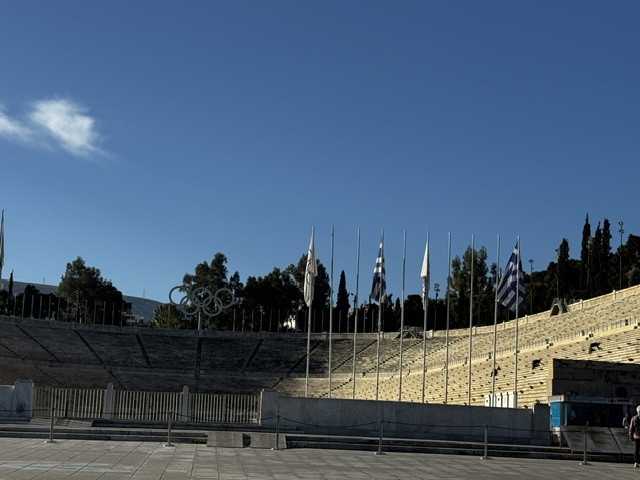
The first modern Olympic stadium in Athens, 1896.
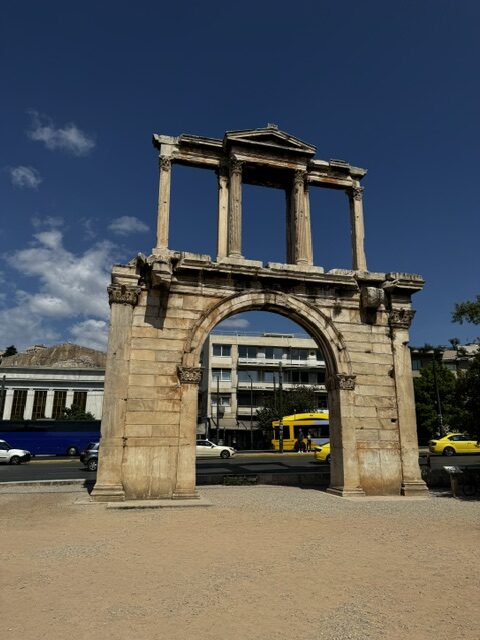
The Arch of Hadrian. Hadrian, a roman emperor, was an admirer of Greek culture, with a lot of influence and recognition.
One day we went on a tour that took us away from the city and through the countryside. Our destination was a lovely seaside town, Nafplio.
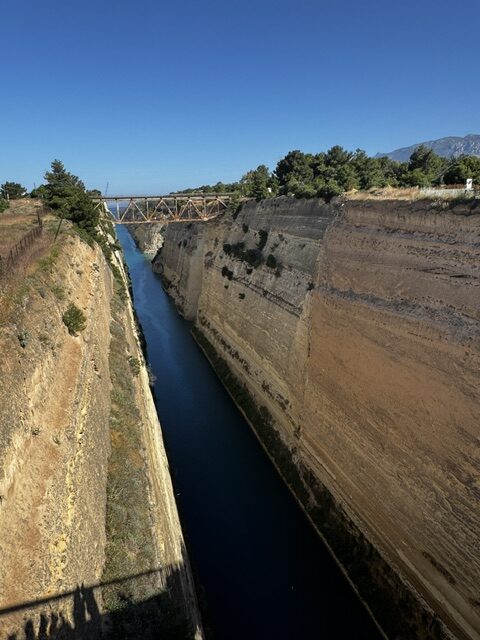
The narrow Corinth Canal – cutting through the isthmus to create a shortcut for ships at the time.
We stopped at the Corinth Canal to view this “shortcut” dugout from the Ionian Sea to Aegean Sea. It was dug in the late 1800’s. It’s an impressive sight but no longer serves the bigger ships of today.
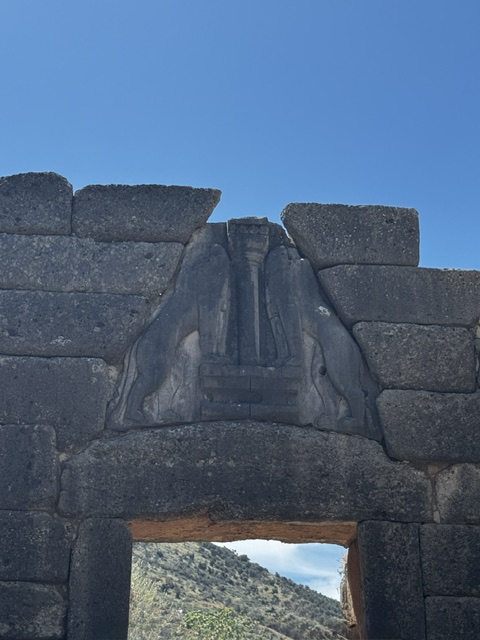
These lions (missing their heads) carved in this stone gateway is called Lion Gate at Mycenae.
We also stopped at the Mycenae acropolis and walked under the stone gateway called the Lion Gate leading up to the acropolis in Mycenae. It is supposed to be the oldest know monument sculpture in Europe, carved in 1250 BCE.
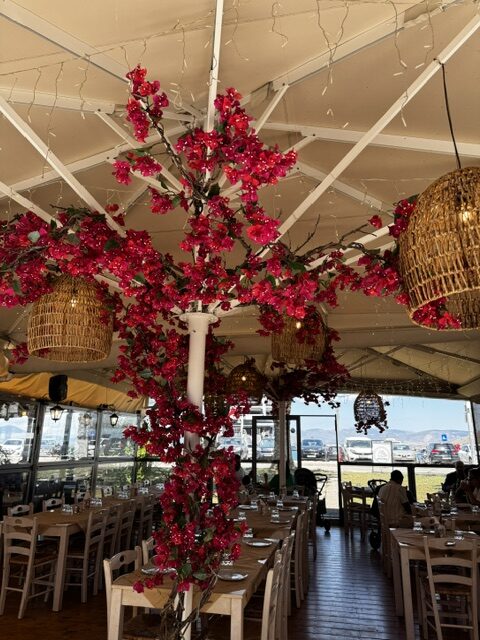
Savouras Fish Tavern in Nafplio.
It is here in Nafplio where we ate our best lunch. We ordered a traditional Greek fare: moussaka (made with eggplant and tuna). It was delicious. We ate in an outside cafe, along the harbor overlooking giant yachts.
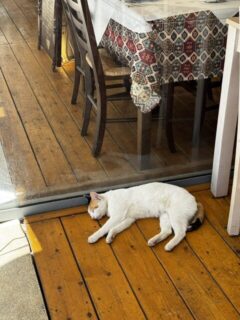
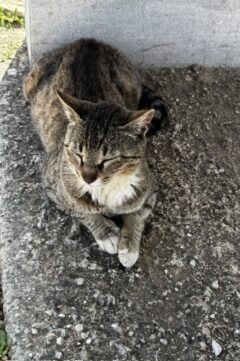
Sweet kitties everywhere.
Back in Athens we saw small, charming outdoor cafes, markets, many ruins, lots of churches, cypress trees, graffiti, cats (yes, stray cats all over the place and people feed them).
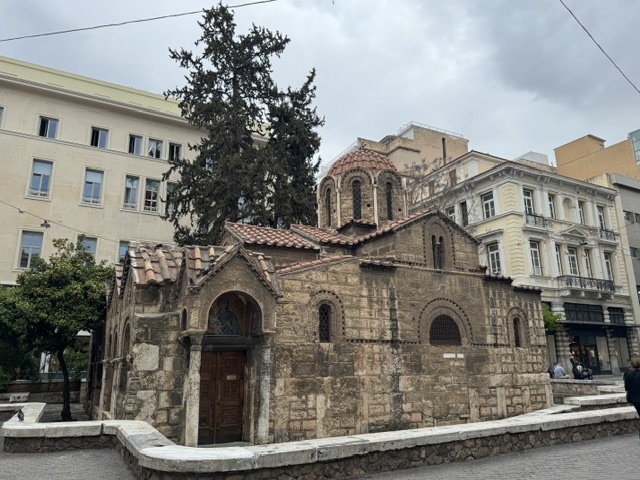
“The most famous, centrally located old church in Athens isPanagia Kapnikarea. Built around 1050 AD, it sits right in the middle of Ermou Street (the city’s premier shopping thoroughfare).”Google
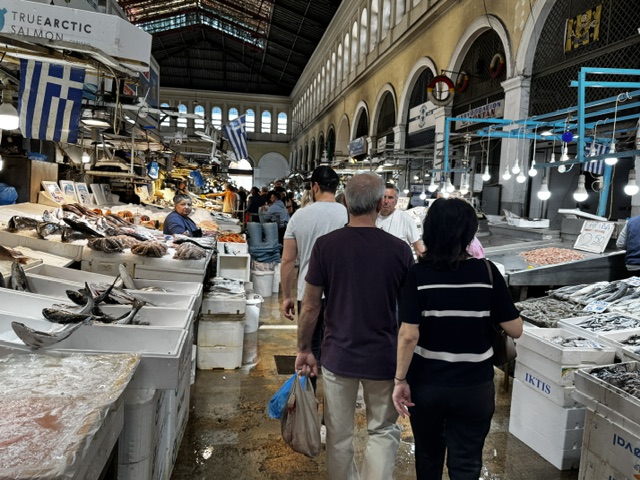
The fish market is part of Athen’s Varvakios Agora. An agora is an open public space used for public gatherings and commerce.
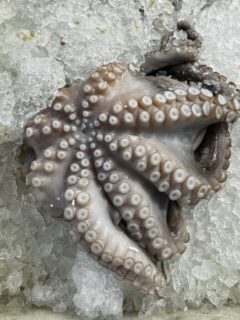
An octopus for sale at the fish market.
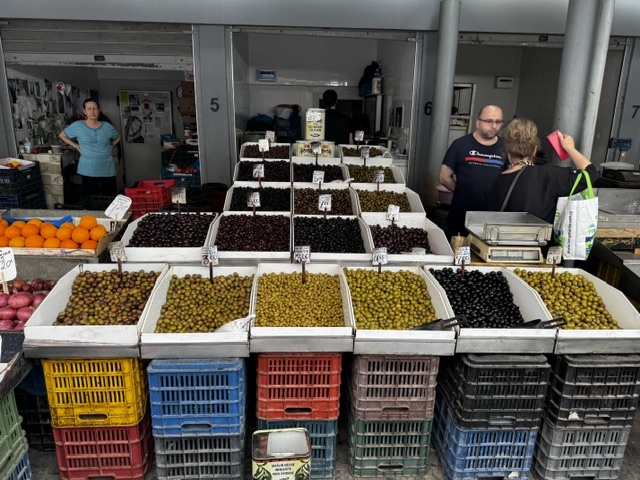
I loved seeing all the different olives in this stand.
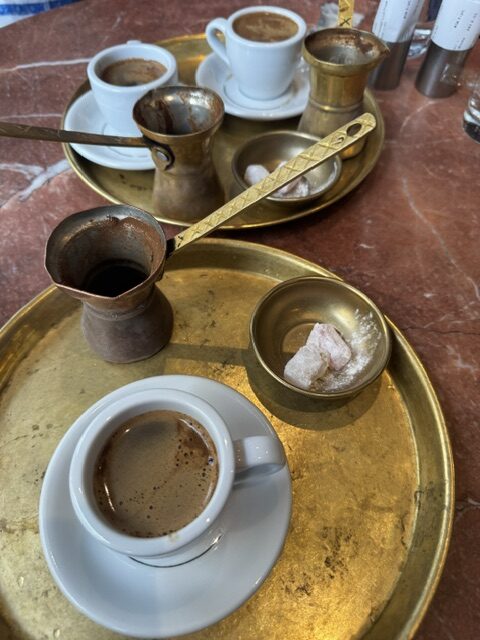
We stopped at Mokka Special Coffee shop near the market square for a specialty Greek coffee.
There is so much ancient history in this area…it was interesting to hear and learn, but hard to comprehend and remember.
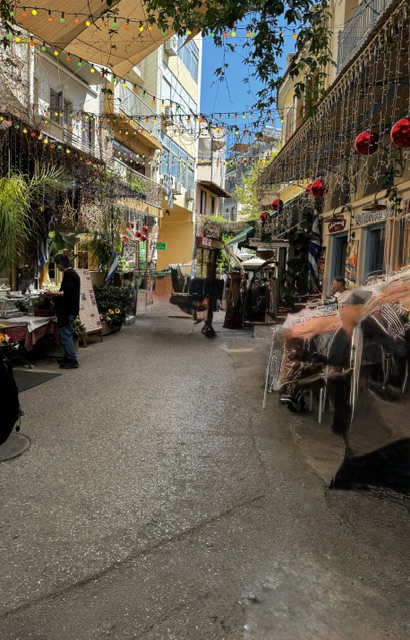
Streets lined with stores and small outdoor cafes.
Greece is a beautiful country…friendly folks too… with so much to offer. As usual we saw only a small portion of it.
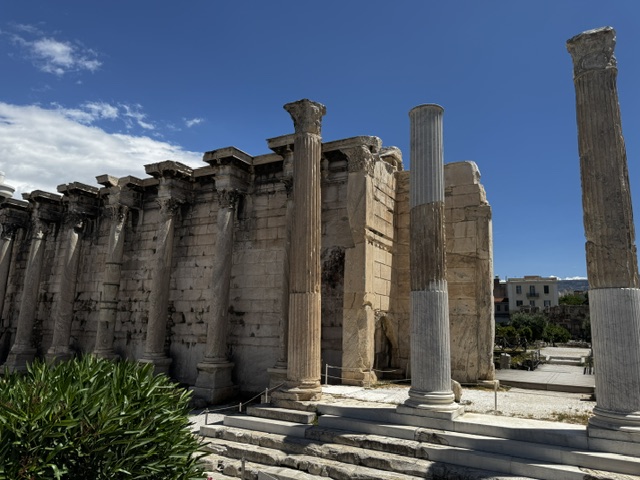
Hadrian’s Library.
We definitely would go back if the opportunity presented itself, but then we say that about most places we visit. There are so many beautiful places in this big, wonderful world. We are grateful we can travel to see a few of them.
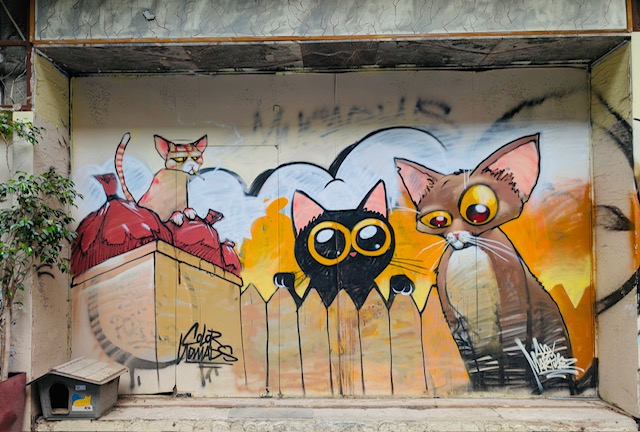
Fun graffiti ( among a lot of not so fun graffit). Notice the cat house in the left corner. People put out food and water to feed the stray cats everywhere.
“It’s a funny thing coming home.
Nothing changes.
Everything looks the same, feels the same, even smells the same.
You realize what’s changed is you.”
Eric Roth
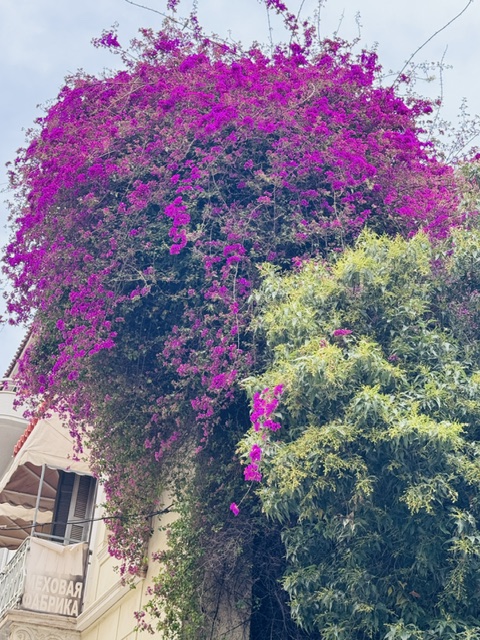
There are a lot of colorful bougainvillea plants thriving and growing tall all around town.
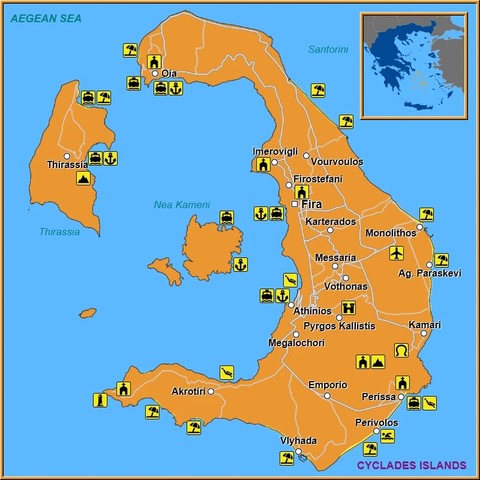
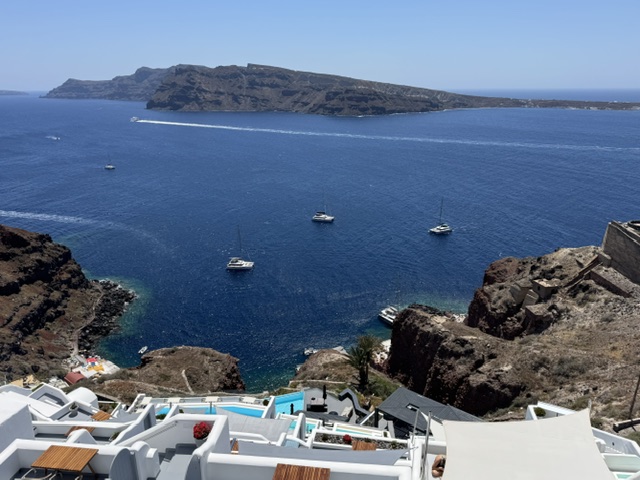
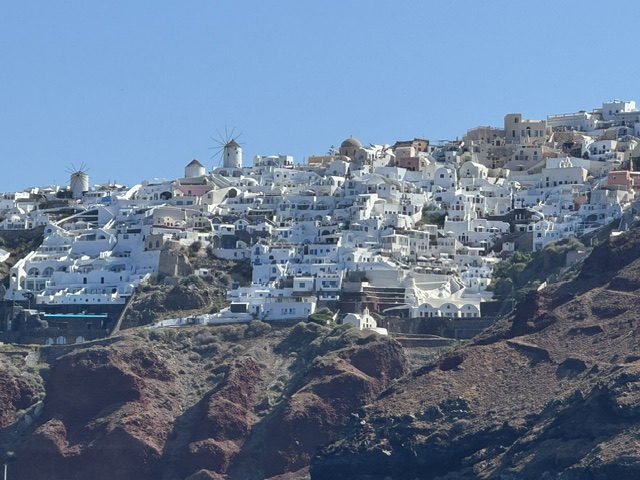
“Santorini is famous for its dramatic volcanic caldera, iconic cliffside villages of whitewashed buildings and blue-domed churches, and breathtaking Aegean sunsets.” (Google) And we got to spend four nights on this romantic island.
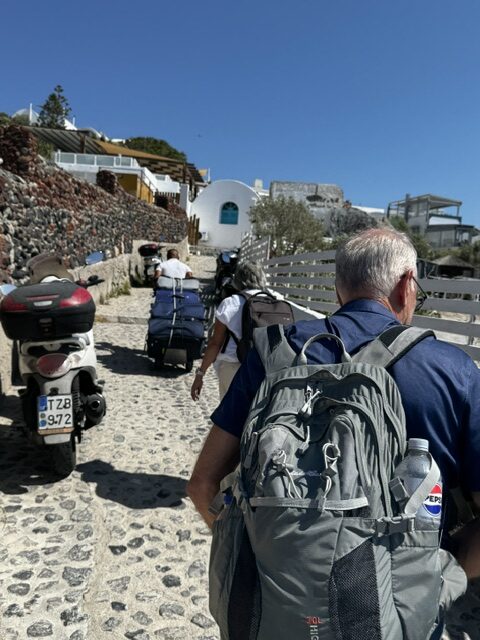
Upon arrival at the airport in Santorini, our pre-arranged driver transferred us to our resort in the city of Oia (locally pronounced Ee-ah) in the north, away from the cruise ship docks in Fira. He dropped us at the parking lot which was several hundred yards from the resort’s office, so a strong, young employee from the resort met us with a dolly.
The hotel employee pulling our luggage on a dolly.
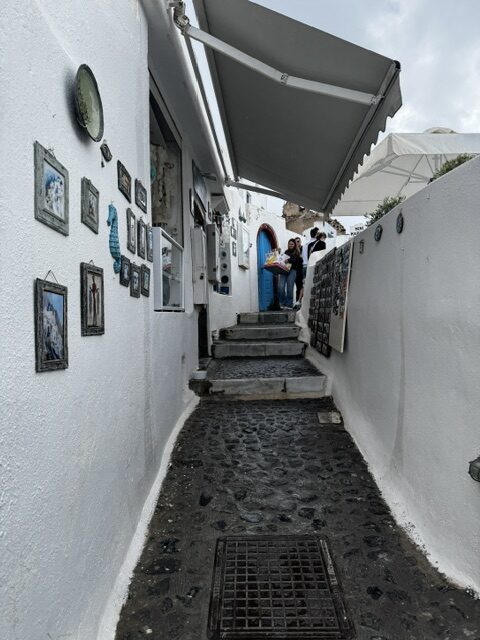
He loaded our heavy luggage (there were four of us) and pulled and pushed the dolly to the resort. It was impressive. These are narrow, uneven brick lanes, going both uphill and down…and down…and down. I’m not sure I could have carried my own luggage if I had to.
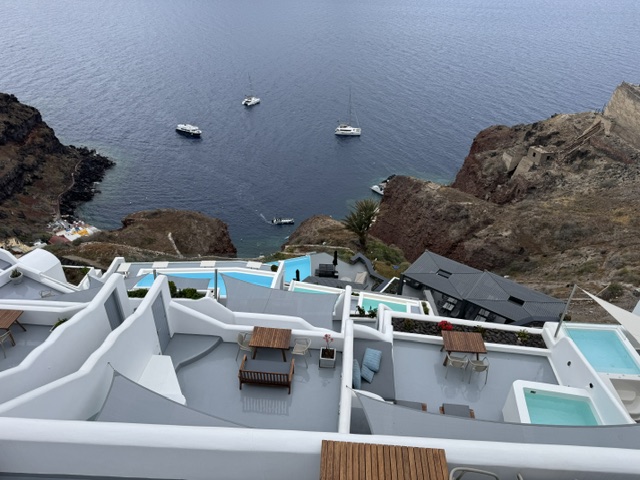
Our hotel – our room on left. photo by gb.
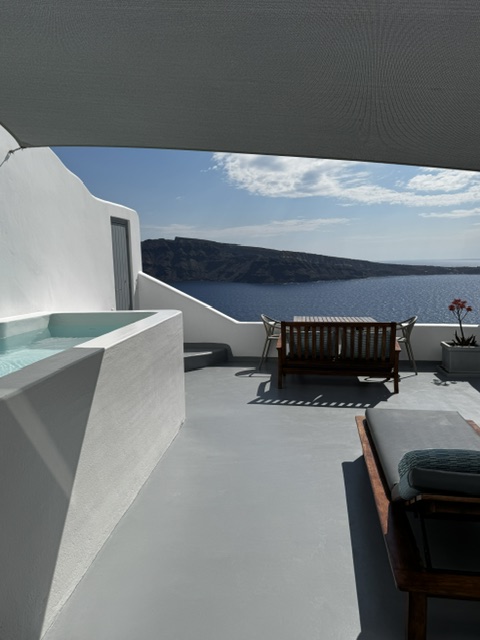
Our balcony.
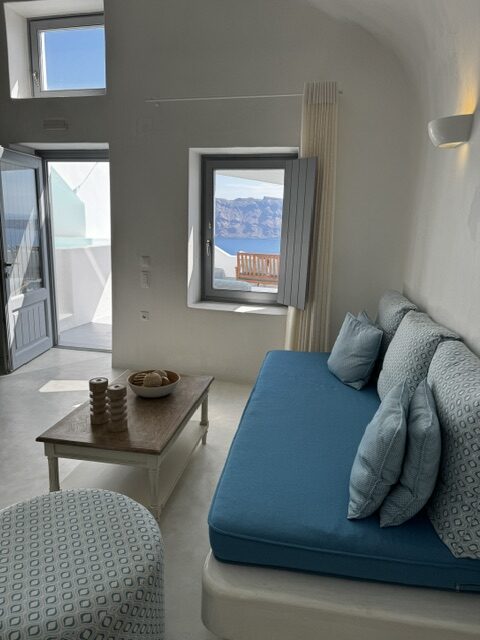
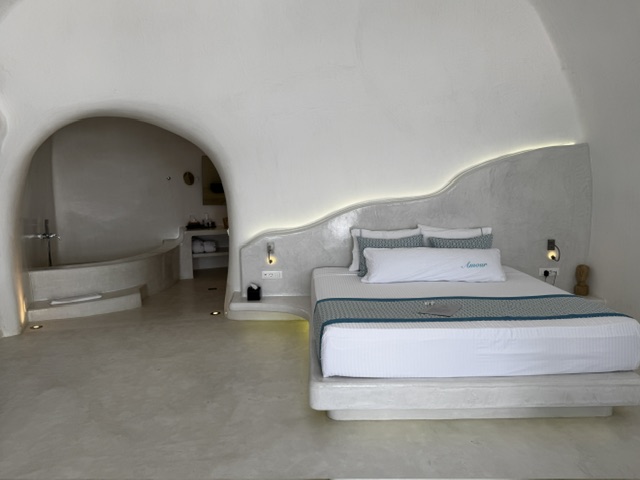
We checked in to our lovely room…with a view, and a balcony… with a hot tub.
Look at the blue water out the window!
Very fun and interesting shapes.
As on the other islands, the resort and hotels, houses and most buildings on the island are painted white…some with blue trim. Churches have blue domes. The buildings are cubical and some cave-like, to imitate the original cave homes on the volcanic island. We were told that in order to confuse the pirates all the homes were painted white and the small lanes created a maze.
Another view from our balcony.
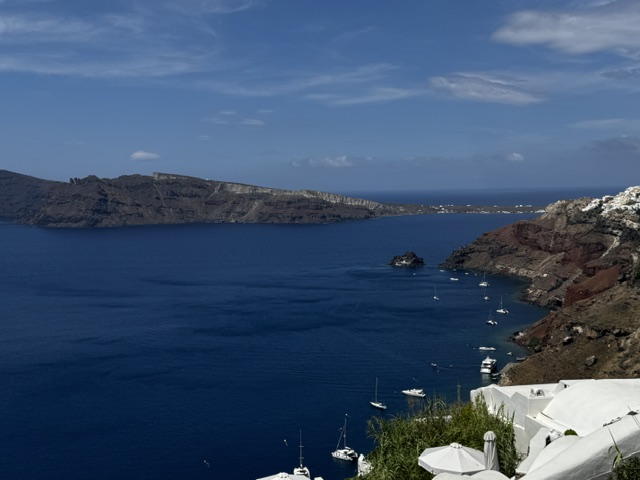
The volcano erupted about 1600 BC and created a caldera (a large, cauldron-shaped depression that forms from the explosion or collapse of the center of a volcano). The island of Santorini is one part of the edge of this caldera and therefore is a crescent shape. Thousands of years ago this caldera filled with water… the most exquisite crystal- clear blue water I’ve ever seen ~ the Aegean Sea which flows into the Mediterranean.
The buildings built on the hillside.
The resort we stayed at was built into a hillside and, as I mentioned, has a lot of steps. This is not a place for those who cannot handle steps or have balance issues.
The narrow, inlaid, bumpy rock sidewalks.
From the office of our hotel to our room there are about 75-80 steps (I lost count). We walked up them every time we left the resort. Our friend’s room was about 15 steps further down from our room. And the swimming pool and breakfast buffet and restaurant was down further still. The streets are a labyrinth… you needed to pay attention to where you were going. We used our phone’s GPS system often.
Along the sea. photo by gb.
Santorini is an amazing place. On this magnificent island we had four days to play. Besides enjoying our balconies and the pool and the restaurant, we left daily for different activities.
For our first day, the activity we planned was a 6 mile hike from the town of Fira to where we were staying in Oia, but it was misty (the only day it rained on our trip), so we just relaxed and delayed our hike until the next morning.
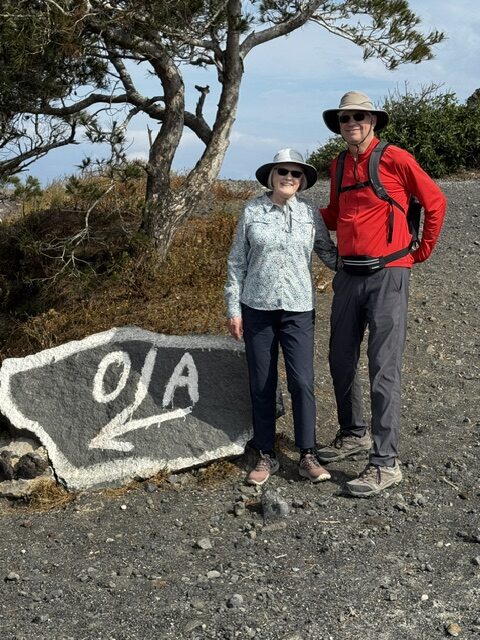
On our hike…this way to Oia. photo by dh.
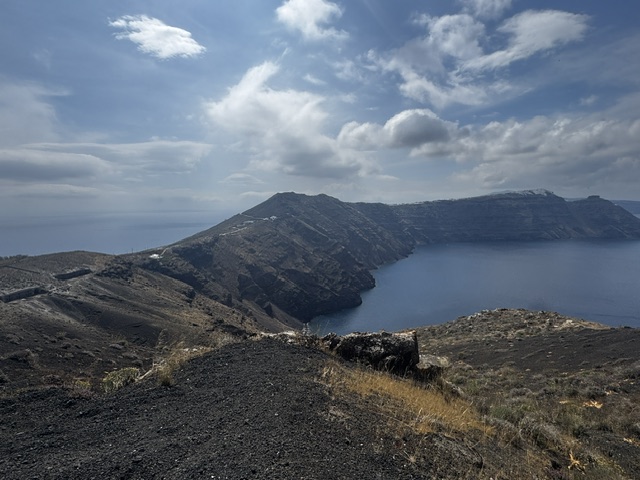
The next day we decided to shorten the hike to 4 miles or so; we hired a driver to take us to our selected hiking starting point and hiked the trail along the edge of the Caldera. It was very picturesque.
Looking back at the shape of the caldera we were waling along.
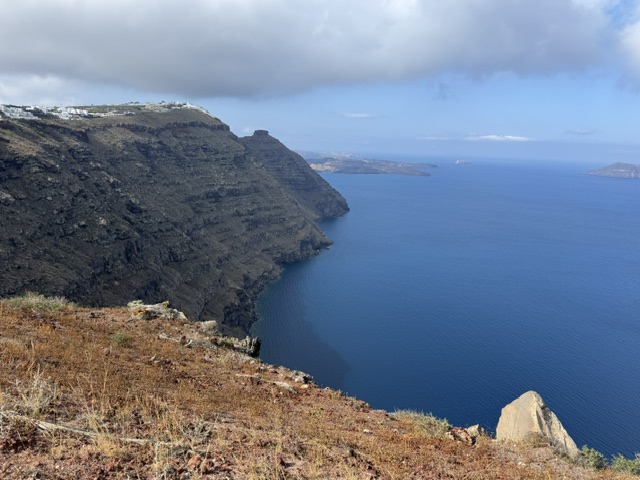
Another beautiful seascape.
Several people were hiking this popular and spectacular trail. We learned about the hike from our son and his wife who walked the trail a few years ago.
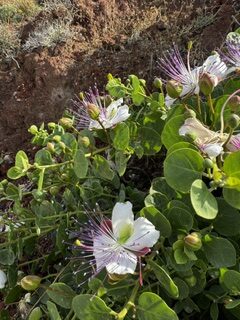
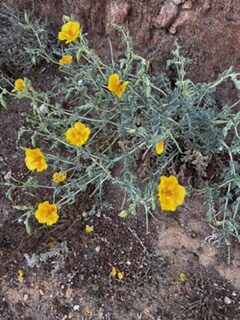
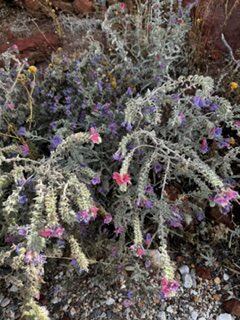
There were stunning views of the sea, and many varieties of wildflowers along the way.
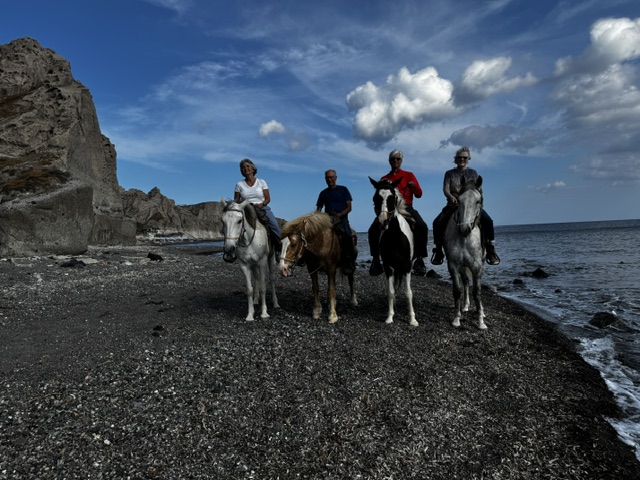
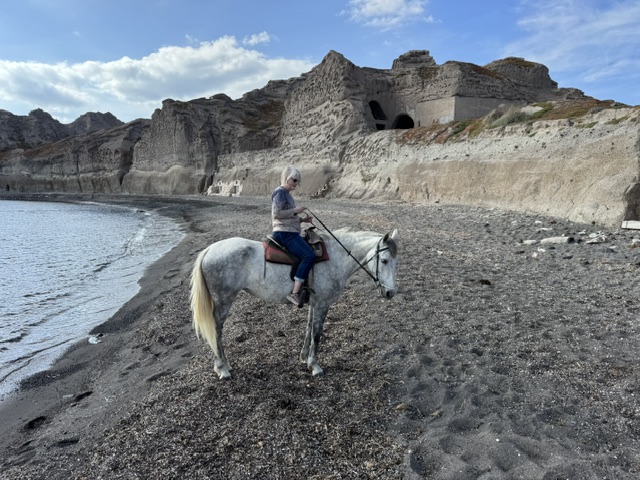
That afternoon we went horseback riding. It was a short ride down to the beach, but it was fun, and a new and different activity for us.
photo by tour guide.
My horse’s name was Georgia. photo by gb.
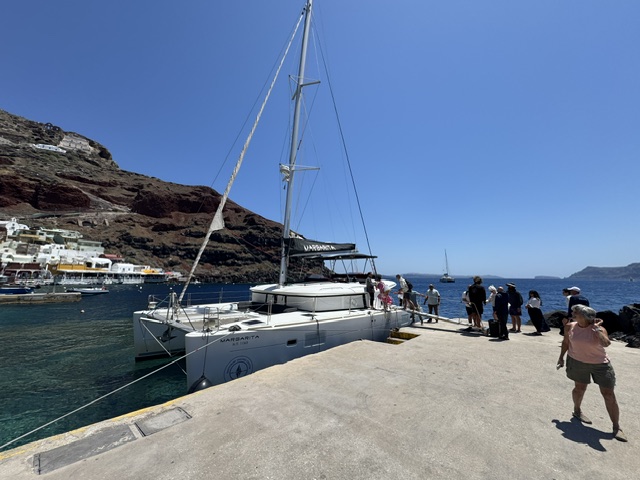
One day we sailed around the other islands in the caldera, on a 45’ catamaran.
The 45′ catamaran. photo by gb.
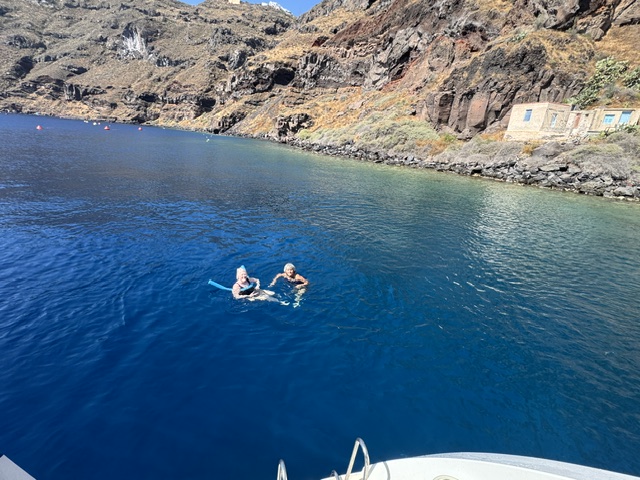
There was only one other couple for our four-hour time slot, so it felt like a personal tour. They crew served us a delicious grilled fish lunch. The boat stopped in two different areas where we were able to jump in and swim. The water was cold!!
Swimming in 64* water! Burr! photo by gb.
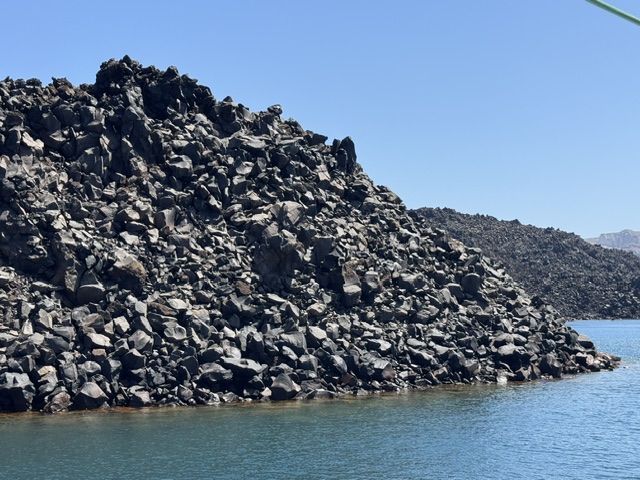
Island of lava chunks. Photo by gb.
We all enjoyed sitting in front of the catamaran to watch the world go by.
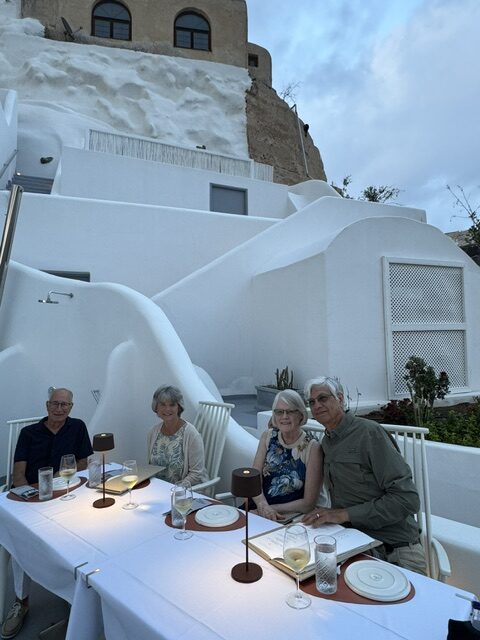
While on Santorini, we had a delicious meal at the restaurant in our hotel. It was a wonderful place, but what made it so special was first, the seating arrangement…always outside…facing west because Santorini is noted for their gorgeous sunsets.
The Aspa Restaurant, in our hotel. photo by waitress.
And second, we mentioned to our tour director on the cruise ship that we were staying at this resort in Santorini and he told us it is owned by one of his best friends, and he would give him a call. When we checked-in they told us we were gifted with a complimentary dinner at the restaurant. What a fun surprise.
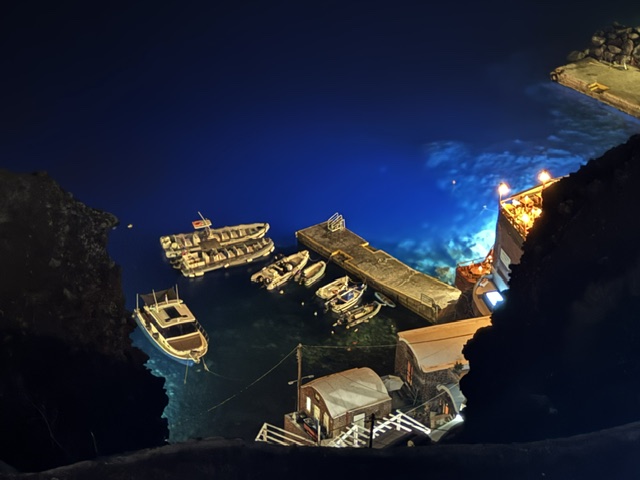
Amoudi Bay. A popular fishing port, nestled below our hotel. I love colors of the night on this pier.
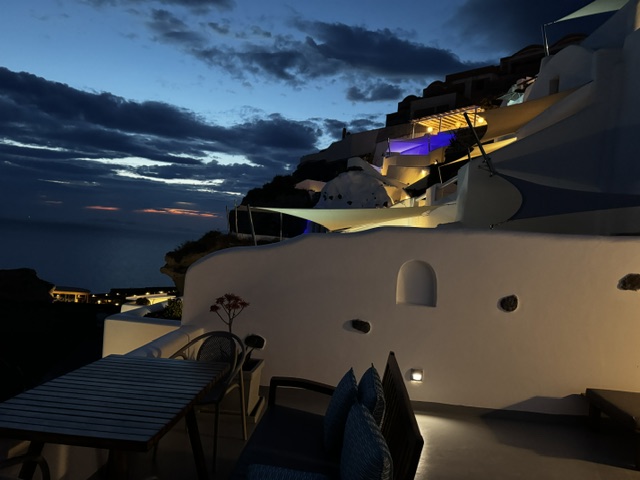
The hotel(s) lite up at night looked lovely too.
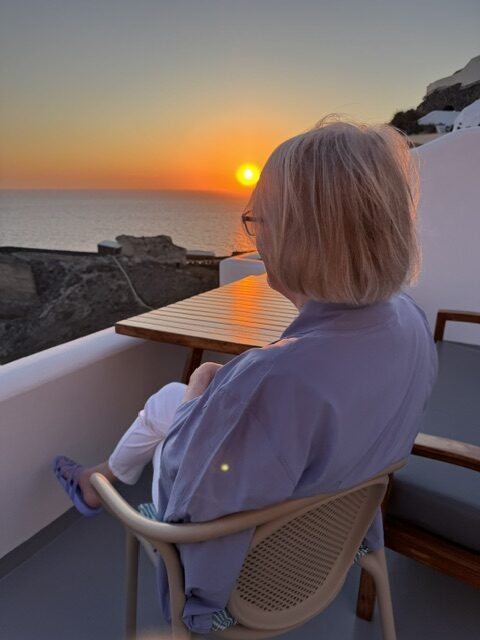
A sunset view from our balcony. photo by gb.
It was a splurge for us to stay on this magical island for four nights, but it was memorable, and we all felt it was worth it.
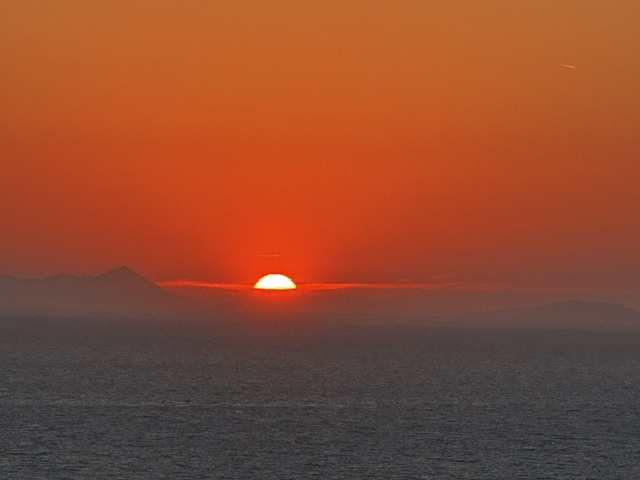
Santorini is a wonderful place to view sunsets.
“We take photos as a return ticket to a moment otherwise gone.” Katie Thurmes
We woke up to another beautiful day in Greece, at a port in Rhodes.
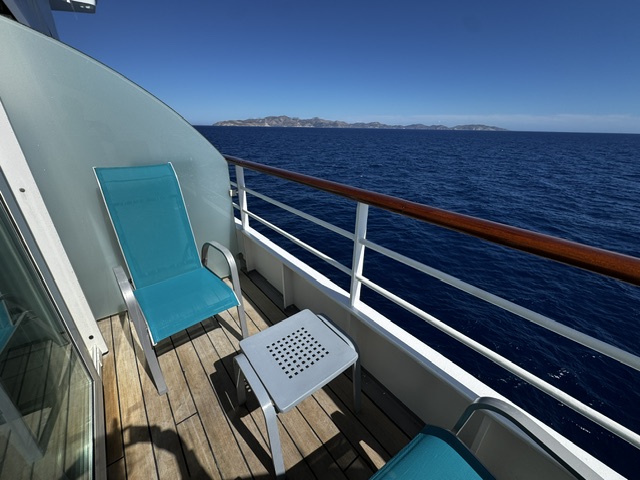
Our balcony on the ship.
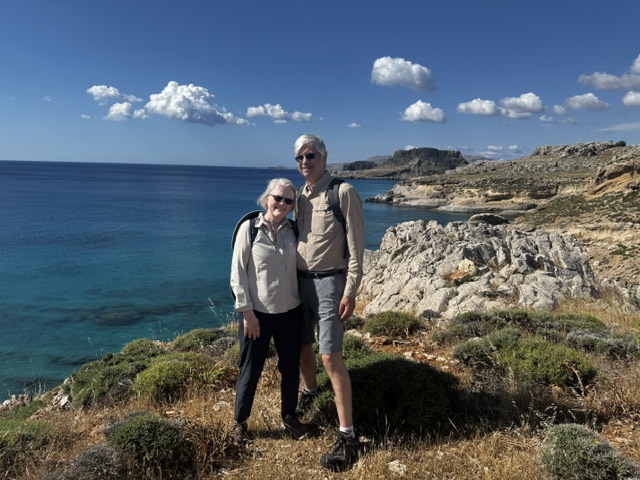
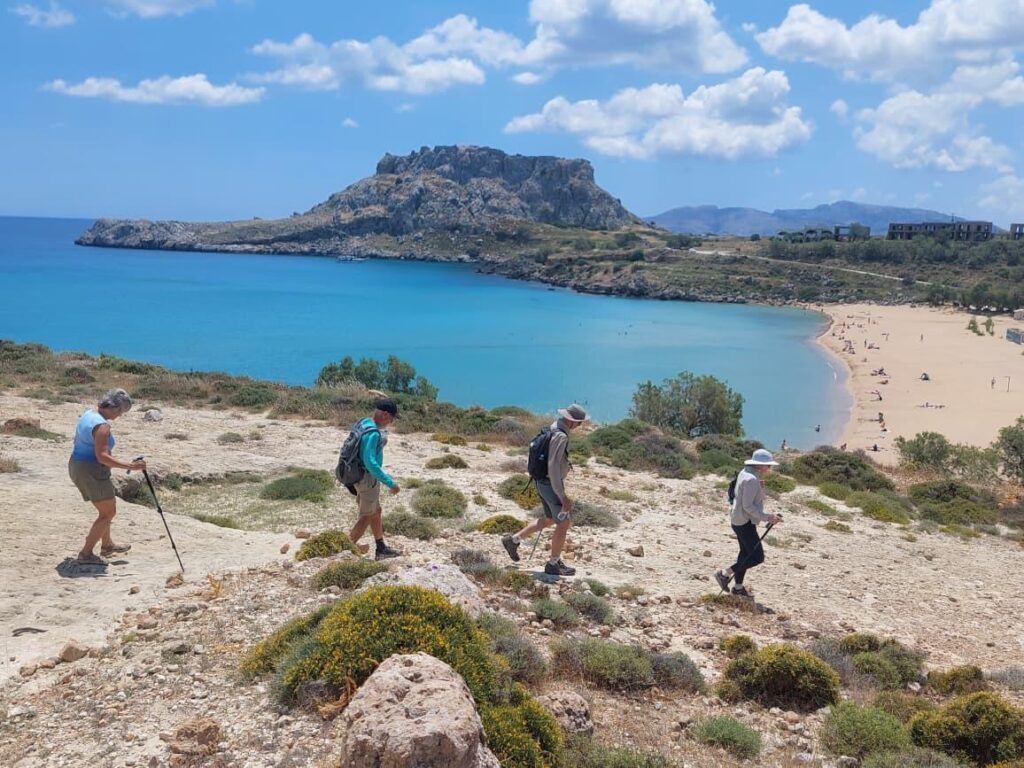
Before our trip we had prearranged a 4+ mile hike along the sea with a tour company. They picked us up at the dock and drove us several miles away to the start of a trail along the rocky coast.
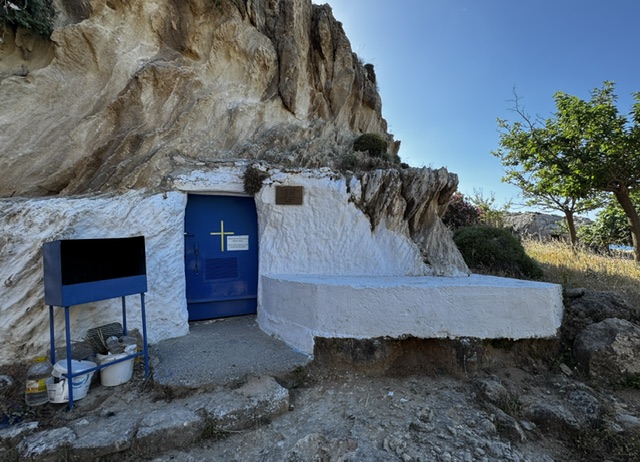
Chapels are everywhere. This was St. Agatha chapel located at the beginning of our hike on Rhodes.
We had a wonderful guide, and the views of the sea were stunning.
Look at that water!!! photo by dh
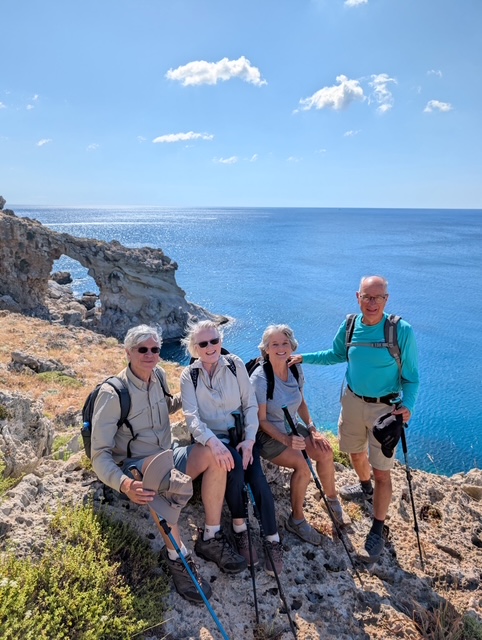
It took several hours, and we enjoyed every minute of it.
Photo by our guide, Marguerite. Apparently this photo was added to her company’s website.
Photo by our guide, Marguerite. Beach in this photo is Agatha Beach.
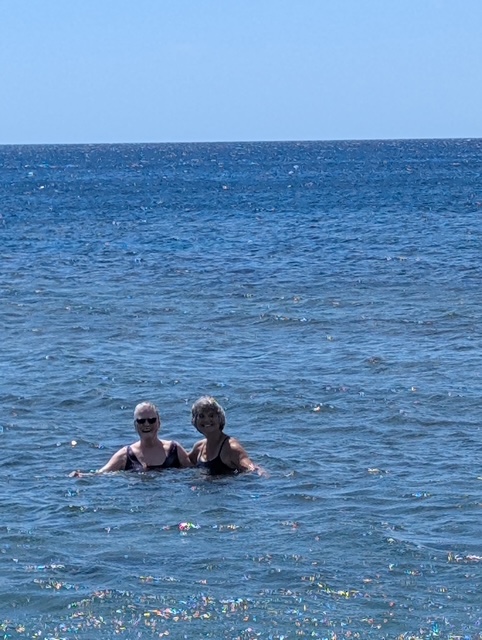
We stopped at Limni Beach to swim in the cool, refreshing, clear waters.
Swimming in the Mediterranean. photo by dh
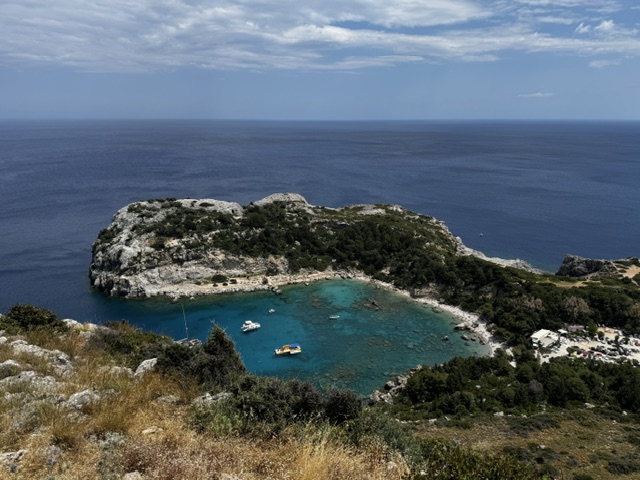
Anthony Quinn Bay ~ made famous because of the 1961 movie Guns of Navarone he starred in.
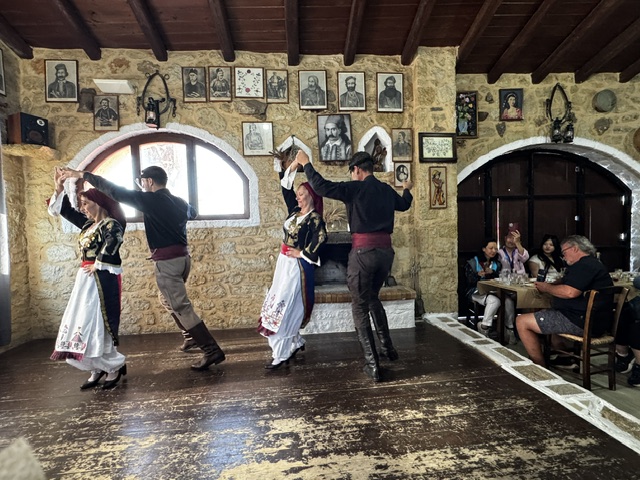
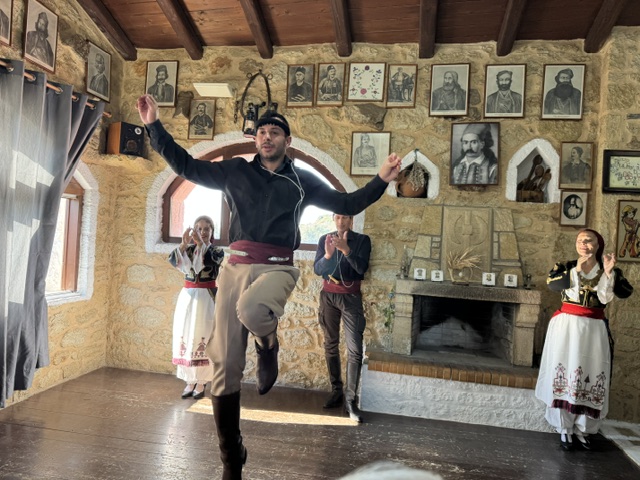
The next day we disembarked on the isle of Crete where we went to a local family organic farm where they grow olive trees and grapes. We tasted the wine and had some cheese and bread and tomatoes while watching traditional Greek dancers performed for us. It was delightful.
We also had a chance to dance with the dancers at the end. It was fun.
photo by gb
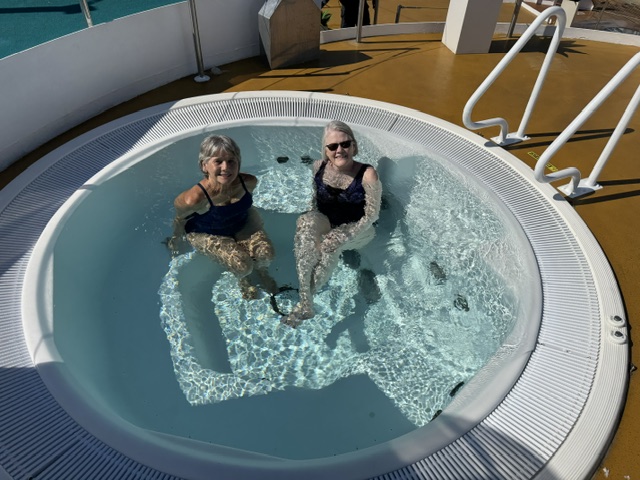
The last stop on our cruise was Santorini. We opted to stay onboard because the next day we would fly to Santorini for a four-night stay on our own. It was very pleasant to be on the ship with so many passengers disembarked. We had the hot tub to ourselves and a nice relaxing experience.
photo by gb
The cruise went quickly. We had a lovely dinner on board, on our last night.
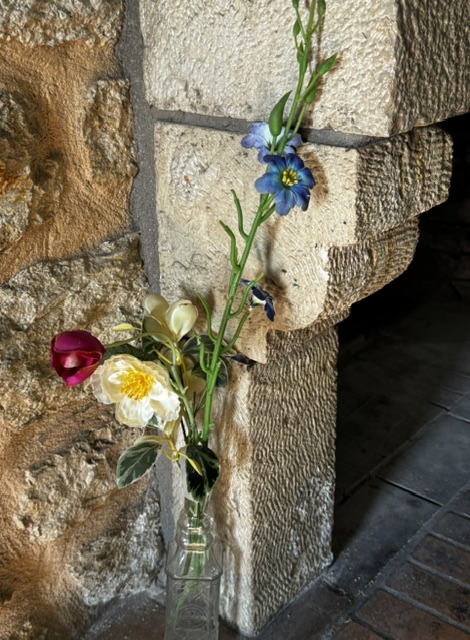
A super-sweet flower arrangement tucked away in the corner of the winery.
"And at the end of the day, your feet should be dirty,
your hair messy
and your eyes sparkling."
Shanti
Our time in Greece was marvelous. It was divided into three parts. Five nights in Athens, a four-night cruise through the isles, and four nights on the island of Santorini. I couldn’t decide where to begin writing about our adventures. I decided to start with my favorites, instead of chronological order. But then, I couldn’t determine between the four-night cruise or the four-night stay on the island of Santorini…I decided to start with the cruise.
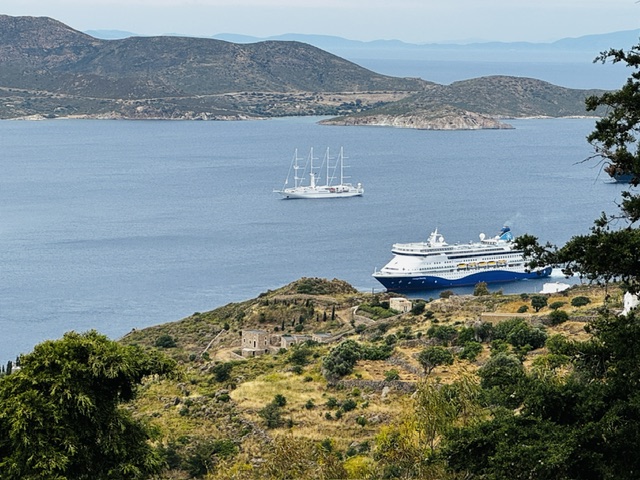
Our ship in the forground.
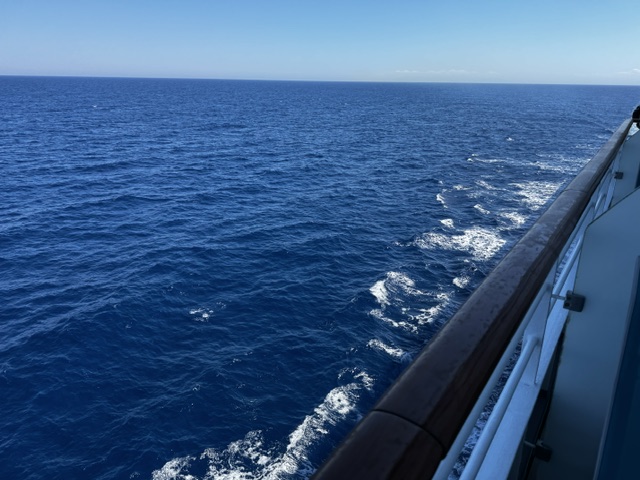
I love being on the water and was happy to be on the Celestial Discovery, a smaller ship (1200 passenger) cruising the Mediterranean Sea and stopping at a couple of the 1,200 islands in Greece. We had a delightful tour director who took good care of us. We disembarked on a four islands: Mykonos, Patmos, Rhoades, Crete, and also disembarked at a stop in Ephesus, Turkey.
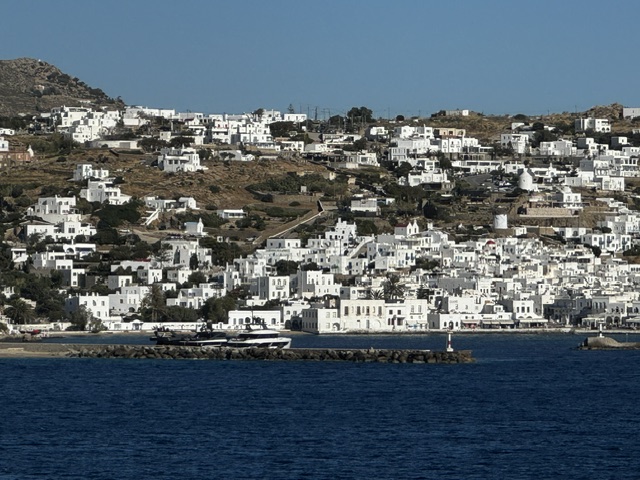
Approaching the island of Mykonos.
Besides seeing the scenic, small, cubical white-washed buildings (some with blue trim and all with no peaked roofs) and the narrow alley ways between houses on the islands and the picturesque scene of these buildings enveloping the hillsides up from the water, each island was unique in its own way.
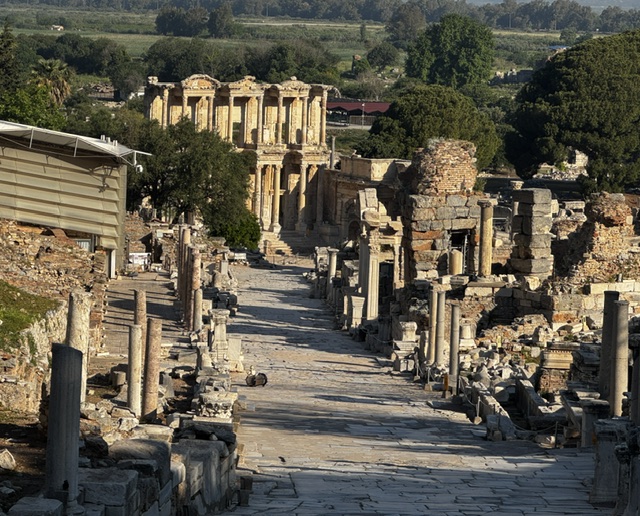
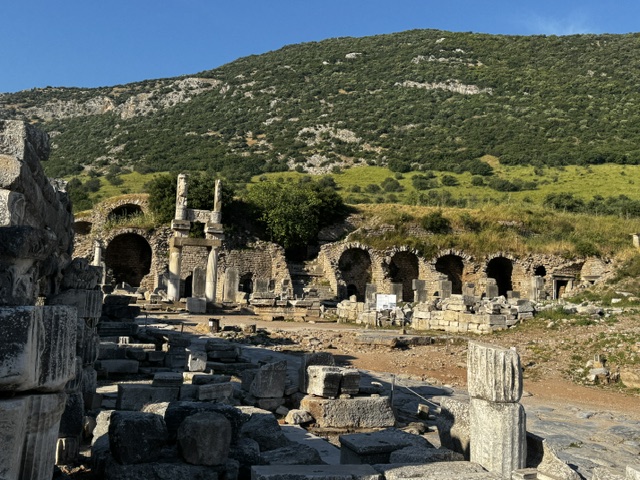
A road in Ephesus.
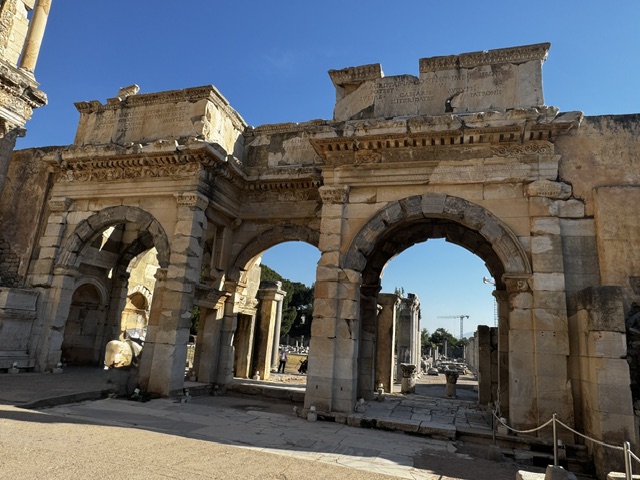
Our first stop was not an island, but we sailed to Turkey, to visit Ephesus. The incredible ruins of this town where Apostle Paul, and other Biblical personalities walked the streets, 2,000 years ago, was incredible to see. The ancient city of Ephesus’ excavated remains go back several centuries.
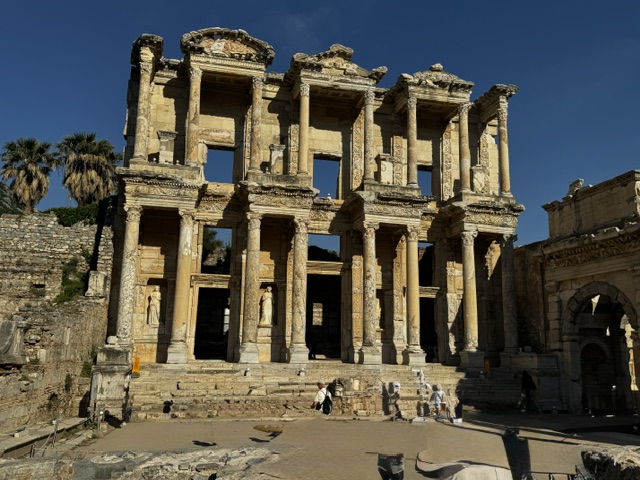
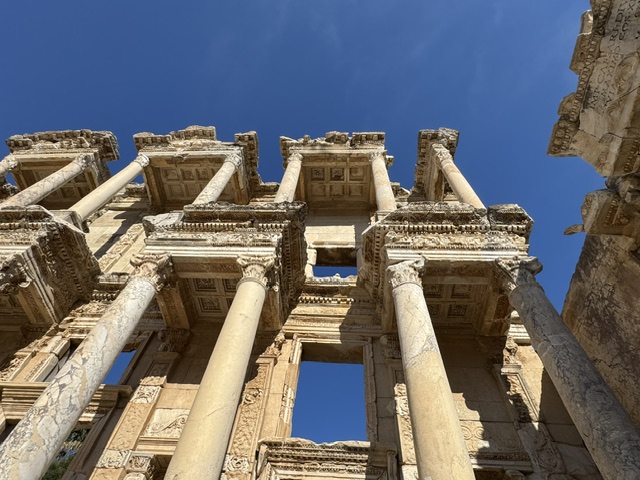
“The Library of Celsus is the most iconic structure in Ephesus — and one of the most beautiful ancient libraries ever built. Completed in the 2nd century A.D., it once held over 12,000 scrolls…” quote off internet
At one time Ephesus was a massive economic and intellectual hub of the Roman Empire, and a center for early Christianity. It amazes me that so many of these ruins are intact today…and that we can meander through them and envision all the activity they represent.
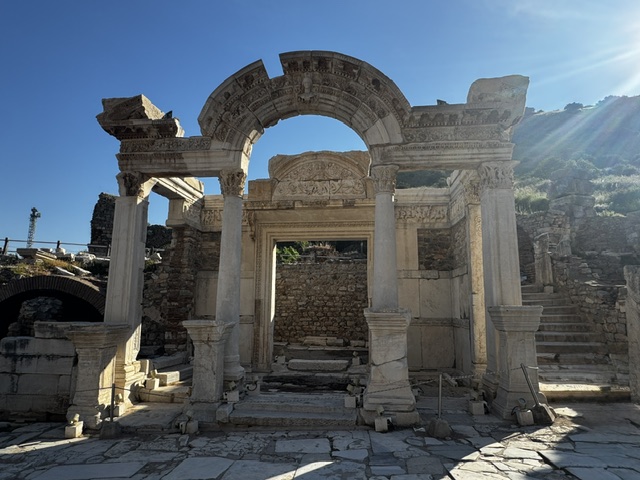
The Temple of Hadrian was built in the 2nd century AD (before 138 AD) to honor Emperor Hadrian’s visits to the city.
The town’s dwelling places.
A structure attached to the library.
Amazing detail, so well preserved.
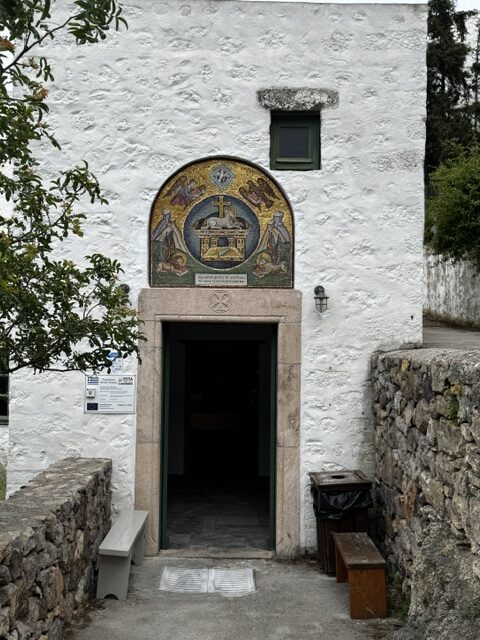
Later, that same day , we sailed to Patmos where the apostle John was exiled from Ephesus, and where John had his visions described in the Bible’s book of Revelation. Researchers are confident the cave ~ The Cave of the Apocalypse ~ where we visited, is indeed where John actually received his divine visions. It is said the crack in the rock wall above (we looked up) is believed to be the spot where God’s voice echoed, symbolizing the Holy Trinity (3 fissures in the rock). This site, as is Ephesus, is a UNESCO World Heritage Site. (A UNESCO World Heritage Site is a landmark or area formally recognized by the United Nations Educational, Scientific and Cultural Organization (UNESCO) as possessing “Outstanding Universal Value”)
The chapel attached to the cave. No pictures were allowed inside.
It was meaningful to me to be there in this cave on Patmos. Our guide told wonderful stories. The one I remember is that after the ruler who sent John to exile at Patmos died, John returned to Ephesus as an old man. In church, when the congregation asked him for a word, he would simply say “Love one another.”
When his disciples grew weary of hearing the same phrase and asked why he always repeated it, John replied: “Because it is the Lord’s command, and if this only is done, it is enough.” Amen. I enjoyed hearing that story.
Back on the ship, we sailed during the night, to Rhodes…(to be continued.)
“A new command I give you: Love one another. As I have loved you, so you must love one another.By this everyone will know that you are my disciples, if you love one another.” John 13:34-35