A view down the main street of Williamsburg, VA – the Duke of Gloucester.
Colonial Williamsburg is a living history museum with restored buildings and actors in period costumes making 18th century history come alive. It’s picturesque and well done.
While driving through five states to get from Minnesota to Virginia we started listening to the book 1776 to get a flavor of what was happening during that time period. It was interesting and thought-provoking. It made us think of how a few men together discussed, debated, and made decisions that changed the life of the colonies forever. All the events leading up to our freedom from England is not something we think about much, but it was interesting to have a refresher history lesson. The problems we experience today are not easy and the problems they experienced back then weren’t easy, but it was fun and enlightening to get glimpses of our past played out for us.
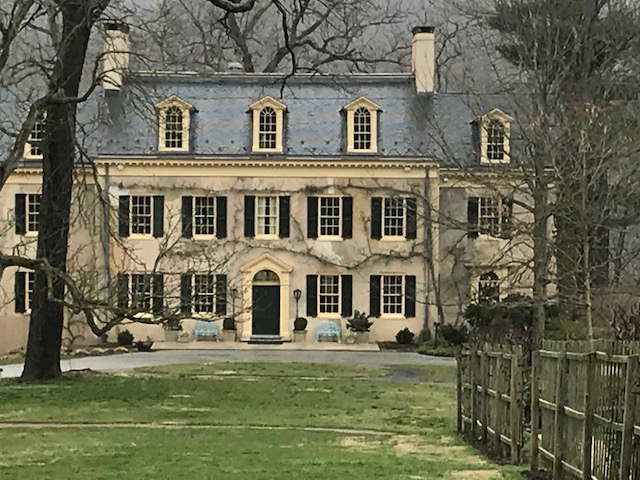
The Raleigh Tavern, built in 1717, was a center of social business and political activities. Guests include George Washington, Thomas Jefferson, Patrick Henry and Lafayette. Many discussions about the future of our country were held in this place. It was remarkable to be able to walk around in it.The Magazine. A magazine “stores or contains things”…this magazine held military artillery.The first capital of Virginia- well, a replica, built in the early 1930’s.The Court House…Gary acted as a defendant during a reenactment of a colonial court case.The Governor’s Palace was grand.A Fife and Drum corps march and demonstration ends the day at Williamsburg. Drums were used for the men to march in step, and were an important part of the battlefield communications system, with various drum rolls used to signal different commands from officers to troops.An interesting, gnarly, old tree next to an aged brick building. The brick fence trimmed with a rounded top, also made from bricks, is very unique.The Rockefeller retreat home…they spent springs and falls in this beautiful home. They were very philanthropic and have contributed much to the development of Colonial Williamsburg, contributing to the saving of over twenty National Parks and started many schools for black children.
To visit these real places from history is an amazing experience and we enjoyed our time in Williamsburg, Yorktown, and Jamestown.
Usually when we travel we like to stay away from chain restaurants…so on Saturday night, after a little research we decided to eat at the South Hills Market & Café in Charleston, West Virginia.
Usually we do not sit at the bar… but since this was a small, family–run restaurant with few tables that were already reserved until 8:30 pm, and it was a busy Saturday night, and we didn’t know where else to go, we decided to sit at the bar since they served the same menu.
I chose the Buttermilk Chicken with a Pecan Waffle that I had found intriguing when we looked at the menu online. Gary chose fish tacos. Both were delicious.
But what made our experience extra special were the people sitting beside us at the bar. To my right a mom and her adult son were also eating dinner and we visited for a while…they were from the Charleston area. A little while later, as the place filled up, another couple sat down beside Gary on our left. They were “regulars” and the staff knew them. They were very friendly also, and stuck up a conversation with us.
Soon I was tapped on the shoulder and Pam, on my right, offered me 2 beignets – a French-style pastry. They had ordered the dessert but the portions were so large they decided to share it with us which I found touching. When we left I told them we’d pay it forward.
So now I have a new outlook on sitting at the bar versus sitting at a table. Both have their place, but for this evening the bar was a wonderful choice.
Our family camping trip out west took us to several national parks in 1992. Each park is unique and so much fun to visit and explore. We are so grateful for those who went before us to preserve such wonderful lands.
NPS Photo
At Mesa Verde National Park we took a hike to see the cliff dwellings, for which the park is known. Mesa Verde is unique because the park preserves the ancient cliff dwellings of the Ancestral Puebloans. When we were there in 1992 the park called the people Anasazi Indians, but when recently looking up information on the park I discovered they no longer use that term, and the correct name is Ancestral Puebloans.
NPS Photo
The website reads the park “offers a spectacular look into the lives of the Ancestral Pueblo people who made it their home for over 700 years, from AD 600 to 1300. Today the park protects nearly 5,000 known archeological sites, including 600 cliff dwellings. These sites are some of the most notable and best preserved in the United States.”
NPS Photo
The website also gives permission to copy photos from their site as long credit is given to the NPS. “They (the photos) may be used for private, public, or press use. Please credit “NPS Photo.”
We went on a ranger led hike through the cliff dwellings. I remember the ranger’s warning that one had to be able to climb ladder steps and fit through small spaces in order to participate in the hike. It was fun to see the cliff dwellings up close and learn about the fascinating life style of the people who had lived there years ago.
Kasha-Katuwe Tent Rocks National Monument is located between Albuquerque and Santa Fe, New Mexico. Kasha-Katuwe means “white cliffs” in the Pueblo language. I didn’t know the difference between a national monument and a national park so I looked it up and this is the answer I found:
“To laypeople, the distinction between lands designated as national parks and national monuments can appear finite. The primary difference lies in the reason for preserving the land: National parks are protected due to their scenic, inspirational, education, and recreational value. National monuments have objects of historical, cultural, and/or scientific interest, so their content is quite varied.”
In Tent Rocks National Monument, volcanic rock and ash have formed unusual slot canyons and tent-shape rocks that make up the landscape of this very unique park.
There is a 1.2 mile trail through a slot canyon up to a lookout point and we hiked it one day last fall. The slots through this canyon trail were sometimes very tight, unlike the slot canyon in The Narrows in Zion National Park. The Tent Rocks trail was interesting because of all the distinctive, smooth formations and conical-shaped rocks. The vistas at the top were great and at the bottom we hiked another mile along the base of these rock formations. It was a fun hike. I had never heard of this park until we planned our trip to New Mexico, but what a wonderful find!
I always enjoy discovering and exploring new places. There are so many in this world…
After spending Christmas and starting the New Year (2015) with our son and his family in Mozambique, my husband and I flew to Cape Town, South Africa. It was great to see another country on the African continent. Cape Town is a more progressive city and we were excited to see it and the surrounding area, including the Cape of Good Hope and Cape Point, at the southern most tip of Africa.
Table Mountain is in the center of Cape Town and is visible from anywhere in the city. It’s flat top makes it looks like a table, hence the name. We decided to hike to the top of Table Mountain.
Getting closer to the top…deceiving photo though – you cannot see the people in it.
It was going to be another beautiful, sunny day in Cape Town so we started hiking up the mountain in the morning with much anticipation and energy. The climb soon became difficult: it was steep, rocky, hot and slow going. But we made it to the top and we were glad when we did.
As we were hiking two people stopped to ask me if I had enough water. I did. We are always careful a about carrying enough water with us when we hike. As people passed us up I noticed a lot of them were younger than we were. About two thirds of the way up we stopped to rest under a rock overhang, to stand in shade for a minute because we were so warm. A young man came up to me and asked if I had enough water. I said yes, and then he asked me to hold out my hat…when I did he poured his water into my hat and told me to pour it over my head. I did and it felt so good. I said thank you and he took off and continued on his way and I never saw him again. I was impressed with such a random act of kindness.
A beautiful view of Cape Town off to one side of Table Mountain.
The views at the top were fantastic and we spent a fair amount of time up there. When it was time to head down we took a cable car instead of hiking. The cable car is continually taking folks up to the top of the mountain and back down again. Usually hiking down is harder than hiking up, so I was grateful for the option to ride down the mountain.
From the window of the cable car.
A funny story about the cable car is we happened to be first in line for the next ride down. When we stepped into the cable car we were excited to get a front row view out the window. Once the cable car filled up and started descending, the floor of the cable car started rotating so everyone was able to have a chance to have that front row view. It was surprising, but what a great idea.
A cable car coming down from the top of Table Mountain.
Even though the hike up Table Mountain was a difficult one, we are happy we did it!
In 2003 we went to visit friends who spend their winters in Arizona, away from the Minnesota cold, snow and ice. They bought a lovely town home in Tucson and we enjoy visiting them, over a long weekends, in February, when it works.
There is a lot to do and see in the area where they live: Tuscan Botanical Garden, Saguaro National Park, Arizona-Sonora Desert Museum, DeGrazia Gallery, Old Tuscon Studios, Mt. Lemon and the Santa Catalina mountains, good restaurants and several places for hiking. Sabino Canyon is one of those places.
Sabino Canyon is a desert oasis in the Coronado National Forest. When you arrive at the park you can take a tram up the canyon and walk back down if you desire. That’s a great way to hike! But there are several trail options available to hike back down. We have hiked in this canyon on several different trips. On this day in Sabino Canyon we were casually hiking down along the canyon in the beautiful, warm, sunshine. There was water in the canyon; water pools in the canyon during winter months and being near water while hiking is a always a treat. As we were walking we caught up with a couple in front of us that had stopped on the trail. They pointed to a rattlesnake coiled up in the sun on a rock along side the trial. We tiptoed past it and kept on going. That’s the first time, and hopefully the last time, I see one of those snakes!
Desert cactus in bloom.
Other than the snakes, the desert landscapes in this park are beautiful and it’s especially nice when one can enjoy warmth and sunshine knowing it’s cold and icy back in Minnesota.
My husband and I went camping in Itasca State Park. This park is a beautiful treasure in Minnesota. In this park, the headwaters of the Mississippi begin. We camped here with our boys when they were younger, but this year it was just my husband and I.
It’s always fun to say “I’ve walked across the Mississippi River.”
One afternoon we took off hiking on a trail from the campground, and I was in the lead. As we were walking along I noticed black in the treetops above me, on my right. I stopped to look and noticed there were two black cubs high in the tree…so then I thought…hmmm, where’s mama?
Tree tops (a photo w/o the cubs).
I looked to the left of the path and there she was, staring right at us. At that moment I couldn’t remember what I was suppose to do. We’ve been to so many parks and read so many signs telling one how to react to bears…black bears or grizzly bears… play dead for one and act big for another, but in this moment – when I needed to know – I forgot! So we stood there, and then slowly stepped backwards. The cubs climbed down the tree, walked over the path in front of us and joined their mama, all the while the mama kept her eyes on us. And we kept our eyes on her too!
The mama bear, keeping her eyes on us.
When the cubs were safely with their mama we watched them scamper off into the woods and we kept going on our hike, happy to have had a safe, and memorable, encounter with the black bears.
In 2014, an article in The Washington Post read “An estimated 94 percent of Lake Superior is covered with ice, enabling sightseers to visit the Apostle Islands National Lakeshore’s sea caves for the first time since 2009.”
Before 2014 I did not know there was a possibility of walking on frozen Lake Superior to visit the sea caves. We explored the sea caves while kayaking one summer, but to see them in the wintertime was intriguing. I love Lake Superior and I loved the idea of walking on it. As soon as I learned about this opportunity we recruited some friends and headed to Duluth for dinner and an overnight, and drove to Bayfield, Wisconsin the next day. A beach near Bayfield was the designated entry point for the trail to the sea caves. There were throngs of people with the same idea. It quickly became a very popular attraction that winter, which made for congested parking and long lines – but it was worth it.
We bundled up in our warm, winter gear, grabbed our hiking poles and walked out to see the beautiful dazzling ice formations, crystal caves, and icicles hanging everywhere off the cliff faces along the Apostle Island National Lakeshore. When the lake is not frozen the sea caves are very popular places for exploring with canoeists and kayakers. But at this point in time people could walk through, and crawl under, these same sea caves and it was awesome!
Our youngest son, Tim, planned our first trip to Africa. He was living there when my husband, oldest son and myself went to visit. Tim met us at the airport as we stepped off the plane. It was so exciting to be in Africa!
A photo of a page from the photo book I made from our trip.
We met the rep from the rental car company and picked up our car. We were soon on the road starting our adventures. The first days were spent at a rustic lodge in Liwonde National Park in Malawi, Africa. We went on an exciting canoe safari and saw hippopotamus’ up close, and in this park we saw elephants in the wild for our first time (but not our last).
Our first hippo sighting from our canoes.
A hippo…they’re big!
After a couple of nights it was time to head to the country of Mozambique to see where our son lived. However, the morning we were to leave we had trouble starting our vehicle at the lodge. After several attempts the car finally started and we drove to the park entrance. We had to turn in our permit to the park ranger and by automatic reflex we turned off the car. This time it wouldn’t start again.
Photo from our safari in Krueger National Park…there was no hiking in this park…must stay in the open-top jeep with your guide.
We called the rental company and they said they would send someone right away but of course we were a couple of hours from the city, so we each took out our books and started to read. After a while I decided I wanted to take a walk. My oldest son said he’d go along so we started walking down the road. Immediately the park ranger came running after us and said in broken English…”No! No walk…elephants.” So, of course we had to go back to the car.
Finally two mechanics showed up at the park to fix our car. Thankfully they could do it on the spot and they worked quickly. Soon we were on the road again driving to Mozambique.
A photo of a photo of the sunset we saw as we were paddling back to shore from our canoe safari.
Shortly after we arrived home to the USA I noticed an article in the newspaper about a young mom and her baby attacked by an elephant in Kenya, Africa and they died. Of course I immediately thought about our attempted hike in Liwonde National Park. I guess the ranger knew what he was talking about.